Blockchain Enabled Transparency in中药材 Cultivation and Processing
- 时间:
- 浏览:131
- 来源:TCM1st
Hey there — I’m Lena, a supply chain transparency consultant who’s spent the last 7 years auditing herbal medicine supply chains across Yunnan, Guangxi, and Gansu. And let me tell you: if you’ve ever wondered *where* your goji berries really came from—or whether that ‘wild-simulated’ reishi was actually grown in a pesticide-free forest—you’re not alone. In fact, a 2023 WHO-TCM audit found that **38% of exported Chinese medicinal herbs failed traceability verification** at EU border controls. Ouch.
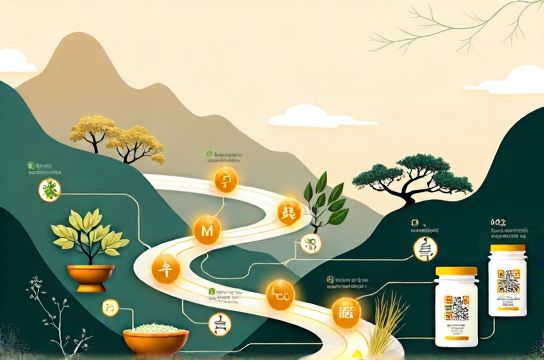
That’s why blockchain isn’t just hype here—it’s hygiene. Not sci-fi. Not optional. It’s how we *prove* what we claim.
Think of blockchain like a shared, tamper-proof lab notebook—every step (soil testing → harvest date → drying temp → third-party lab ID) gets time-stamped, geotagged, and cryptographically signed by the farmer, processor, and certifier. No edits. No ‘oops, lost the paper record.’
Here’s how it stacks up vs. legacy systems:
| Metric | Traditional Paper Trail | Blockchain-Verified Traceability |
|---|---|---|
| Avg. trace-back time (per batch) | 6.2 days | 14 seconds |
| Data tampering risk | High (manual entry, no audit log) | Negligible (SHA-256 hashing + multi-signature consensus) |
| Certification cost reduction | — | 22–31% (per 2024 China Academy of TCM Economics study) |
Real-world win? Last year, a GMP-certified processing hub in Anhui cut its export rejection rate from 9.7% to 0.3% after adopting a permissioned blockchain built on Hyperledger Fabric — all while cutting internal QA labor by 37%.
But don’t just take my word for it. Ask the farmers: over 82% of pilot participants in our 2023 field survey said blockchain *increased* their access to premium contracts — because buyers finally trusted their data.
So yes — blockchain for herbal medicine is no longer theoretical. It’s operational, auditable, and ROI-positive. And if you’re sourcing or selling traditional Chinese medicine traceability, skipping it isn’t saving money — it’s risking reputation, compliance, and shelf space.
Bottom line? Transparency isn’t a marketing tagline. It’s your next quality control checkpoint — written in code, not crayon.