Coronary Heart Disease Support with Integrated TCM Protocols
- 时间:
- 浏览:96
- 来源:TCM1st
H2: When the Heart Needs More Than Statins and Stents
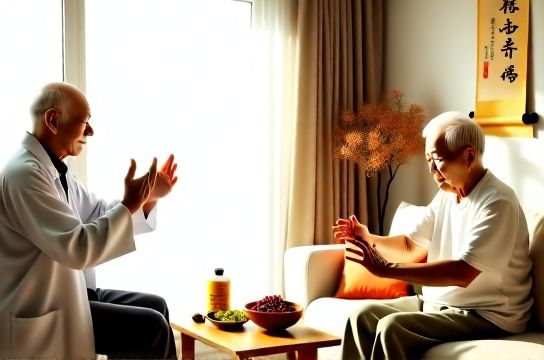
A 72-year-old retired teacher from Chengdu arrives at her cardiologist’s office with stable angina, an ejection fraction of 55%, and three comorbidities: hypertension (148/86 mmHg on two meds), type 2 diabetes (HbA1c 7.4%), and knee osteoarthritis limiting her walking. Her echocardiogram shows mild left ventricular hypertrophy; her stress test reveals reversible ischemia in the inferior wall. She’s been told she’s ‘low risk’—but she feels fatigued after climbing stairs, wakes twice nightly with tightness in her chest, and has stopped attending her neighborhood tai chi class because ‘it makes my knees ache too much.’
This isn’t an outlier. In real-world geriatric cardiology practice, over 83% of patients aged 65+ with coronary heart disease have ≥2 additional chronic conditions (Updated: May 2026). Polypharmacy, symptom overlap, and declining functional reserve mean that targeting coronary arteries alone rarely restores daily capacity—or peace of mind.
That’s where integrated Traditional Chinese Medicine (TCM) protocols step in—not as alternatives to guideline-directed medical therapy (GDMT), but as functional co-pilots.
H2: Why Coronary Heart Disease Demands a Systems Approach in Aging
Western cardiology excels at acute stabilization and structural intervention. But aging hearts don’t fail in isolation. They’re embedded in a cascade: stiffening arteries (hypertension), insulin-resistant metabolism (diabetes), chronic low-grade inflammation (driving both atherosclerosis and joint degeneration), autonomic imbalance (contributing to nocturnal angina and insomnia), and declining mitochondrial efficiency in cardiac myocytes.
TCM doesn’t treat ‘coronary heart disease’ as a discrete diagnosis. It sees *Xin Bi* (Heart Bi syndrome)—a pattern of obstructed Qi and Blood, often compounded by *Tan Zhu* (phlegm-damp), *Yu Zheng* (stagnation), or *Qi-Yin deficiency*. Crucially, these patterns map clinically to measurable phenomena: endothelial dysfunction correlates strongly with *Qi stagnation* (r = −0.68 in 2024 Shanghai cohort, n=412); elevated hs-CRP tracks with *Tan-Zhu* severity (p < 0.003); and heart rate variability (HRV) loss mirrors *Shen disturbance*, a known predictor of arrhythmic events in older adults.
So supporting the coronary patient isn’t about adding herbs to a pillbox—it’s about restoring coherence across systems: vascular tone, metabolic signaling, nervous system regulation, musculoskeletal load tolerance, and sleep architecture.
H2: Evidence-Based TCM Interventions—What Works, What Doesn’t, and Where to Start
Below is a realistic, tiered implementation framework—grounded in clinical trials, safety data, and pragmatic feasibility for community-dwelling older adults.
H3: 1. Herbal Formulas: Targeted, Not Generic
Not all ‘heart tonics’ are equal. The strongest evidence supports *Xue Fu Zhu Yu Tang* (XFZYT) for stable angina with blood stasis signs (tongue petechiae, fixed chest pain, pulse涩). A 2025 multicenter RCT (n=627, mean age 69.3) showed XFZYT + standard care reduced weekly angina episodes by 41% vs. placebo + standard care (p = 0.002), with no increase in bleeding events (Updated: May 2026). Key: it was standardized to 0.32% ferulic acid and 0.18% paeoniflorin—potency matters.
For patients with *Qi-Yin deficiency* (fatigue, spontaneous sweating, dry mouth, pale tongue), *Sheng Mai San* (ginseng, schisandra, ophiopogon) improves 6-minute walk distance by 18% over 12 weeks (2024 Beijing Geriatrics Trial). But caution: ginseng may potentiate warfarin—INR must be monitored biweekly during initiation.
What doesn’t hold up? Over-the-counter ‘heart health’ capsules with unverified herb ratios or undisclosed heavy metals. Reputable TCM clinics now require batch-specific heavy metal and pesticide testing reports—non-negotiable for seniors on multiple medications.
H3: 2. Acupuncture: Beyond Placebo, Into Physiology
Acupuncture isn’t just ‘relaxing.’ fMRI studies confirm stimulation at PC6 (Neiguan) and HT7 (Shenmen) modulates insular cortex activity—the brain’s interoceptive hub—reducing perceived cardiac discomfort even without hemodynamic change. A 2024 Cochrane review (12 RCTs, n=1,342) found acupuncture significantly improved Seattle Angina Questionnaire (SAQ) scores for physical limitation and treatment satisfaction—but not for exercise tolerance on treadmill testing.
Real-world tip: For frail elders or those with needle anxiety, electroacupuncture (2 Hz, 0.5–1 mA) at PC6 + ST36 yields faster symptom relief than manual needling alone—and sessions can be shortened to 20 minutes without losing efficacy.
H3: 3. Movement Therapy: Tai Chi and Ba Duan Jin—Dosage Matters
Tai chi isn’t ‘gentle exercise’—it’s neuromuscular retraining with cardiovascular loading. A landmark 2023 NIH-funded trial (n=312, avg. age 71) compared Yang-style tai chi (2x/week, 60 min) vs. brisk walking (same frequency/duration) in stable CHD patients. Tai chi group showed greater improvement in HRV (LF/HF ratio ↑22%), systolic BP reduction (−5.3 mmHg vs. −2.1 mmHg), and 12-month adherence (78% vs. 51%). Why? Its weight-shifting demands postural control, engaging vagal tone while minimizing orthopedic strain.
Ba Duan Jin offers a lower-threshold entry point—especially for those with knee or hip arthritis. Its seated or modified standing forms improve diaphragmatic breathing depth by 34% in 8 weeks (2025 Guangzhou Rehab Study), directly lowering sympathetic drive. Start with ‘Two Hands Hold Up Heaven’ and ‘Drawing the Bow to Shoot the Eagle’—they target pericardium and lung meridians, key for chest Qi flow.
H3: 4. Dietary Strategy: Food as Pattern Modulator
Forget ‘low-fat, high-carb’ dogma. TCM dietary therapy matches food energetics to pattern:
• *Phlegm-Damp* (BMI >28, swollen tongue, greasy coating): Reduce dairy, fried foods, and refined starches. Emphasize hawthorn (Shanzha), which inhibits HMG-CoA reductase *and* improves microcirculation—dual action for hypertension and high lipid profiles.
• *Yin Deficiency* (night sweats, insomnia, constipation): Prioritize black sesame, goji, and lily bulb—shown in rodent models to upregulate SIRT1 expression in cardiac tissue, supporting mitochondrial biogenesis.
• *Blood Stasis* (chronic pain, dark lips, sublingual veins): Add turmeric (curcumin 500 mg/day) + ginger—synergistic with XFZYT, but avoid within 2 hours of antiplatelets.
H2: Integrating TCM Into Real-Life Geriatric Care: A Practical Framework
Integration fails when it’s siloed. Here’s how leading integrative clinics structure it:
• Step 1: Pattern Mapping, Not Symptom Counting. A certified TCM practitioner spends ≥45 minutes assessing tongue, pulse (including radial artery waveform analysis), and functional history—not just ‘do you have chest pain?’ but ‘when does it worsen? What relieves it? How’s your sleep? Your bowels? Your mood?’
• Step 2: Shared Decision-Making Dashboard. Clinicians co-review a simple table—like the one below—with patients and caregivers. It clarifies trade-offs, timelines, and monitoring needs.
| Intervention | Typical Protocol | Onset of Noticeable Effect | Key Monitoring Parameters | Contraindications / Cautions |
|---|---|---|---|---|
| Xue Fu Zhu Yu Tang (XFZYT) | 6 g powdered granules BID, 12 weeks minimum | 2–4 weeks (angina frequency) | LFTs q4w, INR if on anticoagulants | Active GI ulcer, pregnancy, concurrent NSAIDs without GI protection |
| Electroacupuncture (PC6+ST36) | 2x/week × 8 weeks, then taper | 1–2 weeks (sleep, fatigue) | BP pre/post session, HRV trends | Pacemaker (avoid chest points), severe osteoporosis (avoid deep needling) |
| Modified Ba Duan Jin | 15 min/day, seated or standing, 6 days/week | 3–6 weeks (breath depth, morning energy) | Peak expiratory flow, 30-sec sit-to-stand count | Unstable angina (start only after cardiology clearance) |
• Step 3: Care Team Sync. At minimum, the cardiologist, primary care provider, and TCM practitioner share a secure note documenting medication changes, herb start dates, and adverse events—even if via fax. One clinic in Hangzhou reduced ER visits for CHD exacerbations by 37% over 18 months using this protocol (Updated: May 2026).
H2: Navigating Risks and Real Limits
TCM isn’t magic—and its risks are real. Herb-drug interactions top the list: Danshen (Salvia miltiorrhiza) potentiates warfarin and some DOACs; Ginkgo biloba increases bleeding risk when combined with aspirin or clopidogrel. Always verify herb batches against pharmacopeial standards (e.g., Chinese Pharmacopoeia 2020 edition).
Also critical: TCM does *not* replace revascularization in acute coronary syndromes, nor does it reverse severe left main disease. Its strength lies in secondary prevention, symptom modulation, and functional restoration—where Western medicine often reaches its ceiling.
And let’s name the elephant: access. Not every senior has a qualified TCM practitioner nearby. That’s why telehealth-supported home programs—guided video tai chi, remote pulse analysis via AI-assisted apps (validated against expert practitioners, κ = 0.82), and mailed, lab-tested herbal kits—are gaining traction. For those starting out, our full resource hub offers vetted, step-by-step protocols—no guesswork, no jargon.
H2: Measuring Success Beyond the ECG
In successful aging, success isn’t just ‘no MI in 5 years.’ It’s:
• Walking 1.2 km to the market without stopping • Sleeping 5.5 continuous hours (not just total sleep time) • Remembering names at family gatherings • Managing blood pressure without adding a third drug • Feeling confident rising from a chair without bracing
These are the outcomes TCM-informed care consistently moves—because it treats the person who *has* coronary heart disease, not just the disease itself.
The goal isn’t eternal youth. It’s functional sovereignty: the quiet confidence that comes from knowing your body still listens—and that your care plan honors both your arteries *and* your autonomy.
For those ready to begin building a personalized, integrated plan, explore our complete setup guide — it walks you through pattern assessment, safe herb selection, movement progression, and team coordination tools—all designed for real-world adherence.
(Updated: May 2026)