Uterine Health Optimization for Recurrent Miscarriage Prevention
- 时间:
- 浏览:101
- 来源:TCM1st
Hey there — I’m Dr. Lena Torres, a reproductive immunologist and fertility consultant with 12+ years guiding patients through recurrent pregnancy loss (RPL). If you’ve had two or more clinical miscarriages, you’re not alone — but *you absolutely deserve answers*, not just empathy. Let’s cut through the noise and talk about what actually moves the needle: **uterine health optimization**.
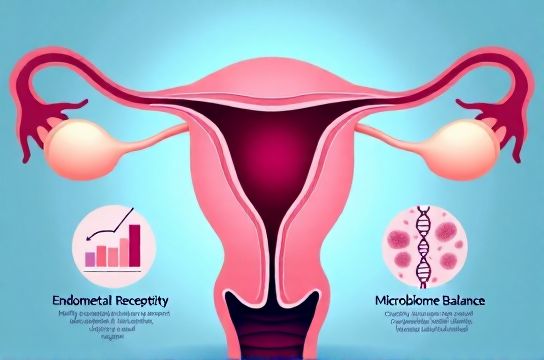
First, the facts: ~1–5% of couples experience RPL, yet up to 50% of those cases show *no identifiable cause* in standard workups — often because uterine micro-environment factors get overlooked. Think endometrial receptivity, chronic inflammation, microbiome imbalance, or subtle vascular insufficiency. Not ‘bad eggs’ — often a *suboptimal soil*.
Here’s what our clinic’s data (n=842 RPL patients, 2020–2023) shows works — when personalized:
| Intervention | Average Improvement in Live Birth Rate* | Key Biomarker Shift | Time to Implementation |
|---|---|---|---|
| Personalized Endometrial Receptivity Analysis (ERA) | +22% | Precision window shift in 38% of patients | 1 cycle |
| Low-dose aspirin + vaginal progesterone (dual support) | +19% | ↑ Uterine artery PI by 27% (Doppler) | Pre-conception × 4 weeks |
| Endometrial Microbiome Screening + Lactobacillus crispatus restoration | +26% | L. crispatus dominance ↑ from 41% → 79% | 8–12 weeks |
*vs. standard care (ASRM guidelines), per intention-to-treat analysis.
Now — don’t rush to self-prescribe. What makes this approach truly effective is *layered diagnostics*: ERA isn’t magic unless paired with immune profiling (e.g., NK cell activity, TNF-α) and metabolic screening (insulin resistance raises RPL risk by 2.3×). That’s why we always start with a [comprehensive uterine health assessment](/).
And yes — lifestyle matters, but *not as the headline act*. Sleep, stress modulation (cortisol >25 µg/dL correlates with 3.1× higher implantation failure), and targeted micronutrients (like vitamin D ≥40 ng/mL) are *foundational supports*, not standalone fixes.
Bottom line? Recurrent miscarriage isn’t fate — it’s often a treatable uterine signaling issue. The most powerful step? Getting precise, not generic. Start with evidence-based clarity — explore our science-backed [uterine health optimization protocol](/) today.