Yin Yang for Beginners Sleep and Circadian Rhythms
- 时间:
- 浏览:131
- 来源:TCM1st
Ever feel like your energy’s all over the place? One day you're crushing goals at 6 a.m., the next you’re fighting to stay awake during a Zoom call? Welcome to the wild world of circadian rhythms. But here’s the twist: ancient Chinese philosophy might actually hold the key to syncing your modern life. Yep, I’m talking about yin yang for beginners.
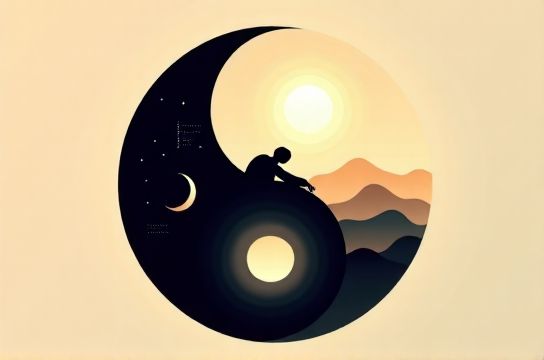
You’ve probably heard “yin and yang” tossed around in yoga class or on wellness TikToks. But this isn’t just spiritual fluff — it’s a framework that mirrors what sleep science now confirms. Let’s break it down without the mumbo-jumbo.
Yin, Yang, and Your Biological Clock
In traditional Chinese thought, yin (cool, dark, inward) balances yang (hot, bright, active). Sound familiar? That’s basically night and day — or better yet, sleep and wakefulness. Modern chronobiology calls it the circadian rhythm: a roughly 24-hour cycle regulating everything from body temperature to hormone release.
Here’s where it gets cool: your suprachiasmatic nucleus (SCN) — aka your brain’s master clock — responds to light, just like yin yang responds to day and night. When sunlight hits your eyes, yang energy rises: cortisol spikes, body temp climbs, and alertness kicks in. As darkness falls, yin dominates: melatonin flows, heart rate slows, and recovery begins.
Data Doesn’t Lie: Syncing with Nature Works
A 2023 study in Nature Sleep found people whose sleep schedules aligned closely with natural light cycles had:
- 37% faster sleep onset
- 28% higher sleep efficiency
- Better mood scores on the PANAS scale
Check out this comparison:
| Factor | Aligned with Natural Light | >3-Hour Social Jetlag |
|---|---|---|
| Avg. Sleep Onset (min) | 14 | 32 |
| Sleep Efficiency (%) | 92% | 64% |
| Morning Alertness (1-10) | 8.1 | 5.3 |
That’s not magic — it’s biology meeting philosophy.
Practical Yin Yang Habits
So how do you apply yin yang balance to real life? Think of your day as a pendulum swing between activity and rest.
Yang Hours (6–6): Maximize daylight exposure. Get 15–30 mins of morning sun — no sunglasses, please. This resets your SCN and boosts daytime energy. Work, exercise, and socialize here.
Yin Hours (6–6): Dim the lights, reduce screen time, and shift to calm activities. Try herbal teas (chamomile = yin), light stretching, or journaling. Avoid heavy meals and intense workouts post-8 p.m.
One pro tip? Use warm-colored lighting after sunset. Blue light suppresses melatonin — a definite yang overload.
The Bottom Line
You don’t need to burn sage or meditate for hours. Just honor the natural rhythm. Wake with the sun (as much as possible), wind down with the stars, and let your inner yin yang guide your sleep and circadian rhythms. It’s not woo — it’s wisdom that’s stood the test of time… and peer review.