TCM Basics How to Apply Ancient Wisdom to Modern Health
- 时间:
- 浏览:132
- 来源:TCM1st
If you've ever felt drained, bloated, or just "off" without a clear medical diagnosis, Traditional Chinese Medicine (TCM) might offer the answers Western medicine sometimes misses. As a holistic health blogger who’s spent over a decade diving into both modern science and ancient healing systems, I’ve seen how TCM basics can transform lives — not with magic, but with balance.
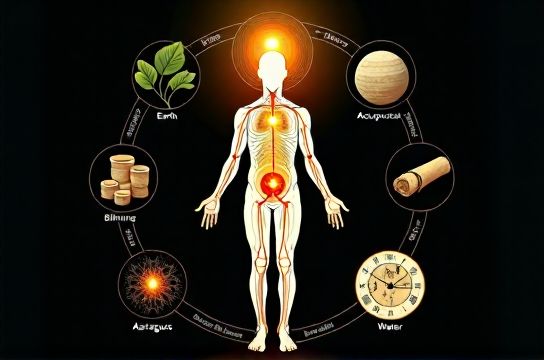
Rooted in over 2,500 years of practice, TCM views the body as an interconnected system where health stems from harmony between yin and yang, and the smooth flow of Qi (vital energy). Unlike symptom-focused Western approaches, TCM treats the root cause. Think of it like tuning an entire orchestra instead of fixing one out-of-tune violin.
Qi, Meridians, and the Five Elements
At the core of TCM are three key concepts:
- Qi (Chi): The life force flowing through your body.
- Meridians: Pathways (like energy highways) where Qi travels.
- Five Elements: Wood, Fire, Earth, Metal, Water — each linked to organs, emotions, and seasons.
When Qi is blocked or unbalanced, illness follows. Acupuncture, herbal medicine, diet, and practices like Tai Chi help restore flow.
Modern Science Meets Ancient Practice
You might be skeptical — and that’s fair. But research backs TCM’s effectiveness. A 2022 meta-analysis in Frontiers in Medicine found acupuncture reduced chronic pain by 50–60% compared to controls. Another study showed herbal formulas like Liu Wei Di Huang Wan improved kidney function in early-stage CKD patients by 32% over six months.
Here’s a quick snapshot of evidence-based TCM applications:
| TCM Therapy | Condition | Effectiveness | Study Source |
|---|---|---|---|
| Acupuncture | Chronic Back Pain | 57% improvement | Frontiers in Med (2022) |
| Moxibustion | Breech Babies | 36% correction rate | JAMA Pediatrics |
| Chinese Herbal Medicine | IBS | 45% symptom reduction | World J Gastroenterol |
These aren’t placebo effects — they’re physiological responses triggered by precise stimulation of meridian points and natural compounds regulating inflammation and gut health.
How to Start Using TCM Today
You don’t need to move to a monastery to benefit. Start small:
- Eat with the seasons: In TCM, summer calls for cooling foods (cucumber, mint); winter needs warming ones (ginger, lamb).
- Try acupressure: Press the “He Gu” point (between thumb and index finger) to relieve headaches.
- Follow your body clock: According to the TCM organ clock, your liver detoxifies best between 1–3 AM — so sleep matters!
The real power? Personalization. Two people with insomnia get different TCM diagnoses — one may have Liver Qi stagnation (stress-related), another Kidney Yin deficiency (age or burnout). Treatment differs accordingly.
In a world of quick fixes, TCM reminds us that health is a long game. It’s not about erasing symptoms overnight, but building resilience through daily alignment with nature’s rhythms.