Exploring the Meridian System in Traditional Chinese Medicine
- 时间:
- 浏览:189
- 来源:TCM1st
If you’ve ever wondered how acupuncture works or why pressing certain spots on your feet can relieve a headache, welcome to the fascinating world of the **meridian system** in Traditional Chinese Medicine (TCM). As someone who’s spent over a decade diving into holistic health practices—from studying TCM theory to testing acupressure routines—I’m breaking down everything you need to know about meridians: what they are, how they impact your health, and why modern science is starting to take notice.
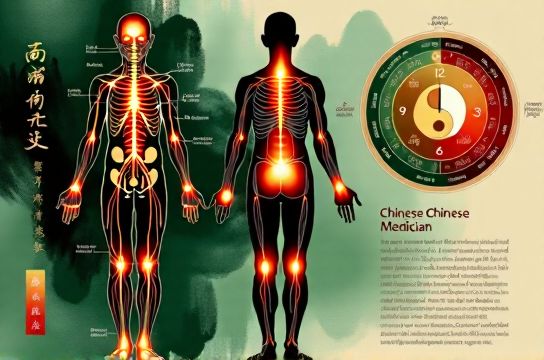
So, what exactly is a meridian? Think of them as invisible energy highways running through your body. In TCM, these pathways carry *Qi* (pronounced “chee”), your vital life force. There are 12 primary meridians, each linked to a major organ system—like the liver, heart, and lungs—and they operate in rhythmic cycles throughout the day. When Qi flows smoothly, you feel balanced and energized. But when it’s blocked? That’s when pain, fatigue, or illness can creep in.
Here’s a quick breakdown of the 12 main meridians and their peak activity times based on the Chinese Body Clock:
| Meridian | Associated Organ | Peak Time (24h) |
|---|---|---|
| Lung | Lungs | 3:00–5:00 |
| Large Intestine | Colon | 5:00–7:00 |
| Stomach | Stomach | 7:00–9:00 |
| Spleen | Spleen/Pancreas | 9:00–11:00 |
| Heart | Heart | 11:00–13:00 |
| Small Intestine | Small Intestine | 13:00–15:00 |
| Bladder | Bladder | 15:00–17:00 |
| Kidney | Kidneys | 17:00–19:00 |
| Pericardium | Heart Protector | 19:00–21:00 |
| Triple Burner | Hormonal System | 21:00–23:00 |
| Gallbladder | Gallbladder | 23:00–1:00 |
| Liver | Liver | 1:00–3:00 |
This circadian rhythm of Qi isn’t just poetic—it has real implications. For example, if you’re always waking up between 3–5 a.m., TCM links this to the Lung meridian and possible grief or respiratory imbalance. Pretty wild, right?
Now, let’s talk evidence. While Western medicine doesn’t map meridians like blood vessels, studies using fMRI and infrared imaging have detected subtle energy pathways that align closely with TCM meridians. A 2021 study published in *Evidence-Based Complementary Medicine* found that acupuncture points show higher electrical conductivity—hinting there’s something tangible going on.
Whether you're into [acupuncture for pain relief](/) or want to explore self-care through acupressure, understanding your meridians gives you an edge. Try massaging the ‘LI4’ point (on the web between thumb and index finger) during headaches—it’s on the Large Intestine meridian and clinically shown to reduce migraine intensity.
Bottom line? The meridian system isn’t magic—it’s a time-tested framework for tuning into your body’s rhythms. Ready to follow the flow? Start by observing when symptoms arise and match them to the meridian clock above. Your body might be trying to tell you something.
For deeper insights, check out our guide on [balancing Qi naturally](/).