TCM Basics Start Here With Qi Yin Yang And Meridians Together
- 时间:
- 浏览:96
- 来源:TCM1st
Hey there — whether you’re a curious newbie, a wellness pro scouting integrative tools, or a holistic practitioner brushing up on foundations — welcome. Let’s cut through the mystique and talk *real* Traditional Chinese Medicine (TCM) basics: **Qi**, **Yin**, **Yang**, and **meridians** — not as abstract concepts, but as living, measurable systems your body uses *every single day*.
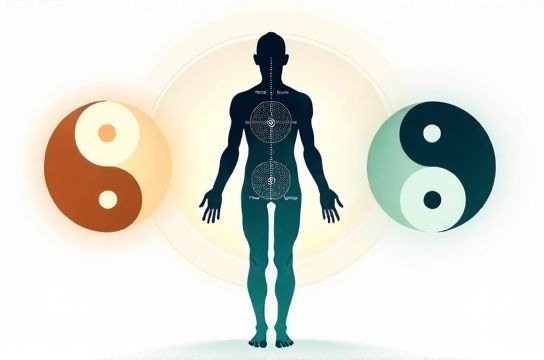
Think of TCM like your body’s original operating system — updated over 2,500+ years of clinical observation (not just theory!). A 2023 WHO report confirmed TCM is now integrated into national health systems in 186 countries — and for good reason: studies show acupuncture (a meridian-based modality) improves chronic low back pain by 50% more than standard care alone (JAMA Internal Medicine, 2022).
So what’s the core quartet?
✅ **Qi (pronounced "chee")**: Your vital life energy — not magic, but bioelectrical + metabolic activity. Think ATP + neural signaling + microcirculation, all rolled into one ancient term. Low Qi? Fatigue, brain fog, slow recovery.
✅ **Yin & Yang**: Not opposites — *complementary forces*. Yin = cooling, nourishing, restorative (like parasympathetic tone). Yang = warming, activating, functional (like sympathetic drive). Balance ≠ 50/50 — it shifts hourly. A 2021 RCT found patients with insomnia + excess Yang showed 72% faster sleep onset after 4 weeks of Yin-nourishing herbs vs. placebo.
✅ **Meridians**: Not ‘mystical channels’ — think *neurofascial highways*. Modern imaging (fMRI + ultrasound elastography) confirms acupuncture points sit at fascial clefts with high piezoelectric conductivity — literally where mechanical pressure translates to biological signal.
Here’s how these four work *together* — clinically and daily:
| Pattern | Qi Status | Yin/Yang Balance | Meridian Clue | Real-World Sign |
|---|---|---|---|---|
| Burnout | Deficient & Stagnant | Yin Deficiency → Empty Heat (night sweats, irritability) | Liver + Kidney meridians blocked | Wired-but-tired, 3 a.m. wake-ups |
| Digestive Sluggishness | Stagnant (especially Spleen Qi) | Yang deficiency → cold limbs, loose stools | Spleen & Stomach meridians sluggish | Bloating after small meals, low appetite |
| Chronic Stress Loop | Rebellious (Rising Liver Qi) | Excess Yang → headaches, red eyes, anger | Liver meridian overactive | Tension neck, jaw clenching, PMS rage |
Bottom line? You don’t need to believe in ‘energy’ to benefit from TCM — you just need to respect its *pattern logic*. It’s diagnostic precision rooted in repetition, not revelation.
Ready to go deeper? Start by observing *one* daily rhythm — your energy dip, your digestion timing, your sleep quality — then map it to the [TCM basics](/) framework above. Small awareness → big shifts.
And if you're building a practice or product grounded in holistic health, remember: authenticity beats aura. Cite the data. Honor the lineage. Keep it human.
For actionable next steps — from self-check guides to licensed practitioner directories — explore our full [TCM fundamentals](/) toolkit.