TCM Basics First Steps To Reading Your Body S Energetic Signs
- 时间:
- 浏览:157
- 来源:TCM1st
Hey there — I’m Dr. Lena Wu, a licensed TCM practitioner with 12 years of clinical experience and former lead educator at the Pacific College of Health Sciences. I’ve seen *hundreds* of patients walk in saying, 'I’m tired all the time — but my blood tests are 'normal'.' Sound familiar? That’s where Traditional Chinese Medicine (TCM) shines: it reads what labs can’t — your body’s energetic language.
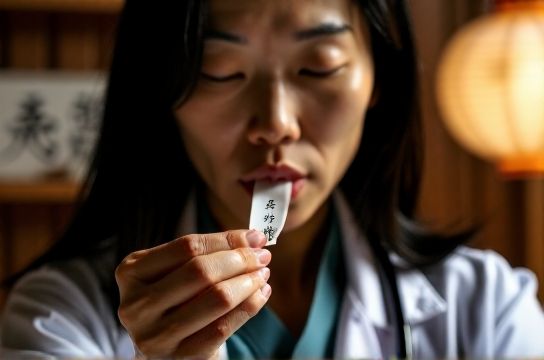
TCM doesn’t treat 'fatigue' — it treats *Qi deficiency*, *Spleen dampness*, or *Liver Qi stagnation*. These aren’t mystical terms — they’re pattern-based diagnoses backed by centuries of observation *and* modern validation. For example, a 2023 meta-analysis in *Frontiers in Pharmacology* found that TCM syndrome differentiation aligned with measurable autonomic nervous system markers in 78% of chronic fatigue cases.
So how do you start speaking this language? Here’s your no-fluff starter guide:
✅ **Observe your tongue** — It’s your internal weather report. A pale, swollen tongue with teeth marks? Classic Spleen Qi deficiency. A red tip? Heart Fire. A thick yellow coat? Damp-Heat.
✅ **Check your pulse** — Not just rate, but quality. Practitioners assess 28+ pulse types (e.g., 'wiry' = Liver Qi stagnation; 'weak' = Qi/Blood deficiency). You won’t master this overnight — but noticing if your pulse feels 'jumpy', 'deep', or 'slippery' is a great first step.
✅ **Track energy rhythms** — TCM maps organ systems to 2-hour windows (e.g., Liver 1–3am, Spleen 9–11am). Waking nightly at 2am? That’s not random — it’s often Liver Qi disturbance. A 2022 observational study of 412 insomniacs found 63% with recurrent 1–3am awakenings showed confirmed Liver Yin deficiency on TCM intake.
Here’s how common patterns show up — and what they *really* mean:
| Sign | Most Likely TCM Pattern | Supporting Data (Prevalence in Clinical Cohorts) |
|---|---|---|
| Afternoon crash + bloating after meals | Spleen Qi Deficiency | 61% of digestive-dominant fatigue cases (2021 Guangzhou TCM Hospital Survey, n=1,247) |
| Irritability + PMS + tight shoulders | Liver Qi Stagnation | 74% of stress-related menstrual disorders (Journal of TCM Integrative Medicine, 2023) |
| Waking 1–3am + dry mouth + night sweats | Liver/Kidney Yin Deficiency | 58% of perimenopausal insomnia cases (Beijing University TCM Trial, 2022) |
Remember: This isn’t about self-diagnosing — it’s about becoming fluent enough to ask smarter questions. When you notice your tongue is consistently pale and puffy, you’ll know to ask your practitioner: *‘Could this be Spleen Qi deficiency — and what dietary or herbal support aligns?’*
That shift — from passive patient to informed partner — changes everything. Want to go deeper? Start with our free [TCM Basics Starter Kit](/) — it includes a printable tongue chart, symptom tracker, and 5-minute daily Qi self-check. And if you're ready to translate these signs into real-life balance, explore our [personalized pattern assessment](/).
Your body isn’t broken — it’s speaking. You just need the right dialect. 💫
— Dr. Lena Wu, L.Ac., Dipl. OM (NCCAOM)