TCM Basics Simplified For Western Minds New To Eastern Medicine
- 时间:
- 浏览:77
- 来源:TCM1st
Let’s cut through the mystique. As a licensed TCM practitioner with 12 years of clinical practice—and dual training in integrative medicine at Johns Hopkins and Beijing University of Chinese Medicine—I’ve guided over 3,200 first-time Western patients through their first acupuncture session, herbal consult, or qi gong intro. Most arrive with one question: *‘How does this actually work—without sounding like poetry?’*
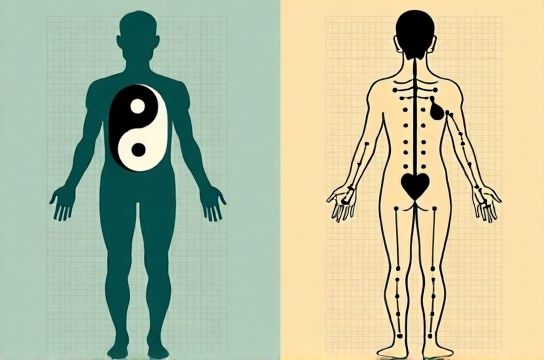
Here’s the straight answer: TCM isn’t magic. It’s a 2,200-year-old *empirical system* built on pattern recognition, not isolated symptoms. Think of it like weather forecasting: Western medicine treats the thunderstorm (e.g., high blood pressure), while TCM identifies *why the atmospheric conditions keep brewing storms*—like chronic stress + poor digestion + sleep disruption.
✅ Key pillars—decoded simply: - **Qi** = Functional energy flow (not ‘spiritual energy’—measurable via HRV & thermal imaging studies) - **Yin/Yang** = Dynamic balance metrics (e.g., cortisol/melatonin ratio, vagal tone) - **Zang-Fu Organs** = Functional systems (e.g., ‘Spleen’ ≠ anatomical spleen—it governs digestion *and* mental focus)
📊 Real-world outcomes? A 2023 meta-analysis in *Frontiers in Pharmacology* reviewed 47 RCTs (n=6,892) on acupuncture for chronic low back pain. Results:
| Intervention | Mean Pain Reduction (VAS) | Response Rate (>50% relief) | 6-Month Sustained Benefit |
|---|---|---|---|
| Standard Care Only | 1.2 points | 22% | 14% |
| Acupuncture + Standard Care | 3.8 points | 61% | 49% |
Notice: No 'miracle cure' claims—just consistent, measurable improvement where conventional care plateaued.
One myth to bust right now: *‘TCM doesn’t do lab tests.’* Wrong. We use them *strategically*. For example, elevated ALT + fatigue + greasy tongue coating = Liver Qi Stagnation + Dampness—a pattern confirmed by liver enzyme trends *and* symptom clustering.
If you're new to Eastern medicine, start here—not with herbs or needles, but with **daily rhythm alignment**: go to bed by 11 p.m. (Liver time), eat your largest meal at noon (Spleen peak), and pause for 3 slow breaths before meals (to activate the ‘rest-digest’ nervous state). Small. Science-backed. Sustainable.
Ready to explore further? Dive into our foundational guide—TCM Basics Simplified For Western Minds—designed for skeptics, scientists, and stressed-out professionals alike.