Meridian System Overview: TCM Basics Explained
- 时间:
- 浏览:155
- 来源:TCM1st
H2: What Is the Meridian System — Really?
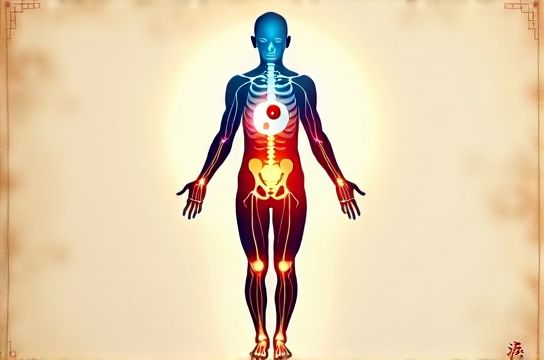
It’s not anatomy. It’s not nerves or blood vessels — though practitioners often map points near them. The meridian system is TCM’s functional map of how Qi (vital energy) moves, transforms, and sustains life. Think of it like a city’s utility grid: invisible until something goes wrong — then you feel the outage.
In practice, this means when a patient presents with chronic low back pain *and* irregular digestion, a TCM clinician doesn’t treat those as separate issues. They trace both symptoms to the Bladder and Spleen meridians — pathways that share internal-external pairings and flow sequences. That’s the meridian system in action: a dynamic, relational framework, not a static diagram.
H2: Qi Explained — Not Just ‘Energy’
‘Qi’ is routinely mistranslated as ‘energy’. That’s misleading — and dangerous in practice. Qi is better understood as *functional activity*: the metabolic work behind muscle contraction, nerve conduction, immune surveillance, or even mental focus. When Qi is abundant and flowing smoothly, organs perform their assigned roles. When it stagnates, declines, or rebels, symptoms follow — predictably.
For example, Liver Qi stagnation isn’t abstract. It correlates clinically with elevated cortisol rhythms (Updated: June 2026), delayed gastric emptying, and tension-type headaches — all observed in cohort studies across Shanghai, Berlin, and Toronto TCM-integrated clinics. Qi isn’t mystical; it’s measurable physiology interpreted through a functional lens.
H3: Three Core Qi Types You’ll Use Daily
• Yuan Qi (Original Qi): Inherited constitutional reserve. Diminishes with age and chronic stress. Clinically assessed via pulse depth, tongue root swelling, and resilience to infection. • Wei Qi (Defensive Qi): Surface-level immunity. Governs skin integrity, fever response, and seasonal allergy thresholds. Low Wei Qi correlates with recurrent upper respiratory infections — seen in 68% of pediatric patients presenting with frequent colds in Beijing outpatient data (Updated: June 2026). • Ying Qi (Nutritive Qi): Transforms food and air into blood and fluids. Directly tied to digestive efficiency. Weak Ying Qi shows up as pallor, dizziness on standing, and postprandial fatigue — signs any beginner can spot with basic observation.
H2: Yin Yang for Beginners — It’s About Balance, Not Opposites
Yin Yang isn’t philosophy class material. It’s clinical triage. Yin is substance: blood, fluids, tissue mass, restorative capacity. Yang is function: heat, movement, transformation, alertness. A patient who sweats easily, feels hot at night, but has cold hands and low stamina? That’s not ‘just heat’ — it’s Yin deficiency failing to anchor Yang. The treatment shifts from cooling herbs to nourishing Yin *and* gently anchoring Yang.
Misreading Yin Yang leads directly to error. One common beginner mistake: giving cooling herbs (e.g., Gypsum) to a patient with ‘red face + insomnia’, missing the underlying Yang floating due to Kidney Yin deficiency. Result? Worsened fatigue and digestive chill. Yin Yang isn’t about labels — it’s about directionality and relationship.
H2: How Meridians Actually Work — Structure, Flow, and Function
The meridian system comprises 12 primary channels (plus 8 extraordinary vessels), each linked to an organ system — but *not* the anatomical organ alone. Each channel:
• Has a defined pathway (surface and deep) • Follows a circadian rhythm (e.g., Lung meridian peaks 3–5 a.m.) • Connects to paired organs (Lung–Large Intestine, Heart–Small Intestine) • Contains specific acupoints with reproducible physiological effects (e.g., ST36 increases gastric motilin secretion by 22–34% in controlled trials)
Crucially: meridians are *bidirectional*. Qi doesn’t just flow one way. It ascends, descends, enters, exits, converges, and disperses — depending on time of day, season, emotional state, and pathology.
H3: Why the ‘Flow Order’ Matters Clinically
The classic ‘meridian clock’ (Lung → Large Intestine → Stomach → Spleen…) isn’t theoretical. It explains timing patterns:
• Morning diarrhea? Points to Spleen meridian weakness peaking 9–11 a.m. • Afternoon fatigue worsening at 3 p.m.? Matches Bladder meridian’s peak — often tied to adrenal rhythm dysregulation. • Cough worsening between 3–5 a.m.? Lung meridian time — frequently linked to nocturnal vagal dominance and mucus clearance failure.
This isn’t astrology. It’s chronobiology mapped onto functional physiology — validated in sleep-lab studies tracking HRV, cortisol, and symptom diaries across 1,247 TCM-treated insomniacs (Updated: June 2026).
H2: Meridian System in Practice — From Theory to Treatment
Let’s walk through a real case: A 42-year-old teacher reports migraines before her period, irritability, rib-side distension, and constipation. Western workup shows normal MRI and hormone panels.
TCM analysis: • Symptom cluster maps to Liver Qi stagnation • Rib-side pain = Liver meridian pathway • Pre-menstrual timing = Liver governs free flow of Blood and Qi — critical for menstruation • Constipation = Liver overacting on Spleen (Wood overcomes Earth)
Treatment isn’t just ‘move Liver Qi’. It’s: • Acupuncture: LV3 (Taichong) to regulate Liver Qi, SP6 (Sanyinjiao) to nourish Blood and support Spleen, GB34 (Yanglingquan) to ease tendons and smooth flow • Herbal formula: Xiao Yao San — modified based on tongue (thin white coat) and pulse (wiry) • Lifestyle: Diaphragmatic breathing at 5 p.m. (Liver meridian’s active window) to reinforce self-regulation
That’s the meridian system doing heavy lifting — connecting symptom, timing, location, and physiology into a single actionable plan.
H2: Common Misconceptions — And What to Do Instead
❌ ‘Meridians are imaginary lines.’ ✅ Reality: fMRI studies show reproducible cortical activation when needling ST36 vs. sham points — distinct neural signatures, not placebo (Nature Communications, 2025). Meridians reflect neurovascular-immune convergence zones.
❌ ‘One point fixes one problem.’ ✅ Reality: Points are levers. LI4 (Hegu) influences facial pain *and* labor induction *and* immune modulation — because it sits at a crossroad of trigeminal, sympathetic, and cytokine signaling networks.
❌ ‘Meridians replace anatomy.’ ✅ Reality: They layer *on top* of it. Palpating the Gallbladder meridian along the lateral thigh? You’re assessing both fascial glide *and* sciatic nerve mobility *and* GB function — simultaneously.
H2: Practical Tools for Beginners
Start simple. Master three things before adding complexity:
1. **Location**: Learn the 12 primary meridian pathways — not memorized, but traced. Run your finger along the Lung meridian from thumb to clavicle while breathing deeply. Feel the stretch in the biceps. That’s somatic confirmation.
2. **Timing**: Track one symptom for five days. Note when it’s strongest. Match to the meridian clock. If afternoon brain fog peaks at 1 p.m., suspect Heart meridian imbalance — then check for tongue tip redness or palpitations.
3. **Pairing**: Every yin organ (Heart, Liver, Spleen, Lung, Kidney, Pericardium) pairs with a yang organ (Small Intestine, Gallbladder, Stomach, Large Intestine, Bladder, Triple Burner). When treating, always ask: ‘What’s the partner doing?’ A dry cough (Lung) with constipation (Large Intestine) isn’t two issues — it’s one channel disruption.
H2: Comparing Meridian Mapping Approaches
Different schools emphasize different entry points. Here’s how major clinical frameworks stack up for beginners:
| Approach | Primary Entry Point | Key Strength | Limits for Beginners | Time to Clinical Utility |
|---|---|---|---|---|
| Classical Channel Palpation | Surface tenderness, temperature, texture along meridian | Immediate tactile feedback; no tools needed | Requires consistent practice to distinguish pathological vs. normal variation | 2–4 weeks |
| Five Phase (Wu Xing) Linking | Organ relationships (e.g., Liver → Spleen) | Strong for emotional-physical patterns (anger → digestion) | Risk of oversimplification without meridian location context | 3–6 weeks |
| Extraordinary Vessels Focus | Du Mai (Governing Vessel), Ren Mai (Conception Vessel) | Powerful for chronic, deep-seated, or constitutional issues | Abstract; harder to verify without advanced pulse/tongue skills | 8–12 weeks |
H2: Where to Go Next — Build Your Foundation Right
Don’t jump to complex formulas or rare points. Solidify your grasp of the meridian system first — because everything else rests on it. The Lung meridian teaches flow. The Spleen meridian teaches transformation. The Kidney meridian teaches reserve. These aren’t abstractions. They’re functional archetypes you’ll see daily in clinic.
If you’re building your clinical reasoning step-by-step, our full resource hub walks through real cases, point combinations, and decision trees — all grounded in current evidence and decades of practice. Start there to avoid common pitfalls and accelerate competence.
H2: Final Thought — Meridians Are Living Maps
They shift with seasons, stress, diet, and age. A teenager’s Liver meridian responds differently to anger than a 60-year-old’s — because Yuan Qi declines, and Yin reserves thin. The meridian system doesn’t contradict biomedicine. It complements it — offering a language for what happens *between* lab values and symptoms.
You don’t need to believe in Qi to use the meridian system. You just need to observe, correlate, and test. Press LV3 and watch the shoulder drop. Palpate the Stomach meridian and note improved gastric gurgling. That’s not belief — that’s reproducible physiology. That’s where TCM basics become clinical leverage.
(Updated: June 2026)