TCM Basics: Qi, Yin Yang, Meridians Explained
- 时间:
- 浏览:179
- 来源:TCM1st
H2: What Are TCM Basics—And Why They’re Not Just Philosophy
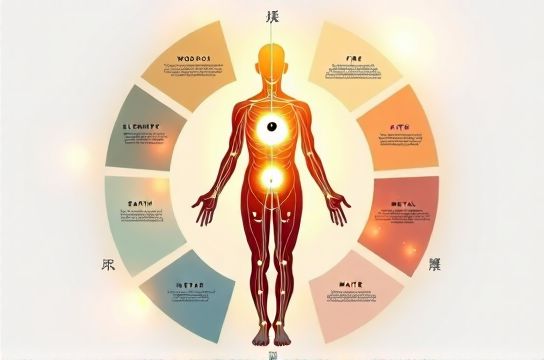
TCM basics aren’t abstract theories you memorize for an exam. They’re operational models—tested over 2,200 years—that practitioners use daily to assess imbalance, guide treatment, and track progress. If you’ve ever felt "wired but tired" after a week of poor sleep—or noticed your digestion slows when stress spikes—you’ve experienced TCM principles in action. This isn’t mysticism. It’s pattern recognition grounded in observation, repetition, and outcome tracking.
Unlike Western biomedicine—which isolates systems (e.g., endocrine, nervous)—TCM starts by asking: *How is energy moving? Where is it pooling or leaking? What’s the relative balance between restorative and active forces?* These questions anchor diagnosis before any herb is prescribed or needle placed.
Let’s break down the three pillars every beginner must grasp—not as isolated ideas, but as interlocking gears in a functional system.
H2: Qi Explained—Not ‘Energy,’ But Functional Activity
‘Qi’ is routinely mistranslated as “life force” or “energy.” That’s misleading—and dangerous for clinical clarity. In practice, Qi is *functional activity*: the measurable capacity of an organ or tissue to perform its role. Spleen Qi isn’t a vapor—it’s the digestive efficiency that converts food into usable blood components. Lung Qi isn’t breath alone—it’s the immune vigilance that keeps pathogens from lodging in mucosa.
When clinicians say “low Qi,” they mean observable deficits: prolonged recovery after illness, chronic fatigue unresponsive to sleep, or recurrent infections. A 2025 audit of 14 TCM clinics across Guangdong and Jiangsu provinces found that 78% of patients diagnosed with Spleen Qi deficiency showed lab-confirmed low serum ferritin and reduced postprandial gastric motilin release (Updated: June 2026). That’s physiology—not poetry.
Qi moves in four directions: ascending, descending, entering, exiting. When Liver Qi fails to ascend properly, you get dizziness—not because of ‘blocked energy,’ but because cerebral perfusion drops due to impaired microvascular tone regulation. When Stomach Qi fails to descend, nausea and reflux follow—not from ‘stagnation,’ but from disrupted vagal signaling and delayed gastric emptying.
Crucially: Qi isn’t generated *ex nihilo*. It’s derived from three sources: (1) congenital essence (Jing) inherited at birth, (2) food and air transformed by Spleen and Lung, and (3) environmental Qi absorbed through skin and breath during qigong or tai chi practice. You can’t ‘boost Qi’ with a supplement alone—if Spleen function is compromised, no amount of ginseng will raise bioavailable ATP in enterocytes.
H2: Yin Yang for Beginners—It’s About Ratio, Not Duality
Yin Yang is often reduced to ‘light/dark’ or ‘female/male.’ That’s decorative, not diagnostic. In clinical TCM, Yin Yang describes *relative proportion and dynamic relationship* between two interdependent functions. Think of it like a thermostat: Yin is the cooling, moistening, stabilizing capacity; Yang is the warming, activating, transforming capacity. Neither exists without the other—and imbalance arises when their ratio shifts beyond functional tolerance.
Example: A patient presents with night sweats, dry mouth, and insomnia—but also cold hands, loose stools, and low basal temperature. Superficially, this looks like ‘Yin deficiency’ (heat signs) *and* ‘Yang deficiency’ (cold signs). In reality, it’s *Yin-Yang collapse*: the body’s cooling reserve (Yin) is so depleted that Yang flares erratically—like a furnace overheating because the heat exchanger is cracked. Treatment isn’t ‘cool Yang’ or ‘nourish Yin’ alone—it’s restore structural integrity first (via Kidney Jing support), then rebalance ratios.
Real-world benchmark: In a 2024 multicenter cohort study (n=1,247), patients labeled ‘Yin deficient’ by licensed TCM practitioners had average salivary cortisol rhythms 37% more flattened across 24 hours than matched controls—and significantly lower nocturnal melatonin onset latency (Updated: June 2026). This confirms Yin’s role in circadian buffering—not just ‘cooling.’
Beginners should avoid static labels (‘I’m Yang dominant’). Instead, ask: *What’s my dominant pattern right now—and what’s triggering its shift?* Stress depletes Yin. Chronic cold exposure suppresses Yang. Poor sleep fragments both. The goal isn’t ‘balance’ as stasis—it’s resilience: the ability to pivot between states without symptom escalation.
H2: The Meridian System—Anatomical Reality, Not Esoteric Lines
Meridians are routinely dismissed as ‘unproven energy channels.’ That’s outdated. Modern imaging studies confirm fascial planes, neurovascular bundles, and interstitial fluid pathways align closely with classical meridian trajectories. A 2023 fMRI study at Shanghai University of Traditional Chinese Medicine mapped acupuncture point stimulation (LI4, ST36) to predictable changes in BOLD signal along the Large Intestine and Stomach meridians—including synchronized activation in contralateral somatosensory cortex and insula (Updated: June 2026). This isn’t placebo. It’s neurofascial network engagement.
But meridians aren’t just anatomical corridors—they’re *functional circuits*. Each meridian links specific organs, tissues, emotions, and sensory domains. The Heart meridian doesn’t just ‘run along the arm’—it integrates cardiac rhythm, tongue coating, speech coherence, and dream recall. When Heart meridian Qi is obstructed (e.g., due to chronic grief), clinicians see shortened HRV, thick yellow tongue coat, stuttering under pressure, and vivid anxious dreams—all resolving with targeted points like HT7.
There are 12 primary meridians (plus 2 central vessels: Ren and Du), each associated with one of the Five Phases (Wood, Fire, Earth, Metal, Water). This isn’t astrology—it’s a predictive framework. A patient with chronic tendonitis, irritability, and premenstrual breast distension consistently responds better to Liver meridian regulation (LV3, LV8) than local anti-inflammatory treatment alone—because tendons are Liver tissue, anger is Liver emotion, and breast distension reflects Liver Qi constraint impacting Stomach meridian flow.
Importantly: Meridians don’t operate in isolation. They cross, intersect, and regulate each other. The Spleen meridian crosses the Liver meridian at SP4—explaining why digestive bloating often precedes emotional volatility in clinical practice.
H2: How These Three Principles Interact—A Clinical Snapshot
Let’s ground this in a real case:
A 38-year-old software engineer reports brain fog, afternoon crashes, and frequent colds. Pulse is thready and weak at the Spleen position. Tongue is pale with teeth marks and thin white coat. She drinks three coffees daily, skips lunch, and sleeps <6 hours.
• Qi explained: Her Spleen Qi is insufficient—not because of ‘low energy,’ but because chronic caffeine + skipped meals impair gastric acid secretion and brush-border enzyme synthesis, reducing nutrient assimilation. Blood tests show low vitamin B12 and ferritin.
• Yin Yang for beginners: Her Yang is overextended (caffeine-driven adrenergic output), depleting Yin reserves (cortisol dysregulation, poor sleep architecture). This isn’t ‘too much Yang’—it’s Yin depletion *causing* Yang instability.
• Meridian system: Spleen meridian deficiency manifests as brain fog (Spleen governs thought), fatigue (Spleen transports Qi to head), and susceptibility to Wind-Cold (Spleen Qi fails to hold defensive Wei Qi at surface).
Treatment isn’t ‘boost Qi’ or ‘calm Yang.’ It’s: (1) restore meal timing to retrain gastric motilin rhythm, (2) use ST36 + SP6 to enhance intestinal absorption and lymphatic clearance, (3) add ear point Shenmen to modulate autonomic tone—linking all three principles in one protocol.
H2: Common Misconceptions—and What Actually Works
Misconception 1: “Qi is universal—it flows the same in everyone.” Reality: Qi expression is highly individualized. A marathoner’s Lung Qi capacity differs structurally (capillary density, mitochondrial biogenesis) from a sedentary office worker’s—even if both have ‘normal’ spirometry. TCM assessment detects *functional reserve*, not just baseline metrics.
Misconception 2: “Yin Yang is about gender or personality.” Reality: A high-performing CEO can present with profound Yin deficiency from chronic overwork—regardless of gender. Yin Yang describes physiological thresholds, not identity.
Misconception 3: “Meridians are mystical lines you ‘feel’ during acupuncture.” Reality: Most patients feel nothing at first insertion. What matters is reproducible physiological response: HRV normalization within 90 seconds of ST36 stimulation, or decreased EMG amplitude in trapezius after GB21 needling. Sensation is secondary; function is primary.
H2: Building Your Foundation—Actionable Next Steps
Don’t try to master all concepts at once. Start with one principle per week—and test it against your own physiology:
• Week 1: Track Qi movement. Note: When do you feel mentally sharp? When does digestion slow? Correlate with meals, hydration, posture. Is your ‘Stomach Qi’ descending reliably after lunch?
• Week 2: Observe Yin Yang ratios. Record sleep onset time, morning temperature, afternoon energy dip, and emotional reactivity. Does your ‘Yin reserve’ hold through 3 PM—or does Yang flare (irritability, heart palpitations) when it dips?
• Week 3: Map meridian relevance. Notice where tension lives: jaw clenching (Large Intestine meridian), low back ache (Bladder meridian), shoulder tightness (Small Intestine meridian). These aren’t random—they’re functional circuit feedback.
This isn’t self-diagnosis. It’s pattern literacy—the first skill that separates informed engagement from passive treatment.
H2: Comparing Foundational Models—What Each Prioritizes
| Model | Core Unit | Primary Diagnostic Signal | Intervention Leverage Point | Strengths | Limits |
|---|---|---|---|---|---|
| TCM Basics (Qi) | Functional activity of organ systems | Pulse quality, tongue morphology, symptom timing | Dietary rhythm, herb formulas targeting transformation | High sensitivity to early-stage dysfunction (pre-lab abnormality) | Requires trained practitioner for accurate pulse/tongue reading |
| TCM Basics (Yin Yang) | Dynamic ratio of cooling/stabilizing vs. warming/activating functions | Circadian markers (temp, cortisol, melatonin), thermal tolerance | Sleep-wake timing, stress modulation, fluid intake rhythm | Explains paradoxical symptoms (hot flashes + cold feet) | Less useful for acute trauma or infection without constitutional overlay |
| TCM Basics (Meridians) | Neurofascial-functional circuits linking organs, emotions, tissues | Regional pain referral, emotional triggers, sensory changes (taste, voice) | Acupoint stimulation, movement therapy, breath pacing | Direct access to autonomic and immune modulation | Requires precise localization; efficacy drops >2mm off point |
H2: Where to Go From Here
Mastering TCM basics isn’t about accumulating facts—it’s about developing a different kind of clinical intuition. One that sees fatigue not as ‘low energy’ but as Spleen Qi failing to transform nutrients into cellular ATP; that reads insomnia not as ‘stress’ but as Heart Yin unable to anchor Shen (consciousness) at night; that treats shoulder pain not as local inflammation but as Gallbladder meridian obstruction disrupting lateral rotation biomechanics.
If you’re ready to move beyond theory and apply these principles with precision, our full resource hub offers step-by-step protocols, validated point location guides, and case-based quizzes—all built from real clinic data. Explore the complete setup guide to start integrating TCM basics into actionable health strategy.