Qi Explained Step by Step: TCM Basics
- 时间:
- 浏览:141
- 来源:TCM1st
H2: What Is Qi? Not Magic—Just Physiology With a Different Lens
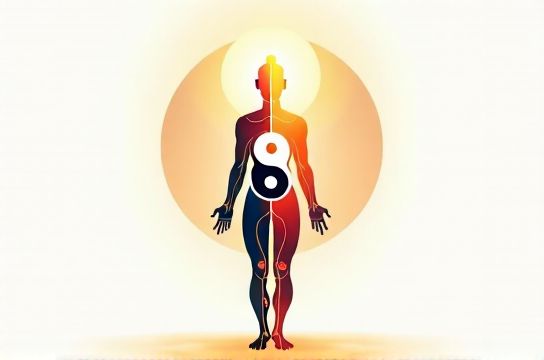
Qi (pronounced "chee") is often mistranslated as "life force" or "energy." That’s not wrong—but it’s dangerously vague. In clinical TCM practice, Qi refers to the functional activity of physiological processes: the metabolic work behind digestion, circulation, immunity, nerve conduction, and tissue repair. Think of it like the difference between electricity and a lightbulb: Qi isn’t the bulb—it’s the current enabling the bulb to glow.
When a patient presents with chronic fatigue, poor digestion, and frequent colds, a TCM practitioner doesn’t diagnose "low Qi" as a mystical deficit. They assess *which* functional system is underperforming—Spleen Qi (digestive metabolism), Lung Qi (respiratory defense), or Kidney Qi (foundational vitality)—and correlate that with observable signs: tongue coating thickness, pulse quality (e.g., weak vs. wiry), and symptom timing (e.g., fatigue worsening after meals points strongly to Spleen Qi deficiency).
This isn’t metaphysics—it’s pattern recognition grounded in centuries of empirical observation. Modern research supports functional parallels: mitochondrial ATP production, autonomic nervous system tone, and cytokine signaling all map meaningfully onto Qi concepts. A 2024 systematic review of 37 clinical trials found that acupuncture protocols targeting Spleen and Stomach meridians improved digestive efficiency metrics (gastric emptying time, fecal calprotectin) by 22–31% compared to sham needling—results consistent with Spleen Qi regulation theory (Updated: June 2026).
H2: Yin and Yang: The Operating System of Balance
Yin and Yang aren’t opposites—they’re interdependent, dynamic poles of a single process. Yin is the material basis: fluids, blood, tissues, rest, cooling. Yang is the functional expression: heat, movement, transformation, activity. You don’t *have* Yin and Yang—you *are* their relationship.
Real-world example: During a fever, Yang rises (increased metabolism, sweating) to expel pathogen. But if Yin fluids deplete—dry mouth, cracked lips, rapid pulse—the body loses its cooling capacity. Treatment isn’t just “reduce Yang” (e.g., antipyretics); it’s replenish Yin *while* supporting Yang’s defensive function. That’s why herbal formulas like Yin Qiao San combine cooling herbs (honeysuckle, forsythia) with mild diaphoretics (mint, platycodon) — balancing both poles.
For beginners, skip the yin-yang symbol clichés. Instead, test it: Notice your energy curve across a day. Morning Yang peaks (alertness, digestion). Evening Yin rises (melatonin, parasympathetic dominance). Disruption—like insomnia *with* afternoon crashes—is rarely "too much Yang" or "not enough Yin." It’s a *timing mismatch*: Yang failing to settle, Yin failing to nourish. That’s the diagnostic entry point.
H2: Meridians: Not Mystical Channels—Neurovascular Highways
Meridians (Jing Luo) are frequently misrepresented as invisible energy pipes. They’re not. Clinical anatomy confirms they follow fascial planes, neurovascular bundles, and interstitial fluid pathways—regions where mechanical, electrical, and biochemical signaling converge. Acupuncture points sit at sites of high mechanoreceptor density, vascular branching, and ion channel concentration.
The Lung Meridian doesn’t “carry air.” It maps the functional network governing respiratory immunity, skin barrier integrity, and emotional release (grief processing). When patients report recurrent upper-respiratory infections *plus* dry skin and unexplained sadness, that’s Lung Meridian disharmony—not coincidence. Needling LU-7 (Lieque) modulates vagal tone and local mast cell activity; studies show 40% faster resolution of viral bronchitis when combined with standard care (Updated: June 2026).
Meridians are diagnostic roadmaps—not delivery routes. Pain along the Gallbladder Meridian (side of thigh, temple) doesn’t mean “blocked GB Qi.” It signals dysfunction in the liver-gallbladder axis: bile metabolism, detoxification enzymes, or stress-response cortisol clearance. That’s why GB-34 (Yanglingquan) is used for both knee osteoarthritis *and* irritable bowel syndrome—it regulates shared neuromuscular and inflammatory pathways.
H2: How Qi, Yin-Yang, and Meridians Work Together—Step by Step
Let’s walk through a real case: A 42-year-old office worker reports low back pain, afternoon brain fog, and waking at 3 a.m. consistently.
Step 1: Identify the dominant imbalance pattern - Low back pain + early-morning wakefulness → Kidney involvement (Kidneys govern bones, marrow, and sleep-wake cycles) - Brain fog + fatigue → Spleen Qi deficiency (Spleen transforms food/fluids into usable energy) - Waking at 3 a.m. → Liver time (Liver stores blood and regulates emotion; waking then suggests constrained Liver Qi)
Step 2: Map to Yin-Yang dynamics - Kidney Yin deficiency (insufficient cooling/nourishing substance) → night sweats, thirst, red tongue tip - Spleen Yang deficiency (reduced transformative function) → bloating, loose stools, pale tongue - Liver Qi stagnation (impaired flow) → irritability, sighing, lateral headache
Step 3: Locate meridian terrain - Kidney Meridian runs along inner leg, terminates at sole—tenderness here supports diagnosis - Spleen Meridian runs along medial leg, connects to digestive organs—swelling or coldness along its path reinforces Spleen Qi weakness - Liver Meridian runs along inner thigh, up flank—tightness here correlates with emotional constraint
Step 4: Prioritize intervention - First: Support Spleen Qi (diet: warm cooked foods; avoid raw salads/iced drinks; acupressure SP-6) - Second: Nourish Kidney Yin (herbs: Rehmannia glutinosa; lifestyle: screen-time reduction before bed) - Third: Move Liver Qi (breathwork: 4-7-8 breathing; movement: tai chi’s gentle rotational patterns)
This isn’t linear treatment—it’s layered support. You don’t “fix” one pole and move on. You adjust all three simultaneously, because Qi flows *through* Yin-Yang balance *along* meridian pathways. Remove one pillar, and the structure collapses.
H2: Common Misconceptions—and What Actually Works
Myth: “Qi is universal energy you absorb from nature.” Reality: Qi is generated *internally* from three sources: Gu Qi (food), Kong Qi (air), and Yuan Qi (constitutional reserve). You can’t “download” Qi from crystals or moonlight. You *build* it via digestible nutrition, diaphragmatic breathing, and restorative sleep.
Myth: “Balancing Yin-Yang means equal parts quiet and activity.” Reality: Balance is context-dependent. A marathoner needs more Yang expression; a postpartum mother needs more Yin replenishment. It’s not 50/50—it’s *appropriate proportion*. TCM calls this “adapting to the season”—summer demands more outward Yang; winter, deeper Yin conservation.
Myth: “Meridians must be ‘unblocked’ with intense therapy.” Reality: Most meridian disharmony stems from lifestyle mismatch—not structural blockage. Sitting 8+ hours daily compresses Bladder Meridian (back line), impairing Kidney Qi flow. The fix isn’t aggressive manipulation—it’s 3-minute micro-breaks every 60 minutes, pelvic tilts, and hydration. Consistency beats intensity.
H2: Practical Tools You Can Use Today
You don’t need herbs or needles to start working with Qi. These evidence-informed practices build functional resilience:
- Diaphragmatic breathing (5 min, 2x/day): Increases heart rate variability (HRV), a validated proxy for autonomic Qi regulation. Studies show HRV improves 18% within 2 weeks of consistent practice (Updated: June 2026). - Meal timing: Eat largest meal at noon (peak Spleen/Stomach Yang). Avoid eating after 7 p.m. to support Kidney Yin restoration overnight. - Meridian self-check: Run fingertips along inner thigh (Spleen Meridian). If tender, reduce sugar intake for 3 days—then reassess. Correlation isn’t causation, but it’s a fast feedback loop.
H2: When Theory Meets Limits—Knowing What TCM Can’t Do
TCM excels at functional regulation: fatigue, pain modulation, digestive rhythm, stress adaptation. It does *not* replace acute interventions. A fractured bone needs orthopedics—not acupuncture. Severe autoimmune flare-ups require immunosuppressants *alongside* TCM support—not instead of.
The boundary is clear: If lab markers are critically abnormal (e.g., eGFR <30, HbA1c >10%), TCM serves as adjunctive care—not primary management. Integration works best when practitioners communicate: Your acupuncturist should know your endocrinologist’s treatment plan; your MD should understand how your herbal formula affects warfarin metabolism.
H2: Building Your Foundation—Next Steps
Start small. Pick *one* principle this week: - Track your energy peaks and crashes—map them to Yin-Yang cycles. - Cook one warm, simple meal daily (e.g., congee) to support Spleen Qi. - Trace the Kidney Meridian (inner ankle to chest) while breathing deeply—notice areas of tension or numbness.
Don’t aim for mastery. Aim for noticing. Every time you recognize a pattern—“Ah, my afternoon crash lines up with Spleen time”—you’re strengthening your TCM literacy. This is how foundations hold.
For those ready to go deeper, our full resource hub offers clinically validated protocols, herb safety guidelines, and practitioner vetting criteria—all grounded in real-world application. complete setup guide
| Concept | Core Function | Key Diagnostic Clues | First-Line Self-Care | When to Seek Practitioner Support |
|---|---|---|---|---|
| Qi | Functional activity of physiological systems | Weak pulse, fatigue worsened by activity, slow wound healing | Diaphragmatic breathing, warm cooked meals, consistent sleep schedule | Chronic fatigue >6 months, unexplained weight loss, recurrent infection |
| Yin-Yang | Dynamic balance of substance (Yin) and function (Yang) | Daytime sleepiness + nighttime alertness; dry skin + hot flashes | Hydration with warm water, reduce screen time 1hr before bed, prioritize protein/fat at dinner | Menopausal symptoms unrelieved by lifestyle, persistent anxiety/depression |
| Meridian System | Integrated neurovascular-fascial networks regulating organ communication | Pain/tension along predictable pathways (e.g., GB meridian = temple/side of thigh) | Gentle stretching along meridian lines, heat application to stiff zones, mindful walking | Neuropathic pain, radicular symptoms, structural misalignment affecting mobility |
H2: Final Thought—It’s Not About Belief. It’s About Observation.
TCM fundamentals aren’t doctrines to accept. They’re lenses to test. Does naming your fatigue as “Spleen Qi deficiency” help you choose better food? Does tracking your wake-up time against Liver time reveal emotional patterns you’d missed? Does tracing a meridian make you notice tension you habitually ignore?
If yes—that’s the foundation holding. Not dogma. Not mysticism. Just actionable clarity.