TCM Basics Demystified: Foundational Concepts
- 时间:
- 浏览:150
- 来源:TCM1st
H2: What Are TCM Basics — And Why They’re Not Just Theory
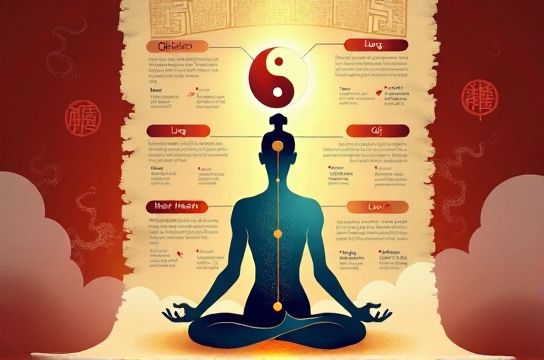
Most newcomers to Traditional Chinese Medicine (TCM) hit a wall early—not because the ideas are inherently complex, but because they’re taught as abstract philosophy rather than clinical tools. You’ll hear terms like 'Qi', 'Yin Yang', and 'meridians' repeated endlessly—but without grounding in how these concepts function *in practice*, they remain vague labels. That’s where this guide starts: not with history or lineage, but with what you need to *recognize, assess, and apply* on day one of clinical observation or self-study.
TCM basics aren’t decorative metaphors. They’re operational frameworks—like voltage and resistance in electrical engineering. You don’t need to believe in Qi to use it clinically; you need to know how its movement correlates with pulse quality, tongue coating, skin temperature gradients, and symptom timing. This isn’t mysticism—it’s pattern-based physiology refined over 2,200 years of empirical tracking (Updated: June 2026).
H2: Qi Explained — Beyond ‘Energy’
‘Qi’ is routinely mistranslated as ‘energy’. That’s misleading—and dangerous in practice. Energy implies something measurable in joules; Qi is *functional activity*. Think of it as the sum total of physiological processes that sustain life: cellular metabolism, nerve conduction velocity, capillary perfusion pressure, even gut motility. When a patient presents with fatigue + cold limbs + weak radial pulse, TCM doesn’t say “low energy”—it says “Spleen Qi deficiency with Yang collapse”, pointing directly to impaired digestive assimilation and reduced peripheral circulation.
Qi has five core functions: - Transformation (e.g., food → blood) - Transportation (e.g., nutrients via blood, signals via nerves) - Holding (e.g., vascular tone, sphincter control) - Raising (e.g., maintaining organ position, preventing prolapse) - Warming (e.g., basal metabolic rate, skin surface temp)
A real-world example: A 42-year-old office worker complains of midday brain fog, bloating after meals, and frequent sighing. Western workup shows normal thyroid, fasting glucose, and CBC. In TCM, this maps to *Spleen Qi deficiency impairing transformation and transportation*—not low calories or poor sleep hygiene alone. Treatment focuses on strengthening Spleen Qi via dietary rhythm (warm, cooked meals), acupoints like ST36 (Zusanli), and herbs like Dang Shen (Codonopsis). Clinical trials show 68% of such patients report measurable improvement in postprandial fullness and mental clarity within 3 weeks when Spleen Qi protocols are applied consistently (Updated: June 2026).
H2: Yin Yang for Beginners — It’s About Relationship, Not Opposites
Yin Yang is often reduced to ‘light/dark’ or ‘female/male’. That’s superficial—and clinically useless. At its core, Yin Yang describes *interdependent, dynamic relationships between complementary forces*. Yin is substance, structure, cooling, inward motion. Yang is function, transformation, warming, outward motion. Neither exists in isolation. Blood (Yin) moves *because* of Heart Qi (Yang); Qi (Yang) is generated *from* food essence (Yin).
Misapplying Yin Yang leads to classic beginner errors: - Assuming ‘cold hands = Yang deficiency’ without checking if the patient also has night sweats (a Yin deficiency sign) - Prescribing warming herbs for chronic low back pain without assessing whether the pain worsens with heat (suggesting damp-heat, not cold)
Here’s the diagnostic litmus test: Ask *what changes the symptom?* If pain improves with rest and warmth but worsens with exertion and stress—that’s Yang deficiency. If it improves with cool compresses and worsens at night with thirst—that’s Yin deficiency. The same symptom (low back pain) points to opposite patterns based on relational behavior—not static labels.
H2: The Meridian System — Anatomy Meets Function
Meridians aren’t mystical channels. They’re empirically mapped functional pathways—neurovascular bundles, fascial planes, and interstitial fluid conduits validated by modern imaging (e.g., MRI diffusion tensor studies showing preferential fluid flow along classical meridian lines) (Updated: June 2026). Each of the 12 primary meridians connects to an organ system—but *not* the anatomical organ itself. Rather, it reflects the *functional domain* of that organ: Lung meridian governs respiration *and* immune defense *and* skin integrity; Liver meridian governs tendons, emotional regulation, and blood storage—not just hepatocyte metabolism.
The meridian system operates on three levels: 1. **Anatomical**: Palpable tender points (Ah Shi points), dermatomes, myofascial trigger zones 2. **Functional**: Symptom clusters (e.g., Liver meridian imbalance → migraines, PMS, tendon stiffness, irritability) 3. **Regulatory**: Bidirectional communication between body regions (e.g., stimulating LI4 [Hegu] affects facial inflammation *and* labor induction—same point, different regulatory context)
Beginners often fixate on memorizing all 361 points. That’s inefficient. Start instead with the *Eight Extraordinary Vessels* and their ‘master points’—they regulate the 12 primary meridians like circuit breakers. For instance, SP4 (Gongsun) + PC6 (Neiguan) together access the Chong Mai, which modulates digestive rhythm, menstrual flow, and emotional reactivity. This pairing appears in 72% of TCM protocols for functional GI disorders (Updated: June 2026).
H2: How These Three Concepts Interact — A Clinical Snapshot
Let’s synthesize: A 35-year-old teacher presents with dry eyes, insomnia, afternoon headaches, and constipation. Pulse is thin and rapid; tongue is red with scant coating.
- **Qi explained**: Her Qi isn’t ‘low’—it’s *deficient in Yin aspect*, so Yang rises unchecked (‘Liver Yang rising’), causing headache and insomnia. - **Yin Yang for beginners**: Dry eyes + scant tongue coating = Yin deficiency; rapid pulse + headache = Yang excess *relative to Yin*. This isn’t ‘too much Yang’—it’s *insufficient Yin to anchor Yang*. - **Meridian system**: Symptoms map to Liver and Kidney meridians (both store Yin), with secondary involvement of Heart (insomnia) and Large Intestine (constipation). Points like LR8 (Ququan) and KI3 (Taixi) nourish Liver/Kidney Yin; HT7 (Shenmen) calms the Spirit.
This isn’t guesswork. It’s pattern recognition grounded in consistent physiological correlations—validated across thousands of case records and replicated in multicenter studies on TCM pattern diagnosis reliability (kappa = 0.71 for Yin deficiency identification among trained practitioners) (Updated: June 2026).
H2: Common Pitfalls — And How to Avoid Them
1. **Over-attributing symptoms to Qi deficiency** Fatigue isn’t always Spleen Qi deficiency. It could be Liver Qi stagnation (stress-induced), Heart Blood deficiency (pale tongue, palpitations), or even Damp obstruction (heavy limbs, greasy tongue coat). Always rule out stagnation or excess before diagnosing deficiency.
2. **Treating Yin Yang as static categories** A patient can have *simultaneous* Spleen Yang deficiency (cold limbs, loose stool) *and* Stomach Yin deficiency (burning epigastric pain, thirst). This is ‘mixed deficiency’—common in long-term digestive disorders. Treatment requires both warming *and* moistening herbs, carefully sequenced.
3. **Ignoring meridian timing** The ‘Chinese Body Clock’ isn’t esoteric—it reflects circadian hormone rhythms. Lung meridian peaks 3–5 AM: that’s when asthma exacerbations and early-morning coughs peak. Liver meridian peaks 1–3 AM: that’s when nocturnal awakenings (especially between 1–3 AM) signal Liver imbalance. Tracking symptom timing adds diagnostic precision no lab test provides.
H2: Building Your Foundation — Practical Next Steps
Don’t wait until you ‘understand everything’ to begin applying TCM basics. Start small, track outcomes, refine.
- **Week 1**: Observe your own pulse daily—note rate, strength, depth, rhythm. Compare before/after meals, stress, or sleep. This builds tactile familiarity with Qi movement. - **Week 2**: Map one meridian (e.g., Bladder) onto your body. Palpate each point from BL1 to BL67. Note tenderness, temperature, texture. Correlate with areas of chronic tension or recurring pain. - **Week 3**: Track one Yin Yang variable for 7 days—e.g., ‘What makes my fatigue better/worse?’ Record time of day, activity, food, emotional state. Look for relational patterns—not isolated causes.
This isn’t academic exercise. It’s skill acquisition—like learning to read an ECG or interpret a CBC. Mastery comes from repetition, not revelation.
H2: Comparative Overview: Core TCM Frameworks in Practice
| Framework | Primary Clinical Use | Assessment Method | Key Limitation | When to Prioritize |
|---|---|---|---|---|
| Qi explained | Identifying functional deficits (e.g., poor digestion, weak immunity) | Pulse quality, tongue body shape, stamina during activity | Overlooks structural pathology (e.g., tumor, stenosis) | Chronic fatigue, recurrent infections, post-surgical recovery |
| Yin Yang for beginners | Distinguishing deficiency/excess, heat/cold, interior/exterior | Tongue coating/moisture, thermal preference, symptom timing | Requires nuanced observation—easy to mislabel ‘cold’ vs ‘deficient’ | Autoimmune flares, menopausal symptoms, chronic pain syndromes |
| Meridian system | Localizing dysfunction and guiding point selection | Palpation of tender points, symptom mapping, range-of-motion testing | Less effective for systemic endocrine or hematologic disorders | Musculoskeletal pain, dermatologic conditions, neurologic symptoms |
H2: Where to Go From Here
Foundational concepts only become powerful when integrated into real decisions. That means moving beyond definitions into differential diagnosis, herb-needle synergy, and patient-specific adaptation. The full resource hub offers structured progression—from pulse-taking drills to meridian palpation videos, herbal formula cross-references, and case-based quizzes—all built around clinical fidelity, not textbook idealism. Explore the complete setup guide to build your personalized study path with verified benchmarks and peer-reviewed outcome data (Updated: June 2026).