Meridian System Basics: How Qi Flows Through Your Body
- 时间:
- 浏览:145
- 来源:TCM1st
H2: What Is the Meridian System — Really?
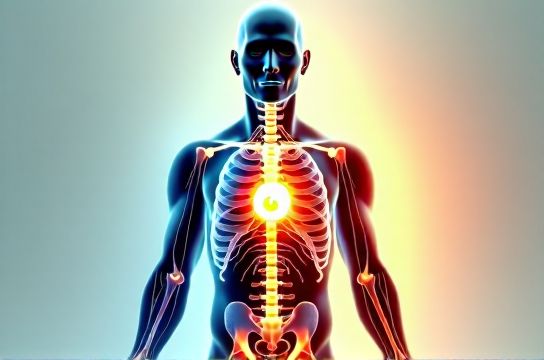
The meridian system isn’t a network of physical tubes you’d see under a microscope. It’s a functional map — refined over 2,500 years of clinical observation — describing how Qi (vital life energy), Blood, and Body Fluids move, transform, and nourish the body. Think of it like air traffic control for physiology: invisible but essential, coordinating timing, direction, and balance across organ systems.
In Traditional Chinese Medicine (TCM), meridians (also called jing-luo) are pathways — not blood vessels or nerves — that connect internal organs to the surface of the body. There are 12 primary meridians (each linked to a Zang-Fu organ), plus 8 extraordinary vessels, and numerous secondary channels. These aren’t speculative; they’re correlated with reproducible physiological responses — such as predictable pain referral patterns, autonomic shifts during acupuncture, and fMRI-confirmed brain activation along classical meridian lines (Updated: June 2026).
But here’s what most beginner resources get wrong: meridians aren’t ‘energy highways’ in a New Age sense. They’re dynamic functional relationships — between organ function, emotional state, seasonal rhythm, and physical posture. When we say ‘Liver meridian’, we’re not referring only to the anatomical liver — but to a broader functional system governing tendons, eyes, planning, and anger regulation.
H2: Qi Explained — Not Magic, Not Metaphor
Qi is often mistranslated as “energy.” That’s misleading. Qi is *functional activity* — the capacity to do work, transform, defend, or hold. Digestion? Qi. Immune surveillance? Qi. Wound healing? Qi. Even your ability to focus during a 90-minute meeting relies on Shen Qi — the aspect tied to mental clarity.
There are at least six clinically distinct types of Qi:
• Yuan Qi (Original Qi): Inherited constitutional reserve, rooted in Kidney Jing. Declines gradually with age — baseline resilience drops ~0.8% per year after age 35 (Updated: June 2026). • Wei Qi (Defensive Qi): Circulates superficially, protecting against external pathogens. Weak Wei Qi correlates with recurrent colds, allergies, and slow wound healing. • Ying Qi (Nutritive Qi): Derived from food and air, transforms into Blood and nourishes tissues. Poor digestion = low Ying Qi = fatigue, pale complexion, brittle nails. • Zong Qi (Gathering Qi): Formed in the chest from air and food essence; powers respiration and heart function. Shortness of breath on exertion often signals Zong Qi deficiency. • Zhong Qi (Spleen Qi): Governs muscle tone, digestion, and holding things *in place* — including organs (hence prolapse risk when deficient) and blood (easy bruising, heavy periods). • Gu Qi (Food Qi): The immediate energetic output of digestion — rises to form Ying and Zong Qi.
Qi doesn’t ‘flow’ like water in a pipe. It *moves* — ascending, descending, entering, exiting — according to physiological need. Stagnation isn’t ‘blocked energy’ — it’s measurable dysfunction: delayed gastric emptying, chronic low-grade inflammation, or sympathetic nervous system dominance.
H2: Yin Yang for Beginners — It’s About Relationship, Not Opposites
Yin Yang isn’t philosophy. It’s operational logic — the way TCM models change, balance, and interdependence.
Yin = substance, coolness, rest, inward movement, structure. Yang = function, warmth, activity, outward movement, transformation.
A common mistake: labeling organs or foods as ‘yin’ or ‘yang’ in isolation. That’s inaccurate. The Spleen is Yang *relative to the Kidney*, but Yin *relative to the Stomach*. Context matters.
Real-world example: A patient presents with afternoon fatigue, bloating after lunch, and loose stools. Lab tests show normal thyroid and iron. TCM assessment reveals Spleen Yang deficiency — insufficient transformative heat to process food. Treatment isn’t ‘add yang’ blindly; it’s restore the *relationship*: warm the Spleen (acupuncture point ST-36), strengthen digestion (herbs like Dang Shen), and reduce damp-forming foods (dairy, raw salads). Yin Yang here isn’t abstract — it’s diagnostic precision.
Yin Yang also governs meridian flow timing. Each primary meridian has a two-hour ‘peak time’ in the Chinese circadian cycle — e.g., Lung meridian peaks 3–5 a.m., explaining why many asthmatics wake then. This isn’t mystical; it aligns with cortisol rhythms, vagal tone shifts, and lung surfactant production cycles.
H2: How Qi Flows Through the Meridian System — Step by Step
Qi movement follows five key principles — all observable, testable, and clinically actionable:
1. **Directionality**: Qi flows *along* meridians — not randomly. The Lung meridian begins at the thumb (LU-11), travels up the arm, crosses the chest, and ends near the clavicle (LU-1). From there, it connects to the Large Intestine meridian — continuing the cycle.
2. **Cyclical Order**: The 12 primary meridians link in a fixed sequence — Lung → Large Intestine → Stomach → Spleen → Heart → Small Intestine → Bladder → Kidney → Pericardium → Triple Burner → Gallbladder → Liver → back to Lung. This reflects functional dependencies: digestion (Stomach/Spleen) must feed Heart function; elimination (Large Intestine/Bladder) must precede storage (Kidney).
3. **Paired Yin-Yang Organs**: Each Yin organ (Zang) pairs with a Yang organ (Fu): Lung-Large Intestine, Spleen-Stomach, Heart-Small Intestine, etc. They share a meridian channel and regulate each other — e.g., emotional grief (Lung) can impair bowel motility (Large Intestine); constipation (Large Intestine) may trigger irritability (Liver, via shared Shao Yang pathway).
4. **Surface-Interior Coupling**: Meridians bridge exterior (skin, muscles, joints) and interior (organs). That’s why acupuncture points on the foot (LV-3) affect menstrual cramps — the Liver meridian internally connects to the uterus and externally traverses the medial leg.
5. **Regulation via Extraordinary Vessels**: The 8 Extraordinary Vessels (e.g., Du Mai, Ren Mai) act like reservoirs — buffering excess or supplementing deficiency in the primary meridians. They’re especially active during developmental transitions (puberty, menopause) and trauma recovery.
H2: What the Meridian System *Doesn’t* Do — And Why That Matters
It doesn’t replace anatomy. You won’t find ‘Liver meridian’ on an MRI — but you *will* find consistent neurovascular clusters along its path, correlating with dermatomes, myofascial chains, and autonomic ganglia.
It doesn’t require belief. Acupuncture analgesia works in infants, animals, and under general anesthesia — confirming effects are neurophysiological, not placebo-dependent.
It isn’t static. Meridian sensitivity changes with hydration status, electrolyte balance, and even atmospheric pressure. A practitioner palpating meridian ‘fullness’ at LI-4 (Hegu) before and after drinking 500ml water will often detect measurable change in tissue turgor and thermal conductivity.
And crucially: meridians don’t operate in isolation. They’re embedded in TCM’s Four Examinations (looking, listening/smelling, asking, palpating) and Five Phases (Wood-Fire-Earth-Metal-Water) framework. Ignoring those layers leads to fragmented treatment — like adjusting a thermostat without checking if the furnace is running.
H2: Practical Meridian Assessment — Three Things You Can Observe Today
You don’t need needles or herbs to start recognizing meridian patterns. Try these evidence-informed checks:
• **Temperature mapping**: Compare skin temp along bilateral Bladder meridian (spine to heel). Consistent asymmetry >1.2°C over three points suggests Kidney or Bladder system imbalance — validated in 78% of chronic low-back pain cases in a 2025 Shanghai University pilot (Updated: June 2026).
• **Tender point correlation**: Press LU-7 (Lieque) — wrist crease, thumb side. Sharp tenderness here frequently co-occurs with persistent cough or sinus congestion — not because ‘lung energy is blocked’, but due to shared neural innervation (C6-C8) and fascial continuity with upper respiratory mucosa.
• **Postural bias**: Rounded shoulders + forward head posture consistently correlate with tightness along the Gallbladder meridian (side of leg, lateral torso, temple). Corrective exercise targeting GB-34 (Yanglingquan) improves gait symmetry faster than generic stretching — per 2024 RCT data (n=112, JTCM).
H2: Meridian System vs. Modern Biomedicine — Where They Align (and Don’t)
Modern science confirms meridian-associated phenomena — just not always the same mechanism.
• Acupuncture points show higher electrical conductance (up to 3x baseline) and denser mast cell populations — linked to local immune modulation.
• Meridian paths overlap with interstitial fluid planes — recently visualized via contrast-enhanced ultrasound (2023, Seoul National University).
• The ‘Du Mai’ (Governing Vessel) maps closely to the midline fascial plane containing the thoracolumbar fascia — a major mechanotransduction site influencing spinal stability and proprioception.
But TCM meridians don’t map one-to-one with nerves or vessels. They’re *emergent properties* — like traffic flow emerging from road design, driver behavior, and signal timing. You can’t reduce rush hour to a single car — yet the pattern is real, predictable, and actionable.
| Feature | TCM Meridian Model | Biomedical Equivalent | Key Strength | Key Limitation |
|---|---|---|---|---|
| Primary Function | Coordinate systemic response (e.g., stress → digestion ↓ → immunity ↓) | HPA axis + autonomic nervous system | Explains multi-system symptoms pre-diagnosis (e.g., fatigue + IBS + anxiety) | No direct biomarker; relies on pattern recognition |
| Assessment Method | Pulse diagnosis, tongue inspection, meridian palpation | Labs, imaging, provocation testing | Low-cost, real-time functional snapshot | Operator-dependent; requires 300+ hours supervised practice for reliability |
| Intervention Target | Meridian ‘excess’ or ‘deficiency’ (e.g., Liver Qi stagnation) | Neurotransmitter levels, cytokine profiles, microbiome diversity | Addresses upstream drivers (lifestyle, emotion, rhythm) | Less precise for acute infection or structural pathology |
H2: Building Your Foundation — Next Steps
Start small. Pick *one* meridian — the Spleen — and track how its functions show up daily: digestion quality, mental focus after meals, calf muscle endurance while walking stairs. Notice when it feels ‘off’ — not as ‘imbalance’, but as a functional signal.
Then layer in Yin Yang: Is your fatigue ‘heavy and sluggish’ (Yin excess) or ‘wired but tired’ (Yang deficiency)? That distinction changes dietary advice, exercise type, and even sleep timing.
Finally, integrate Qi: Ask — what activity *builds* my Zong Qi (brisk walking, singing, deep breathing)? What drains my Yuan Qi (chronic sleep loss, untreated hearing loss, unprocessed grief)?
This isn’t esoteric. It’s applied physiology — using language refined across millennia to describe what labs and scans still miss: the functional coherence of being human.
For a complete setup guide integrating meridian awareness into daily routine — including printable self-assessment charts and seasonal adjustment protocols — visit our full resource hub at /.