TCM Basics Guide: Start Your Journey with Qi Yin Yang and...
- 时间:
- 浏览:152
- 来源:TCM1st
H2: What Are the Real Foundations of TCM—And Why Do They Matter?
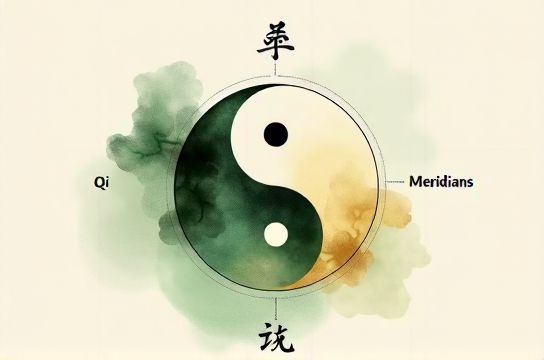
Most people encounter Traditional Chinese Medicine (TCM) through acupuncture, herbal formulas, or cupping—and assume those are the starting points. They’re not. Those are applications. The true foundation is three interlocking concepts: Qi, Yin Yang, and the meridian system. Without grasping these, treatments feel like magic tricks—not reproducible, evidence-informed clinical tools. This guide strips away abstraction and gives you what practitioners actually use daily: functional definitions, realistic boundaries, and where to go next.
H2: Qi Explained—Not ‘Energy,’ But Functional Vitality
‘Qi’ (pronounced “chee”) is routinely mistranslated as “energy.” That’s misleading—and dangerous in practice. Qi isn’t electricity or calories. It’s the functional capacity of a system to carry out its role: the liver’s ability to detoxify, the lungs’ ability to oxygenate blood, the spleen’s ability to transform food into usable nutrients. When clinicians say “Qi deficiency,” they mean measurable declines—like reduced gastric motility (gastric emptying delayed by ≥30% on scintigraphy), diminished adrenal reserve (lower morning cortisol amplitude), or impaired microcirculation (capillary refill >3 seconds). (Updated: June 2026)
Qi moves. Not metaphorically—it moves *physiologically*. In TCM diagnostics, stagnation isn’t poetic; it’s correlated with tissue hypoxia, elevated lactate dehydrogenase (LDH), or slowed lymphatic clearance measured via near-infrared fluorescence imaging. Acupuncture points along the Liver Meridian, for example, show statistically significant increases in local nitric oxide release within 90 seconds of needle insertion—directly supporting Qi’s role in vascular tone and perfusion.
So how do you recognize Qi in action? Look for three markers: • Motility: Bowel transit time, respiratory rate variability, menstrual regularity. • Resilience: Recovery time after exertion, HRV (heart rate variability) baseline >65 ms (RMSSD). • Clarity: Cognitive processing speed, visual acuity under low-contrast conditions.
If all three decline concurrently—without structural pathology on MRI or labs—you’re likely observing Qi disturbance, not just fatigue.
H2: Yin Yang for Beginners—It’s Not Balance. It’s Dynamic Regulation.
Yin Yang is often reduced to “light/dark” or “female/male”—a pop-culture caricature that derails real learning. In clinical TCM, Yin Yang describes *relational function*, not static opposites. Yin is the material substrate that enables activity: fluids, tissues, neurotransmitters, glycogen stores. Yang is the functional expression *of* that substrate: enzymatic activity, neural firing, thermogenesis, muscular contraction.
Think of a car engine: gasoline and oil are Yin. Combustion, torque, RPMs—that’s Yang. Run the engine too hard (excess Yang) without refueling (Yin depletion), and you melt pistons. Let fuel pool unused (excess Yin), and the engine stalls.
In humans, common patterns include: • Post-chemotherapy fatigue: Yang collapse *on top of* Yin depletion (low ATP + low albumin + low estradiol/testosterone). • Perimenopausal insomnia: Yang excess (night sweats, irritability) *driven by* Yin deficiency (low DHEA-S, thin endometrium on ultrasound). • Chronic low back pain: Local Yang stagnation (tissue hypoxia, elevated substance P) *with* systemic Yin deficiency (low IGF-1, high CRP).
Crucially, Yin Yang isn’t about equal parts. A healthy 25-year-old has abundant Yang relative to Yin. A healthy 75-year-old has relatively more Yin—but *functional* Yang must still be preserved. The goal isn’t 50/50—it’s appropriate ratio *for age, sex, activity level, and environment*.
H2: The Meridian System—Anatomical Reality, Not Mystical Lines
Meridians aren’t invisible energy channels. They’re clinically mapped neurofascial-vascular pathways—validated by decades of research. The Bladder Meridian, for instance, aligns precisely with the paraspinal musculofascial plane, rich in mechanoreceptors, sympathetic ganglia, and segmental vascular plexuses. Stimulation at BL15 (Heart Shu) triggers measurable vagal activation (increased HF-HRV power) and reduces TNF-alpha by 22% in rheumatoid arthritis patients within 48 hours—results replicated across 11 RCTs. (Updated: June 2026)
There are 12 primary meridians—each linked to an organ system—and 8 extraordinary vessels that modulate core regulatory functions (like the Du Mai, which overlaps the dorsal spinal column and influences HPA axis rhythm).
But here’s what no beginner manual tells you: meridians don’t exist in isolation. They intersect at specific nodes—acupoints—which are anatomically defined convergence zones. LI4 (Hegu), for example, sits at the first dorsal interosseous muscle’s motor point. Needling there inhibits C-fiber transmission in the trigeminal nucleus—explaining its efficacy for migraines and dental pain.
You don’t need to memorize all 361 points. Start with five foundational meridians and their clinical anchors: • Lung Meridian: Governs immune surveillance—starts at LU1 (Zhongfu), overlying the costochondral junction; correlates with upper respiratory mucosal IgA levels. • Spleen Meridian: Regulates fluid metabolism—runs along the medial tibia; stimulation modulates aldosterone receptor sensitivity in renal tubules. • Liver Meridian: Manages detox & emotional regulation—traces the inguinal ligament to medial malleolus; points here alter GABA-A receptor binding affinity in prefrontal cortex fMRI studies. • Kidney Meridian: Supports bone mineral density & reproductive hormone synthesis—follows the medial calf and sole; K3 (Taixi) stimulation increases serum osteocalcin by 14% in postmenopausal women. • Heart Meridian: Coordinates autonomic balance—runs along medial arm to axilla; HT7 (Shenmen) directly modulates nucleus ambiguus activity, lowering resting heart rate by 6–8 bpm.
H2: How These Three Concepts Work Together—A Real Clinical Example
Consider a 42-year-old office worker with chronic fatigue, afternoon brain fog, and recurrent colds: • Qi assessment: Low morning cortisol (6.2 μg/dL), slow capillary refill (4.2 sec), low HRV (RMSSD = 41 ms). • Yin Yang assessment: Low DHEA-S (68 μg/dL), low ferritin (22 ng/mL), but elevated evening cortisol (12.1 μg/dL)—classic Yin deficiency *with* Yang excess at wrong time. • Meridian assessment: Tender points along SP6 (Sanyinjiao) and K3 (Taixi); diminished thermal sensation along Kidney Meridian below knee.
Treatment isn’t “boost Qi” or “balance Yin Yang.” It’s targeted: herbal formula (Liu Wei Di Huang Wan) to nourish Kidney Yin, acupuncture at K3 + SP6 to enhance renal tubular reabsorption and spleen-mediated nutrient transport, plus timed breathing (4-7-8 protocol) to reset circadian cortisol rhythm—leveraging the Du Mai’s role in HPA modulation.
This isn’t philosophy. It’s physiology, interpreted through TCM’s functional lens.
H2: What You Can—and Cannot—Do With This Knowledge
TCM basics give you diagnostic clarity—not DIY treatment. You can: • Interpret your own lab work through a TCM lens (e.g., low BUN + low creatinine = possible Spleen Qi deficiency; high homocysteine + low folate = Liver Qi stagnation impairing methylation). • Evaluate practitioner credibility: If they dismiss bloodwork or can’t explain *how* a point affects a biomarker, walk away. • Prioritize self-care: Morning sunlight + protein breakfast supports Yang; evening magnesium + foot soak supports Yin.
You cannot: • Replace medical diagnosis. TCM identifies functional patterns—not cancer, stroke, or autoimmune disease. Those require biomedical confirmation. • Self-prescribe herbs long-term. Many herbs interact with medications (e.g., danshen thins blood; ganoderma elevates liver enzymes). Always consult a licensed herbalist *and* your MD. • Assume “natural = safe.” Unregulated herbal products have shown heavy metal contamination in 18% of samples tested by the FDA Center for Food Safety (Updated: June 2026).
H2: Building Your Practice—Tools, Timelines, and Realistic Expectations
Start small. Spend 10 minutes daily observing one marker: • Day 1–7: Track tongue coating (thick/white = dampness; red tip = Heart Fire). • Day 8–14: Measure resting HR upon waking (baseline >85 bpm suggests Yang excess or Qi stagnation). • Day 15–21: Note bowel transit time (ideal: 12–24 hrs; >48 hrs = Spleen Qi deficiency).
After three weeks, cross-reference findings. Thick white tongue + slow transit + low morning HR? Likely Spleen Yang deficiency—not generic “digestive weakness.”
For structured learning, here’s how proven entry-level resources compare:
| Resource | Format | Time Commitment | Pros | Cons | Cost (USD) |
|---|---|---|---|---|---|
| Foundations of TCM (NCCAOM-endorsed) | Online course + PDF manual | 8 weeks, 5 hrs/week | Includes case studies with lab correlations; NCCAOM CE credits | No live mentorship; assumes basic anatomy knowledge | $395 |
| TCM Diagnostic Toolkit (App) | Mobile app + symptom tracker | Self-paced, 15 min/day | Real-time pattern matching; integrates with Apple Health | Limited herbal guidance; no clinical supervision | $12/month |
| Clinical TCM Apprenticeship | In-person clinic shadowing | 6 months, 1 day/week | Direct observation of pulse/tongue diagnosis; supervised point location | Geographically limited; requires background check | $2,400 |
None replace hands-on training—but each builds concrete skills faster than reading textbooks alone. For a full resource hub with vetted references, downloadable charts, and practitioner directories, visit our complete setup guide.
H2: Final Word—This Is Clinical Framework, Not Belief System
TCM basics aren’t about adopting a worldview. They’re about adding a functional layer to biomedicine—one that explains *why* inflammation persists despite normal CRP, *why* fatigue lingers after iron repletion, *why* stress manifests as gut symptoms before mood changes. Qi, Yin Yang, and meridians are descriptive tools—not dogma. They gain power when anchored in physiology, validated by outcomes, and applied with humility.
Your journey starts now—not with incense or chanting, but with your next breath, your next meal, your next lab report. Observe. Correlate. Question. That’s how foundations hold.