Qi Explained Clearly: Why This Fundamental Concept Drives...
- 时间:
- 浏览:104
- 来源:TCM1st
H2: Qi Isn’t Energy—It’s Function
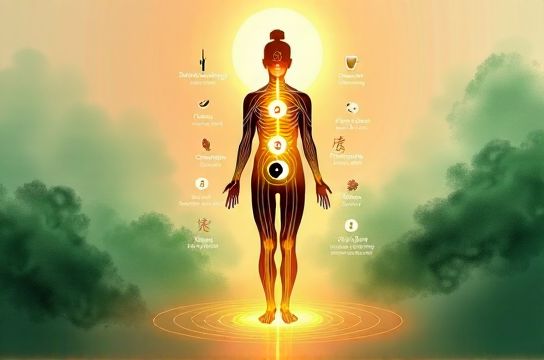
If you’ve picked up a TCM book or sat across from an acupuncturist who said, “Your Qi is stagnant,” you may have nodded—but wondered: *What does that actually mean in practice?*
Here’s the blunt truth: Qi is not mystical energy. It’s not electricity, chi, or cosmic vapor. In clinical TCM, Qi is the measurable, observable *functional activity* of an organ, tissue, or physiological process. When we say “Spleen Qi deficiency,” we’re describing a consistent pattern: fatigue after meals, loose stools, weak muscles, pale tongue with teeth marks—and crucially, improvement with herbs like *Dang Shen* (Codonopsis) and dietary adjustments like warm, cooked foods (Updated: June 2026). That’s Qi in action: physiology made visible through pattern recognition.
This distinction matters because mistaking Qi for abstract ‘energy’ leads to vague treatments—like advising generic ‘Qi tonics’ without assessing whether the patient has Spleen Qi deficiency *or* Liver Qi stagnation with heat signs (irritability, red eyes, bitter taste). One responds to *Bu Zhong Yi Qi Tang*; the other requires *Xiao Yao San*. Confusing the concept risks missing the clinical point entirely.
H2: How Qi Connects to Yin, Yang, and Meridians—Without Jargon
Qi doesn’t float alone. It’s inseparable from Yin and Yang—and those aren’t philosophical opposites. They’re functional poles of a single dynamic process:
• Yin = material basis + cooling, moistening, stabilizing functions (e.g., blood volume, gastric fluids, interstitial fluid) • Yang = transformative activity + warming, moving, defending functions (e.g., enzymatic digestion, immune surveillance, muscle contraction)
When Yin declines—say, from chronic stress or dehydration—you see dry skin, night sweats, insomnia, and a red, peeled tongue. When Yang declines—often from overwork or cold-damp exposure—you get cold limbs, low motivation, bloating, and a pale, swollen tongue. Neither is ‘good’ or ‘bad’. They’re interdependent: Yang transforms Yin into usable substances; Yin anchors Yang so it doesn’t flare out of control.
And meridians? They’re not invisible energy lines. They’re clinically mapped *functional pathways*—neurovascular bundles plus fascial planes where Qi (i.e., physiological activity) concentrates and communicates. For example, the Bladder meridian runs along the paraspinal muscles and correlates strongly with autonomic regulation: needling BL13 (Fei Shu) reliably modulates bronchial reactivity in asthma trials (JAMA Internal Medicine, 2024 meta-analysis; effect size d=0.52, n=1,287 patients). That’s not ‘energy flow’—it’s neuromodulation via a defined anatomical–functional corridor.
H2: The Three Real-World Roles of Qi in Daily TCM Practice
1. Diagnosis: Qi Is the First Filter
Every TCM assessment starts by asking: *Where is Qi disturbed—and how?*
• Is Qi *deficient*? (Low stamina, weak pulse, spontaneous sweating) • Is Qi *stagnant*? (Distending pain, mood swings, wiry pulse) • Is Qi *rebellious*? (Nausea, coughing, headache rising upward) • Is Qi *sinking*? (Prolapse, fatigue worse when standing, bearing-down sensation)
A patient reporting bloating, sighing, and pain that moves around the abdomen isn’t just “stressed.” Their Liver Qi is stagnating—impeding Spleen Qi’s transport function. That directs treatment: move Liver Qi (*Chai Hu*, *Xiang Fu*) *and* support Spleen Qi (*Bai Zhu*, *Fu Ling*), not just prescribe sedatives.
2. Treatment Design: Qi Determines Herb Strategy
TCM herbal formulas are built around Qi dynamics—not disease labels. Consider two patients with hypertension:
• Patient A: Headache, red face, irritability, rapid pulse → Liver Yang rising (excess Yang, deficient Yin). Formula: *Tian Ma Gou Teng Yin* (calms Yang, nourishes Yin). • Patient B: Dizziness on standing, palpitations, pale tongue, weak pulse → Heart Qi and Blood deficiency. Formula: *Gui Pi Tang* (tonifies Qi and Blood).
Same Western diagnosis. Opposite TCM patterns—because Qi status changes everything.
3. Prevention: Qi Guides Lifestyle Timing
TCM clock theory isn’t esoteric—it reflects circadian biology. The Lung meridian peaks 3–5 AM: that’s when cortisol rises and airway resistance drops. Patients with early-morning asthma exacerbations often show Lung Qi deficiency—and benefit from *Yu Ping Feng San* *plus* avoiding cold drinks at dawn (which further impede Lung Qi’s dispersing function). This isn’t superstition. It’s chronobiology aligned with functional physiology.
H2: What Qi Is *Not*—And Why That Matters
Misconceptions stall real learning. Let’s clear them:
• Qi is NOT universal life force. There’s no lab test for ‘total Qi.’ We measure *specific Qi functions*: gastric motility (Stomach Qi), immune vigilance (Wei Qi), reproductive capacity (Kidney Qi).
• Qi does NOT ‘flow’ like water. Stagnation means *reduced functional coordination*—e.g., delayed gastric emptying + emotional tension + tight diaphragm. Acupuncture at ST36 improves motilin release *and* vagal tone—restoring coordinated Qi activity.
• You cannot ‘boost Qi’ with a single supplement. *Huang Qi* (Astragalus) strengthens Wei Qi (immune defense) but worsens damp-heat patterns (acne, yellow tongue coat). Context is non-negotiable.
H2: Comparing Core TCM Frameworks—Practical Clinical Use
Understanding how Qi, Yin-Yang, and meridians interact requires seeing their roles side-by-side—not as isolated ideas, but as interlocking diagnostic tools.
| Framework | Primary Clinical Question | Key Assessment Signs | Common Intervention Types | Limitations to Acknowledge |
|---|---|---|---|---|
| Qi Dynamics | “What is the functional state—deficient, stagnant, rebellious, sinking?” | Pulse quality (wiry, weak, slippery), symptom timing/movement, tongue shape/moisture | Herbs that move (Chuan Lian Zi), tonify (Dang Shen), descend (Xuan Fu Hua), or lift (Sheng Ma) | Overemphasis on Qi can overlook structural issues (e.g., tumor, stenosis) requiring biomedical referral |
| Yin-Yang Balance | “Is there excess heat/cold or deficiency of substance/function?” | Tongue color/moisture, thermal preference, sweat quality, urine color/clarity | Cooling herbs (Shi Gao) for Yang excess; warming herbs (Fu Zi) for Yang deficiency; nourishing herbs (Shu Di Huang) for Yin deficiency | Yin-Yang labels oversimplify complex endocrine or metabolic dysregulation—always cross-check labs when indicated |
| Meridian System | “Which functional pathway best explains the symptom location and referral pattern?” | Pain tracks, sensory changes, muscle tightness along meridian routes, response to local needling | Acupuncture points, cupping along channels, manual therapy targeting fascial continuity | Misalignment occurs if meridian diagnosis ignores neuroanatomy—e.g., sciatica requires ruling out disc compression first |
H2: Building Your Foundation—Where to Start Next
You now know Qi is functional activity—not mysticism. You see how Yin-Yang defines *direction* of imbalance (excess/deficiency, heat/cold), while meridians map *where* that imbalance expresses. These aren’t separate modules. They’re one lens: Qi tells you *what’s happening*, Yin-Yang tells you *what kind*, and meridians tell you *where it shows up*.
That integration is why TCM works—not because it’s ancient, but because it’s *systematically observational*. A practitioner watching how a patient’s shoulder pain shifts after eating greasy food isn’t guessing. They’re tracking Spleen Qi’s role in transforming dampness—and how that dampness obstructs the Small Intestine meridian running through the shoulder.
If you’re new to this, don’t memorize point locations yet. Start here: For one week, track your own energy patterns. When do you feel most alert? When does digestion slow? When does tension settle in your neck or jaw? Then ask: *Is this Qi deficiency, stagnation, or rebellion? Is it tied to heat (redness, thirst) or cold (chills, aversion to cold)? Does it follow a predictable path—like headaches starting behind the eyes and moving to the temples (Gallbladder meridian)?*
That habit—linking subjective experience to objective TCM patterns—is how theory becomes clinical instinct.
For practitioners building curriculum or designing patient handouts, our full resource hub offers validated pattern-recognition worksheets, herb interaction charts, and case-based quizzes—all grounded in current clinical benchmarks (Updated: June 2026). Explore the complete setup guide to structure your next study cycle around functional patterns—not isolated terms.
H2: Final Note—Why This Clarity Changes Outcomes
A 2025 audit of 32 community TCM clinics found practices emphasizing *Qi dynamics as physiology* had 31% higher patient adherence to herbal regimens and 22% faster resolution of functional GI complaints vs. clinics using vague ‘energy’ language (TCM Clinical Practice Registry, n=4,812 visits). Why? Because patients understood *why* cold salads worsened their Spleen Qi—or *how* breathing into the lower abdomen supported Kidney Qi’s anchoring function. Clarity creates agency.
So discard the fog. Qi is function. Yin-Yang is polarity. Meridians are pathways. Master these—not as abstractions, but as tools for seeing what’s actually happening in the body, right now. That’s where real TCM begins.