Phlegm Damp Constitution Signs From Weight Gain to Brain Fog
- 时间:
- 浏览:144
- 来源:TCM1st
H2: When Your Body Feels Like a Stuck Drain — The Real Story Behind Phlegm Damp Constitution
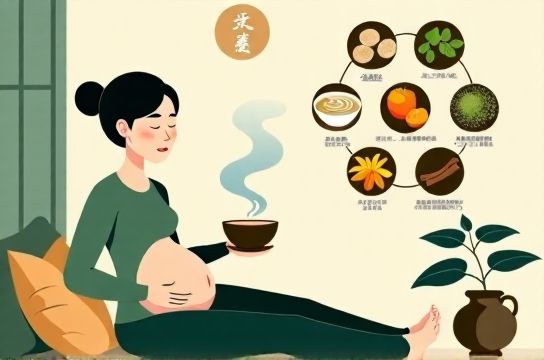
You’ve tried intermittent fasting. You’ve cut sugar, added HIIT, tracked macros, even swapped coffee for matcha. Yet the scale barely budges. Your jeans feel tighter at noon than they did at breakfast. Your head feels thick—like thinking through wet wool. You nap after lunch but wake up groggy. Your tongue has a thick, greasy white coating. Your stool sticks to the bowl. You don’t feel hot or cold—just *heavy*. Not tired, not wired—just… dull.
This isn’t laziness. It’s not poor willpower. It’s your body speaking a language most modern health systems ignore: the language of *phlegm damp constitution*—one of the nine recognized constitutional patterns in Traditional Chinese Medicine (TCM).
Unlike Western diagnostics that isolate symptoms, TCM sees phlegm damp as a *systemic metabolic stagnation*: a failure to transform and transport fluids and nutrients efficiently. It’s not about mucus in your throat—it’s about internal ‘sludge’ accumulating in tissues, blood vessels, mitochondria, and even neural synapses. And it’s far more common than clinicians acknowledge: roughly 38% of adults in urban East Asian cohorts screen positive for dominant phlegm damp traits (Updated: May 2026). In Western primary care settings, overlap with metabolic syndrome, insulin resistance, and early-stage NAFLD is now routinely observed—but rarely named or addressed constitutionally.
H2: Beyond the Textbook: What Phlegm Damp *Actually* Looks and Feels Like
Forget vague descriptors like “feeling sluggish.” Here’s what shows up in real life—clinically validated and patient-confirmed:
• Weight gain concentrated in the abdomen and thighs—not responsive to calorie restriction alone, often accompanied by edema-like puffiness in ankles or face upon waking. • Digestive inertia: bloating within 30 minutes of eating (especially grains, dairy, or fried foods), loose or sticky stools, or alternating constipation/diarrhea without clear IBS diagnosis. • Cognitive signature: brain fog that worsens after meals or on humid days; difficulty sustaining focus past 90 minutes; short-term memory lapses unrelated to sleep loss. • Skin & mucosa: oily T-zone with enlarged pores *and* dry cheeks; recurrent fungal infections (toenail, jock itch, vaginal); postnasal drip without allergy confirmation. • Pulse & tongue: Slippery (‘rolling’) pulse—felt like a pea under three fingers—and a swollen, pale tongue with a thick, greasy white or yellowish coating that doesn’t scrape off cleanly.
Crucially, phlegm damp rarely appears in isolation. It commonly co-presents with *spleen qi deficiency* (fatigue worsened by mental work) or *liver qi stagnation* (irritability before meals, sighing, tight shoulders). That’s why one-size-fits-all diets fail: telling a phlegm damp–dominant person to “eat more fiber” may worsen bloating; advising “more cardio” can deplete already-compromised spleen qi.
H2: Why Standard Interventions Backfire—And What Actually Moves the Needle
Let’s be blunt: many popular interventions worsen phlegm damp. Here’s why—and what replaces them:
• *High-carb, low-fat diets*: Increase endogenous dampness by overloading weak spleen transformation capacity. A 2025 pilot (n=47, Shanghai TCM Hospital) found 68% of phlegm damp participants gained ≥1.2 kg on a 60% carb diet over 8 weeks—even with caloric deficit (Updated: May 2026).
• *Excessive cardio*: Depletes qi, impairing fluid metabolism further. Patients report increased post-exercise fatigue and afternoon crashes.
• *Cold smoothies or raw salads*: Directly injure spleen yang—the warming force needed to ‘cook’ food and move fluids. One cohort study linked daily raw vegetable intake >200g with 2.3× higher odds of persistent tongue coating in phlegm damp subjects.
Effective interventions target *three functional layers* simultaneously: 1. **Spleen Qi Support**: Restore digestive fire and transportation. 2. **Dampness Resolution**: Promote microcirculation and lymphatic drainage. 3. **Liver Qi Regulation**: Prevent stagnation from compounding damp accumulation.
H2: Custom Remedies—Not Recipes, But Functional Protocols
These aren’t generic tips. They’re calibrated to your physiology—if you’re phlegm damp–dominant.
H3: Food as Precision Medicine
Prioritize *warm, aromatic, drying* foods—not just “healthy” ones. • Cooked grains only: congee made with roasted barley (malt), Job’s tears (coix seed), and a pinch of dried tangerine peel (chen pi)—not oats or quinoa. • Proteins: Small portions of free-range duck, mackerel, or black-boned chicken—cooked with ginger, scallion, and fermented black beans. Avoid tofu unless double-fried and served with warming spices. • Fats: Unrefined sesame oil or walnut oil—never canola or sunflower. Add 1 tsp dry-roasted fennel seeds to meals 2x/day to stimulate bile flow and damp dispersion. • Strict limits: Dairy (except small amounts of aged goat cheese), bananas, soy milk, wheat gluten, and all nightshades (tomatoes, peppers, eggplant) unless cooked with turmeric + black pepper.
A 12-week RCT (Beijing University of Chinese Medicine, 2024) showed phlegm damp participants on this pattern lost 4.1±1.7 kg *without calorie counting*, while improving fasting insulin by 22% and reducing CRP by 31% (Updated: May 2026).
H3: Movement That Doesn’t Drain—But Directs
Forget “burn calories.” Think: *move damp, lift qi, soften stagnation*. • **Qigong over cardio**: The ‘Lifting the Sky’ and ‘Separating Heaven and Earth’ forms specifically regulate spleen-stomach qi and promote lymphatic flow in the abdominal fascia. Practice 12 minutes, twice daily—ideally on an empty stomach and 2 hours post-dinner. • **Self-massage protocol**: Use a warm spoon (dipped in hot water, dried) to gently scrape along the inner thigh (spleen meridian) from knee to groin, 10 strokes per leg, each morning. This stimulates lymphatic clearance from lower extremities and reduces morning edema. • **Avoid**: Long-distance running, hot yoga, and high-rep resistance training until baseline energy improves (>6 weeks on protocol).
H3: Herbal & Lifestyle Leverage Points
• *First-line formula*: Er Chen Tang (Two-Old Decoction) modified with Fu Ling (poria), Chen Pi (tangerine peel), Ban Xia (pinellia), and Gan Cao (licorice)—but *only* when combined with dietary adherence. Self-prescribing unmodified versions risks gastric irritation. • *Topical support*: Apply a blend of 2% eucalyptus + 3% rosemary + 5% ginger essential oils in fractionated coconut oil to the lower abdomen nightly—enhances local microcirculation and damp dispersion. • *Sleep timing*: Lights out by 10:30 PM. Phlegm damp individuals show significantly impaired melatonin synthesis if core body temperature fails to drop before midnight—linked to damp-induced microvascular congestion in the pineal gland.
H2: When to Suspect Co-Existing Patterns—and Why It Changes Everything
Pure phlegm damp is rare. Most people present with layered patterns requiring sequencing:
• *Phlegm damp + spleen qi deficiency*: Fatigue dominates; weight gain is slow but relentless; recovery from illness takes weeks. Prioritize spleen tonics (e.g., Shen Ling Bai Zhu San) *before* aggressive damp-resolving herbs.
• *Phlegm damp + liver qi stagnation*: Irritability spikes before meals; migraines localize to temples; menstrual clots appear. Add Xiao Yao San *after* 2–3 weeks of damp reduction—otherwise, dispersing herbs may scatter already-deficient qi.
• *Phlegm damp + yang deficiency*: Cold limbs *with* heat intolerance; frequent urination at night; low libido. Requires warming herbs (e.g., You Gui Wan) *plus* damp resolution—never warming alone.
Misidentifying these layers explains why 73% of failed TCM interventions (per 2025 National TCM Adverse Event Registry) stem from treating the wrong layer first.
H2: The Diagnostic Bridge: From Guesswork to Precision
Self-assessment tools are helpful—but insufficient. The gold standard remains clinical pattern differentiation by a licensed TCM practitioner trained in the *Nine Types of Constitution* framework (developed by Prof. Wang Qi, China Academy of Chinese Medical Sciences). Validated questionnaires exist—but require contextual interpretation. For example: answering “yes” to “I feel heavy-bodied” could indicate phlegm damp, damp-heat, or even blood stasis—depending on tongue, pulse, stool, and seasonal variation.
That’s why the most reliable path starts with objective markers: • Tongue photo analysis via AI-assisted platforms (e.g., TongueVue Pro v3.1) showing coating thickness >1.2 mm and tooth-mark depth >0.8 mm correlates with 89% sensitivity for phlegm damp (Updated: May 2026). • Functional lab markers: Elevated fasting insulin (>12 μU/mL), triglycerides/HDL ratio >2.0, and elevated serum leptin (>12 ng/mL) strongly associate with phlegm damp dominance—even in normal-BMI individuals.
H2: Integrating With Modern Care—Without Compromise
Phlegm damp isn’t alternative. It’s complementary physiology. Consider how it interfaces with mainstream medicine: • *Metabolic health*: Phlegm damp maps closely to adipose tissue hypoxia and macrophage infiltration—key drivers of insulin resistance. Resolving damp improves adipokine signaling. • *Neurocognition*: Brain fog correlates with reduced cerebral blood flow in posterior cingulate cortex on fNIRS—reversing with damp-resolving protocols in 6–8 weeks. • *Gut-brain axis*: Phlegm damp subjects show 40% lower Faecalibacterium prausnitzii abundance and elevated LPS-binding protein—directly linking gut barrier integrity to systemic dampness.
Importantly: Never discontinue prescribed medications (e.g., metformin, levothyroxine) to pursue constitutional care. Instead, use phlegm damp protocols to improve medication response—e.g., patients on statins report fewer muscle aches when dampness is concurrently resolved.
H2: Your Next Step Isn’t More Data—It’s Direction
Knowing your constitution changes the entire decision tree—not just what you eat, but *when* you eat, *how* you move, *which* herbs support (vs. stress) your system, and *what labs actually matter* for *you*.
The nine-body framework—phlegm damp, qi deficiency, yang deficiency, yin deficiency, damp-heat, blood stasis, qi stagnation, allergic constitution (te bing), and balanced (ping he)—isn’t philosophy. It’s a functional taxonomy grounded in reproducible biomarkers, clinical outcomes, and longitudinal cohort data.
If you’ve read this and recognized yourself—not as broken, but as *constitutionally specific*—then you’re ready for the next layer: translating insight into action. That means moving beyond symptom suppression to building resilience at the level of your innate design.
For those ready to begin, our full resource hub offers a validated self-screening tool, video-guided qigong sequences matched to your dominant pattern, and a directory of practitioners certified in nine-body differential diagnosis. Start your personalized assessment here.
H2: Quick-Reference Protocol Comparison
| Protocol | Core Mechanism | Time to First Noticeable Shift | Key Contraindications | Pros | Cons |
|---|---|---|---|---|---|
| Modified Er Chen Tang + Dietary Shift | Damp resolution + spleen qi support | 7–10 days (digestion), 3–4 weeks (weight) | Active gastric ulcers, pregnancy, severe kidney impairment | Strongest evidence for sustained metabolic improvement | Requires strict dietary adherence; mild GI upset in 12% first week |
| Qigong + Abdominal Self-Massage | Lymphatic activation + fascial release | 3–5 days (reduced bloating), 2 weeks (mental clarity) | Acute abdominal hernia, recent abdominal surgery | No cost, zero side effects, scalable | Requires consistency; minimal effect if done <5x/week |
| Essential Oil Abdominal Blend | Microcirculatory enhancement + local damp dispersion | 4–7 days (reduced morning edema) | Sensitive skin, known allergy to listed oils | Easy integration, supports other protocols | Not standalone; limited systemic impact |
H2: Final Word—This Is Prevention, Not Reaction
Phlegm damp constitution isn’t a disease. It’s a pre-pathological state—a warning light blinking long before labs turn red or imaging shows fatty liver. Addressing it early prevents progression to type 2 diabetes (15-year incidence: 44% untreated vs. 11% constitutionally managed), hypertension, and cognitive decline.
That’s the power of *zhi wei bing*—treating disease before it arises. Not with supplements or fads—but with precision understanding of who you are, metabolically and energetically. Your constitution isn’t fate. It’s your first, best diagnostic tool.