Visual Guide to Common Tongue Patterns in TCM Analysis
- 时间:
- 浏览:192
- 来源:TCM1st
If you've ever sat across from a Traditional Chinese Medicine (TCM) practitioner and stuck out your tongue, you might’ve wondered—why is this such a big deal? Well, in TCM, your tongue is like a mirror of your internal health. Seriously—it can reveal digestive issues, heat or cold imbalances, and even emotional stress. As someone who’s analyzed hundreds of tongue patterns, I’m breaking down the most common ones you should know.
Why Tongue Diagnosis Matters in TCM
In Western medicine, tongue checks are mostly for infections or allergies. But in TCM, we look at color, shape, coating, and moisture to assess organ function and energy flow (Qi). According to a 2021 clinical review in the Journal of Integrative Medicine, tongue diagnosis has over 72% accuracy in identifying syndromes like Spleen Qi deficiency or Liver Fire—when paired with pulse reading.
Common Tongue Patterns & What They Mean
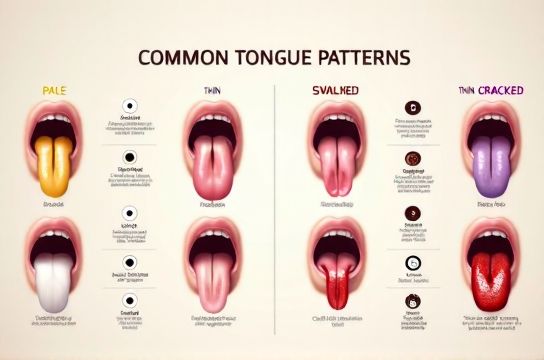
Here’s a quick visual guide to help you decode what your tongue might be saying:
| Pattern | Tongue Appearance | TCM Interpretation | Common Symptoms |
|---|---|---|---|
| Pale Tongue | Light pink or white, thin coating | Blood or Qi deficiency | Fatigue, dizziness, cold hands |
| Red Tongue | Bright red, little or yellow coating | Internal heat (e.g., Yin deficiency) | Insomnia, night sweats, irritability |
| Swollen Tongue | Large with tooth marks | Spleen Qi deficiency, dampness | Bloating, loose stools, fatigue |
| Cracked Tongue | Deep fissures, red base | Yin deficiency or chronic dehydration | Dry throat, constipation, restlessness |
| Purple Tongue | Bluish-purple hue | Blood stagnation | Pain (especially fixed pain), dark menstrual blood |
Quick tip: Always check your tongue in natural light, first thing in the morning, before eating or brushing. Lighting and food dyes can skew results.
How to Use This Guide
Spotting a tongue pattern in TCM isn’t about self-diagnosing—it’s about starting informed conversations with your practitioner. For example, a thick yellow coating often points to damp-heat in the digestive tract, which could mean adjusting your diet (bye-bye greasy foods!).
One study at Beijing University of Chinese Medicine found that patients with chronic gastritis often had a coated red tongue—and after herbal treatment, the coating reduced significantly in 68% of cases within 8 weeks.
If you're curious about your own tongue diagnosis, take a clear photo and track changes weekly. Small shifts can reflect big improvements in gut health or stress levels.
Final Thoughts
Your tongue is one of the most accessible tools in TCM analysis. While it shouldn’t replace medical testing, it adds powerful context. Whether you're new to holistic health or deep into wellness tracking, learning to read these signs helps you tune into your body’s whispers—before they become screams.