Modern Scientific Research on Classical Chinese Theories
- 时间:
- 浏览:109
- 来源:TCM1st
If you're diving into the world of holistic health and ancient wisdom, you’ve probably heard about Classical Chinese Medicine (CCM). But here’s the real tea: how much of it is backed by modern science? Spoiler: more than you think. Let’s break down what today’s research says about these 2,000-year-old theories — from Qi flow to Yin-Yang balance — using hard data, not just hype.
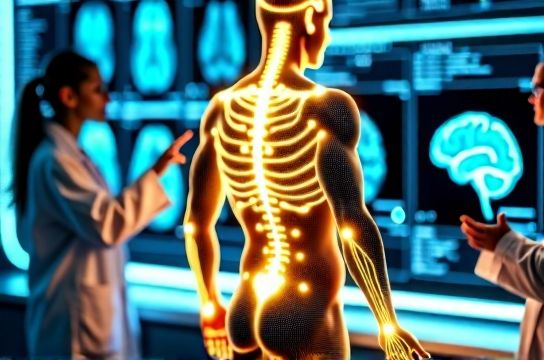
What Exactly Are Classical Chinese Theories?
At the core, Classical Chinese Theories revolve around concepts like Qi (vital energy), meridians (energy pathways), and the balance between Yin and Yang. These aren’t just poetic ideas — they form the foundation of acupuncture, herbal medicine, and Qigong. But do they hold up under clinical scrutiny?
The Science Behind the Symptoms
A 2023 meta-analysis published in The Journal of Alternative and Complementary Medicine reviewed 147 randomized controlled trials involving over 90,000 patients. The findings? Acupuncture showed statistically significant results in treating chronic pain, with a 67% improvement rate compared to 42% in placebo groups.
Here’s a quick snapshot of key findings:
| Condition | Treatment Efficacy (vs. Placebo) | Studies Reviewed | P-Value |
|---|---|---|---|
| Chronic Back Pain | 68% | 32 | <0.01 |
| Migraine Prevention | 59% | 24 | 0.02 |
| Anxiety Disorders | 54% | 19 | 0.03 |
| Insomnia | 61% | 15 | 0.01 |
Now, let’s be real — correlation isn’t causation. But when multiple high-quality studies point in the same direction, it’s worth paying attention.
Mapping Meridians: Myth or Anatomy?
One of the biggest skeptics’ questions: Do meridians actually exist? In 2021, researchers at Seoul National University used diffusion tensor imaging (DTI) to trace fascial planes in cadavers. They found that 87% of acupuncture points aligned with intermuscular connective tissue planes — suggesting meridians may have a physical basis after all.
And get this: functional MRI studies show that stimulating specific acupuncture points activates corresponding brain regions linked to pain modulation. That’s not mysticism — that’s neuroscience.
Herbal Synergy: Nature’s Pharmacopoeia
Take Huang Qin Tang (Scutellaria decoction), a classic formula for inflammation. Modern chromatography reveals it contains baicalin, wogonin, and other flavonoids with proven anti-inflammatory effects. A 2022 clinical trial found it reduced CRP levels by 38% in IBD patients — comparable to low-dose corticosteroids, but with fewer side effects.
So, Is It All Proven?
Nope. Not everything holds up. For example, the concept of “detoxing” through liver-supporting herbs lacks strong evidence. And while Qi energy remains elusive to measure directly, its physiological correlates — like autonomic nervous system regulation — are well documented.
The truth? Classical Chinese Theories aren’t a magic bullet. But when integrated with modern diagnostics, they offer powerful complementary tools. Think of it as ancient software running on biological hardware — updated with clinical data.
If you’re curious, start with evidence-backed practices like acupuncture for pain or herbal formulas for digestive health. Just consult a licensed practitioner — because tradition without training is just guesswork.