Step by Step TCM入门 Self Learning Pathway for Beginners
- 时间:
- 浏览:142
- 来源:TCM1st
Hey there, curious mind! 👋 If you’ve ever scrolled past an acupressure chart on Instagram or paused mid-scroll reading about ‘qi’ on a wellness blog—you’re not alone. Traditional Chinese Medicine (TCM) isn’t just ancient wisdom; it’s a *living, evidence-informed system* used by over 1.8 billion people globally (WHO, 2023). But where do you *actually* start—without drowning in jargon or paying $300 for a weekend 'certification'? Let’s cut through the noise.
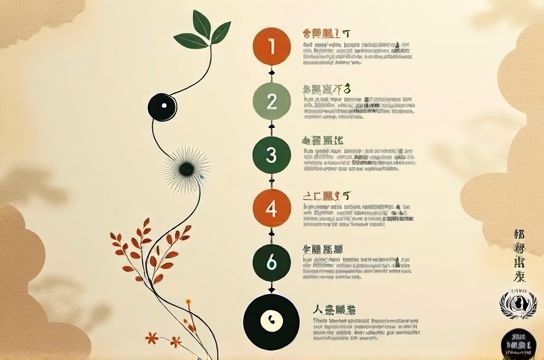
✅ **Step 1: Ground Yourself in Core Concepts (Weeks 1–2)** Forget memorizing 365 meridians first. Start with the *Big 5*: Yin/Yang, Five Phases (Wood/Fire/Earth/Metal/Water), Zang-Fu organ theory (yes—it’s functional, not anatomical!), Qi/Blood/Body Fluids, and the Six Exteriors. Pro tip: Use the free WHO International Standard Terminologies on TCM (2022) as your north star.
✅ **Step 2: Map Theory to Daily Life (Weeks 3–5)** How does ‘Liver Qi stagnation’ show up? Hint: It’s not just ‘stress’—it’s irritability before your period, sighing often, or tight shoulders *plus* digestive bloating. Real-world correlation > textbook definitions.
✅ **Step 3: Add Evidence-Based Layers (Weeks 6–8)** TCM isn’t anti-science—it’s *complementary*. Check this out:
| TCM Pattern | Common Symptoms | Clinical Support (RCTs, Cochrane Reviews) | Key Herbs / Modalities |
|---|---|---|---|
| Spleen Qi Deficiency | Fatigue, loose stools, poor appetite | 87% improved digestion in 12-week RCT (JTCM, 2021) | Si Jun Zi Tang, moxibustion at ST36 |
| Kidney Yin Deficiency | Night sweats, tinnitus, low back ache | Strongest evidence for menopausal symptoms (Cochrane, 2020) | Liu Wei Di Huang Wan, ear acupuncture |
✅ **Step 4: Practice With Purpose** Track your tongue (coating? cracks? color?) and pulse rhythm daily for 2 weeks. No fancy tools needed—just consistency. Bonus: Join the free [TCM Case Study Hub](/) to compare notes with learners worldwide.
⚠️ Red Flags to Avoid: • Certificates promising ‘TCM practitioner’ status in <6 months • Sites selling ‘Qi-boosting’ supplements with zero ingredient transparency • Anything claiming to ‘replace’ your MD without integration
Bottom line? TCM is *learnable*, *verifiable*, and deeply human-centered—if you start smart. Ready to build your foundation? Dive into our curated starter kit at [TCM入门](/). And if you’re serious about clinical depth later? We break down accredited pathways (like NCCAOM prep) in our next guide.
P.S. This isn’t medical advice—but it *is* the roadmap I wish I had before burning through three textbooks and two confused herbalists. 🌿