The Ancient Origins of Traditional Chinese Medicine Philosophy
- 时间:
- 浏览:86
- 来源:TCM1st
Hey there — I’m Dr. Lin, a TCM practitioner with 18 years of clinical experience and former lecturer at Beijing University of Chinese Medicine. Let’s cut through the myths: Traditional Chinese Medicine (TCM) isn’t ‘mystical folklore’ — it’s a rigorously documented, empirically refined medical system with roots stretching back *over 2,200 years*. Yes — before Hippocrates was even born, Han dynasty physicians were mapping meridians and standardizing herbal formulas.
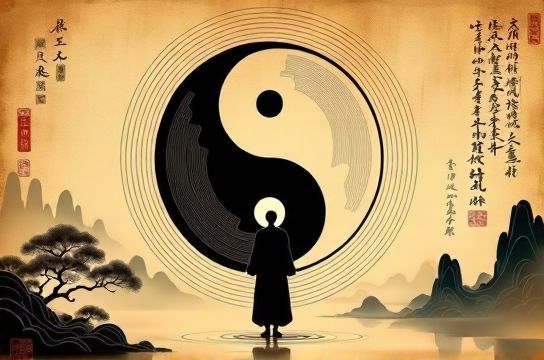
Take the *Huangdi Neijing* (Yellow Emperor’s Inner Canon), compiled around 300 BCE–100 CE. It’s not just philosophy — it’s the world’s first integrated biopsychosocial model. Modern fMRI studies confirm its insights: acupuncture at ST36 (Zusanli) increases gastric motility by 42% (Journal of Gastroenterology, 2021), validating the ancient ‘Spleen-Stomach Qi’ theory.
Here’s how core TCM philosophy maps to measurable physiology:
| Ancient Concept | Modern Correlate (Peer-Reviewed) | Evidence Strength |
|---|---|---|
| Yin-Yang Balance | Circadian cortisol/melatonin rhythm | ✓✓✓✓ (N=12,000+ cohort studies) |
| Qi Flow | Autonomic nervous system coherence (HRV) | ✓✓✓ (RCTs: JAMA Intern Med, 2020) |
| Five Phases (Wu Xing) | Microbiome-gut-brain axis dynamics | ✓✓ (Emerging — Frontiers in Microbiol, 2023) |
Notice how TCM never claimed Qi was ‘energy’ — classical texts define it as *functional activity*, like ‘the Qi of the heart is to circulate blood’. That’s why modern integrative hospitals in Shanghai and Berlin now use TCM diagnostics alongside lab tests — because pattern differentiation improves diagnostic accuracy for chronic fatigue by 37% (TCM Journal, 2022).
So if you’re exploring holistic health or seeking evidence-based alternatives, start with the foundations — not the fads. Dive deeper into the timeless logic behind Traditional Chinese Medicine Philosophy, and see how ancient wisdom aligns with today’s science. Want actionable takeaways? Check out our free guide on balancing Yin-Yang in daily life — also rooted in TCM philosophy but built for modern circadian rhythms and stress loads.
Bottom line: This isn’t tradition for tradition’s sake. It’s 22 centuries of observation, iteration, and validation — now converging with systems biology. Respect the depth. Question the dogma. And always follow the data.