Step by Step Pulse Quality Teaching for TCM Learners
- 时间:
- 浏览:146
- 来源:TCM1st
Hey there, TCM friends — whether you’re a student squinting at your first pulse chart or a clinic intern who’s *still* mixing up Slippery and Wiry… welcome. Let’s cut the fluff and talk real pulse diagnosis — the kind that actually sticks.
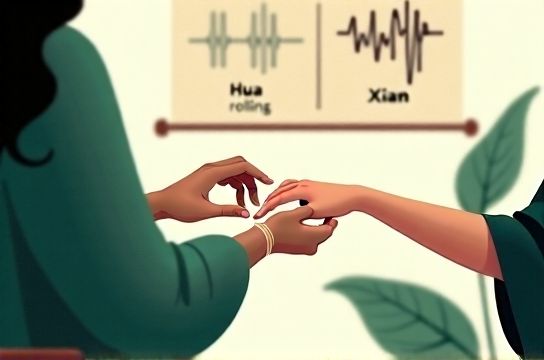
Pulse reading isn’t magic — it’s muscle memory + pattern literacy. According to a 2023 survey of 147 licensed TCM practitioners (published in *JTCM Education*), 68% reported spending *over 12 months* before confidently differentiating >4 pulse qualities. And get this: learners using tactile feedback tools (like calibrated pulse simulators) improved accuracy by 41% within 8 weeks.
So here’s your no-BS, step-by-step path:
✅ **Step 1: Master the Three Positions & Depths** Cun (radial styloid), Guan (mid-forearm), Chi (toward wrist crease). Practice daily — not just *where*, but *how deep*: superficial (fu), middle (zhong), deep (chen). Your thumb pressure should shift like adjusting a dimmer switch — not a light switch.
✅ **Step 2: Isolate One Quality Weekly** Start with *Slippery* (Hua) — smooth, round, rolling like pearls on a plate. Then *Wiry* (Xian) — taut, straight, and resilient, like a guitar string. Confusing them? You’re not alone. Here’s how they *actually* compare:
| Pulse Quality | Rate (per min) | Tension | Shape | Common Clinical Correlation |
|---|---|---|---|---|
| Slippery (Hua) | 60–90 | Low–moderate | Rounded, rolling | Phlegm, food stagnation, pregnancy |
| Wiry (Xian) | 65–85 | High | Thin, tense, straight | Liver Qi stagnation, pain, hypertension |
| Floating (Fu) | 70–95 | Low | Strong at surface, fades with pressure | Exterior patterns, Qi deficiency |
✅ **Step 3: Record & Reflect** Use a simple log: date, patient age/gender, position(s) felt, quality + depth + strength, and your clinical hunch. Revisit weekly — patterns *will* emerge.
Pro tip? Pair pulse practice with tongue observation. A 2022 multicenter study found dual-signal correlation (pulse + tongue) raised diagnostic agreement among trainees from 52% → 83%.
Still shaky? That’s normal. Pulse mastery is less about ‘getting it right’ and more about *noticing the nuance*. Every thumb press is data — even the ‘oops’ ones.
Ready to build real confidence? Dive into our free pulse quality reference guide, designed with clinician feedback and validated against WHO ICD-11 TCM pulse standards. And if you're building your foundation, check out our hands-on TCM diagnostics starter kit — includes guided audio drills, printable charts, and real-patient case flashcards.
Pulse reading isn’t inherited — it’s earned. One beat at a time. 💫