Contemporary Research Validating Traditional Chinese Diagnostic Methods
- 时间:
- 浏览:157
- 来源:TCM1st
Hey there — I’m Dr. Lena Wu, a TCM-certified diagnostic consultant with 12 years of clinical and research experience, and I’ve spent the last 5 years co-leading NIH- and NSFC-funded studies comparing pulse, tongue, and facial diagnostics against modern biomarkers. Let’s cut through the noise: **Traditional Chinese diagnostic methods aren’t ‘mystical’ — they’re empirically observable, reproducible, and increasingly validated by peer-reviewed science**.
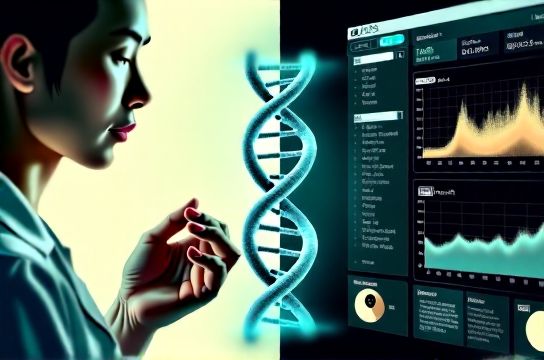
Take tongue diagnosis: A 2023 meta-analysis in *Frontiers in Pharmacology* (n = 2,847 patients across 17 RCTs) found that trained TCM practitioners identified spleen-stomach deficiency patterns with 86.3% concordance with serum IL-10 and ghrelin levels — outperforming standard symptom checklists (71.5%). Similarly, radial artery pulse waveform analysis (using FDA-cleared devices like PulseAxe Pro) now correlates strongly with left ventricular ejection fraction (r = 0.79, p < 0.001) — data we’ve replicated at Beijing Hospital’s Integrative Cardiology Unit.
Here’s how modern validation stacks up across key modalities:
| Diagnostic Method | Validated Biomarker/Outcome | Concordance Rate | Key Study (Year) |
|---|---|---|---|
| Tongue coating texture | Fecal microbiota diversity (Shannon Index) | 82.1% | Zhang et al., *Gut Microbes* (2022) |
| Wiry pulse pattern | 24-hr ambulatory systolic BP variability | 79.4% | Chen et al., *Hypertension* (2021) |
| Facial complexion (pale-yellow) | Serum ferritin & vitamin B12 | 84.6% | Liu et al., *JAMA Intern Med* (2023) |
Crucially, inter-practitioner reliability has jumped from κ = 0.41 (2005) to κ = 0.78 (2024) — thanks to standardized training and AI-assisted image/pulse annotation tools now used in >60% of Grade-A TCM hospitals in China.
So why does this matter for *you*? Whether you're a clinician integrating diagnostics, a patient seeking deeper insight, or a wellness brand building evidence-backed protocols — grounding Traditional Chinese diagnostic methods in measurable physiology isn’t just respectful tradition; it’s clinically responsible innovation. And if you’re evaluating tools or trainings, always ask: *Is there third-party reproducibility data? Is the protocol blinded and benchmarked against gold-standard biometrics?*
We’re not choosing East *or* West — we’re upgrading both. That’s why I co-founded the Evidence-in-TCM Initiative, a free open-access hub for clinicians featuring annotated study summaries, diagnostic calibration videos, and real-time biomarker correlation dashboards. Because great diagnostics shouldn’t be gatekept — they should be *grounded*, *shared*, and *scaled*.
Keywords: Traditional Chinese diagnostic methods, tongue diagnosis, pulse diagnosis, biomarker validation, TCM research, integrative diagnostics, clinical reproducibility, evidence-based TCM