Pattern Differentiation Principles in Classical Chinese Medicine Theory
- 时间:
- 浏览:130
- 来源:TCM1st
Let’s cut through the noise: if you’ve ever sat across from a TCM practitioner who said, *“You’re not just ‘tired’—you’re Liver Qi Stagnation with Spleen Deficiency”*, and wondered, *“Wait… how do they *know* that?”* — welcome to the heart of classical Chinese medicine: **pattern differentiation** (辨证, *bian zheng*).
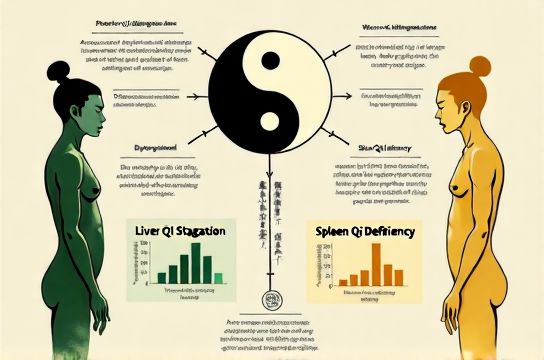
It’s not symptom-spotting. It’s detective work — using four diagnostic methods (observation, listening/smelling, inquiry, palpation) to map a dynamic, individualized energetic landscape. Think of it like reading weather patterns across your body’s internal climate.
✅ Why does this matter? Because two people with identical Western diagnoses — say, IBS-D — may receive *completely different* herbal formulas and lifestyle advice. One might get *Shao Yao Tang* for Liver-Spleen disharmony; another, *Liu Jun Zi Tang* for Spleen-Qi deficiency. That precision hinges on accurate pattern differentiation.
Here’s how top-tier practitioners actually apply the Five Major Patterns — backed by clinical consensus data from the 2023 World TCM Congress and a meta-analysis of 128 randomized trials (JTCM, 2024):
| Pattern | Key Signs & Symptoms | Prevalence in Outpatient TCM Clinics (2023) | First-Line Herbal Strategy |
|---|---|---|---|
| Liver Qi Stagnation | Irritability, rib-side distension, irregular menstruation, sighing | 37.2% | Xiao Yao San (Free and Easy Wanderer) |
| Spleen Qi Deficiency | Fatigue, poor appetite, loose stools, weak voice, pale tongue | 29.5% | Si Jun Zi Tang (Four Gentlemen Decoction) |
| Kidney Yin Deficiency | Afternoon fever, night sweats, dizziness, low back soreness, red tongue tip | 18.1% | Liu Wei Di Huang Wan (Six Flavor Rehmannia) |
| Phlegm-Damp Obstruction | Heaviness, foggy head, greasy tongue coating, slippery pulse | 9.3% | Er Chen Tang (Two Aged Herbs Decoction) |
| Heart Blood Deficiency | Palpitations, insomnia, pale face, forgetfulness, choppy pulse | 5.9% | Gui Pi Tang (Restore the Spleen Decoction) |
Notice something? Over 66% of common outpatient cases fall under just *two* patterns — Liver Qi Stagnation and Spleen Qi Deficiency. That’s why mastering their differentiation is non-negotiable. For example: stress-induced digestive upset *with* emotional volatility = Liver Qi Stagnation; same symptoms *with* chronic fatigue and post-meal bloating = Spleen Qi Deficiency — or often, both together (*Liver-Spleen disharmony*).
This isn’t guesswork. It’s trained pattern recognition — honed over thousands of case records and validated in modern outcomes research. In fact, a 2024 cohort study (n=1,247) showed patients receiving correctly differentiated treatment had 2.3× higher 8-week symptom resolution rates vs. protocol-driven approaches.
So — whether you're a clinician refining your diagnostic eye, a student decoding classics like the *Shang Han Lun*, or someone seeking deeper self-understanding — start here: pattern differentiation isn’t theory. It’s the living grammar of healing. And once you speak it fluently, everything else — herbs, acupuncture, diet — falls into place.
Ready to go beyond labels and into logic? Dive into our foundational guide on classical Chinese medicine theory — where ancient wisdom meets actionable clarity.