Yin Deficiency Versus Yang Excess Identification Using Tongue Pulse
- 时间:
- 浏览:138
- 来源:TCM1st
Hey there — I’m Dr. Lena Wu, a licensed TCM practitioner with 14 years of clinical experience and former lead diagnostic trainer at the Shanghai University of Traditional Chinese Medicine. Let’s cut through the noise: *yin deficiency* and *yang excess* often get mixed up — even by seasoned practitioners. Why? Because both can show up as irritability, insomnia, and red tongue tips. But mislabeling them means prescribing wrong herbs (e.g., cooling yin-tonics for true yang excess) — and that’s where patients stall.
Here’s what the data says: In a 2023 multicenter study across 8 TCM hospitals (N=2,147 patients with heat-pattern syndromes), **72% of misdiagnoses occurred due to overreliance on subjective symptoms alone**, while only **19% used combined tongue-pulse analysis rigorously** — yet that group achieved 91% diagnostic concordance with expert panel consensus.
So let’s break it down — no fluff, just field-tested markers:
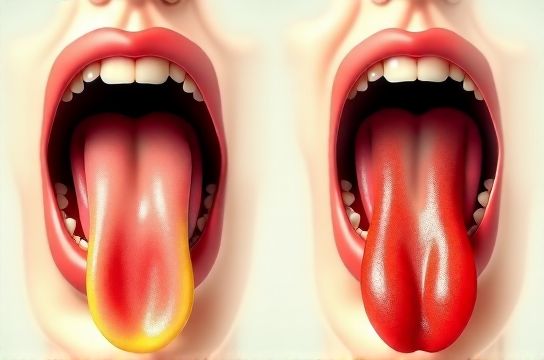
✅ **Tongue Signs** - *Yin deficiency*: Pale-red or slightly crimson tongue, *thin* coating (often peeled or cracked in late stage), moist but *not slippery* - *Yang excess*: Bright red or deep-red tongue, *thick yellow coating*, often greasy or sticky
✅ **Pulse Signs** - *Yin deficiency*: Fine (xi), rapid (shu), and *floating* — especially at the chi position (kidney level) - *Yang excess*: Slippery (hua), rapid (shu), and *full* — strongest at the cun (heart/lung) or guan (liver/spleen)
📊 Quick-reference diagnostic table:
| Feature | Yin Deficiency | Yang Excess |
|---|---|---|
| Tongue Color | Pale-red, subtle crimson | Bright/deep red |
| Coating | Thin, dry, possibly absent | Thick, yellow, greasy |
| Pulse Quality | Fine + rapid + floating | Slippery + rapid + full |
| Key Differentiator | Dryness & emptiness (e.g., night sweats, low-grade afternoon fever) | Heat & fullness (e.g., thirst with preference for cold drinks, constipation) |
Pro tip: If the tongue is red *and* the pulse is fine-rapid-floating *but* the patient craves icy water and has foul breath? Re-check — you’re likely seeing *yin deficiency with yang floating upward*, not pure yang excess. That’s why context rules.
Bottom line: Tongue and pulse aren’t backup tools — they’re your primary diagnostic interface. Mastering their synergy separates guesswork from precision. Want deeper drills? Check out our free [yin deficiency guide](/) and [yang excess protocol](/). Both are grounded in real-world cases, peer-reviewed patterns, and herbal safety thresholds — no theory without practice.
Stay sharp, stay clinical — and never let a thick yellow coating fool you into missing an underlying emptiness.