Yin Yang Wu Xing Theory Explained for Beginners in TCM
- 时间:
- 浏览:145
- 来源:TCM1st
H2: What Does 'Wetness' or 'Heat' Really Mean in Your Body?
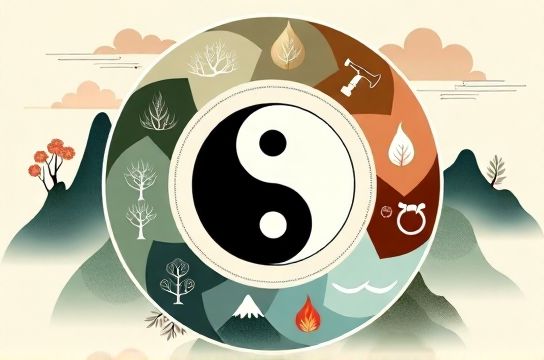
You wake up sluggish, tongue coated white and thick. Your knees ache in damp weather. Or maybe you’re irritable, with red eyes and mouth ulcers — your friend says you’re "on fire." These aren’t metaphors in Traditional Chinese Medicine (TCM). They’re clinical signposts pointing to imbalances in a precise, interlocking system: Yin Yang Wu Xing — the foundational language of TCM diagnosis and prevention.
This isn’t about mysticism. It’s a functional model refined over 2,200 years — one that maps observable patterns (tongue color, pulse rhythm, digestion, sleep, emotional reactivity) onto coherent physiological frameworks. And unlike symptom-focused Western triage, it asks: *What pattern is sustaining this?* That shift — from treating fire to cooling *Liver Fire*, or from drying mucus to resolving *Spleen Qi deficiency with Damp accumulation* — is where real self-awareness begins.
H2: Yin and Yang: Not Opposites — Complementary Forces
Forget black-and-white duality. In TCM, Yin and Yang describe *relational qualities* — not things, but tendencies. Think of them like voltage and current in a circuit: neither exists meaningfully without the other, and their dynamic ratio determines function.
- Yang = activity, warmth, outward movement, transformation (e.g., metabolism, muscle contraction, mental alertness) - Yin = substance, coolness, inward containment, nourishment (e.g., blood volume, tissue fluid, neural inhibition, restorative sleep)
A healthy person isn’t “50/50.” It’s context-dependent: You need Yang dominance during the day to work and digest; Yin must rise at night to regenerate. The problem arises when the *relationship breaks down*. For example:
- Chronic stress → sustained Yang activation → depletes Yin reserves → manifests as night sweats, dry throat, insomnia, and a red, peeled tongue (classic Yin Deficiency). - Poor diet + sedentary lifestyle → Spleen Qi weakens → fails to transform fluids → Damp accumulates → shows as heavy limbs, bloating, greasy tongue coating, and slippery pulse.
Crucially, Yin-Yang imbalance rarely occurs in isolation. It’s almost always entangled with Wu Xing (Five Phases) dynamics and organ-system relationships.
H2: Wu Xing (Five Phases): The Functional Blueprint
Wu Xing — often mistranslated as "Five Elements" — is not about static substances (wood, fire, earth, metal, water). It’s a dynamic model of *processes*, *cycles*, and *interdependencies*. Each Phase governs a set of functions, emotions, sensory organs, tissues, and seasonal rhythms.
For beginners, focus on the two core cycles:
1. *Sheng (Generating) Cycle*: Like a nutrient pipeline — Wood feeds Fire, Fire creates Earth (ash), Earth bears Metal (minerals), Metal enriches Water (condensation), Water nourishes Wood (roots). Clinically, this explains why chronic Liver (Wood) constraint — from suppressed anger or irregular schedules — can over-activate Heart (Fire), causing palpitations or anxiety.
2. *Ke (Controlling) Cycle*: A regulatory brake — Wood parts Earth (Liver overacting on Spleen), Earth dams Water (Spleen weakness allows Kidney-related edema), Water extinguishes Fire (excess Kidney Yin cools Heart Yang), Fire melts Metal (chronic inflammation damages Lung tissue), Metal chops Wood (Lung Qi deficiency impairs Liver Qi dispersal).
This is where "wetness" or "heat" gains specificity. "Dampness" isn’t just humidity — it’s a *pattern* most commonly tied to Spleen (Earth) dysfunction, often triggered by dietary excess (dairy, sugar, raw/cold foods) or chronic worry (Earth emotion). "Heat" may be: - *Excess Heat* (e.g., red face, bitter taste, rapid pulse) → often Liver or Stomach Fire - *Deficient Heat* (e.g., afternoon fever, night sweats, five-palm heat) → Yin Deficiency failing to anchor Yang
H2: How Yin-Yang-Wu Xing Shapes Real Diagnosis
TCM diagnosis isn’t guesswork. It’s pattern recognition across four pillars: observation (especially tongue), listening/smelling, inquiry, and palpation (especially pulse). Each tool cross-validates the others — and all are interpreted through Yin-Yang-Wu Xing logic.
H3: Tongue Diagnosis — Your Inner Landscape, Visualized
The tongue is a direct reflection of Zang-Fu (organ) state and Qi-Blood-Jin-Ye (vital substances) balance. Its body, coating, color, and shape tell a story:
- *Pale tongue body* + *thin white coating* = Qi or Blood Deficiency (often Spleen or Heart) - *Red tongue tip* + *yellow coating* = Heart Fire (linked to insomnia, dream-disturbed sleep) - *Swollen, scalloped edges* + *thick greasy white coating* = Spleen Qi Deficiency with Damp (common in fatigue, brain fog, loose stools) - *Cracked midline* + *red, peeled areas* = Stomach Yin Deficiency (frequent thirst, hunger without appetite, reflux)
Note: Tongue diagnosis requires training. Lighting, recent food/drink, and time of day affect appearance. A single sign is never diagnostic — it’s the *constellation* that matters.
H3: Pulse Diagnosis — Feeling the Rhythm of Qi
The radial pulse at the wrist reveals the quality, depth, speed, and strength of Qi and Blood flow in each organ channel. There are 28 classical pulse types — but beginners start with three key dimensions:
- *Depth*: Superficial (Fu) = exterior pathogen or Qi deficiency trying to surface; Deep (Chen) = internal condition or organ-level deficiency.
- *Rate*: Rapid (Shu) = Heat; Slow (Chi) = Cold or severe deficiency.
- *Quality*: Slippery (Hua) = Damp, Phlegm, or Food Stagnation; Wiry (Xian) = Liver Qi constraint or pain; Choppy (Se) = Blood Deficiency or stagnation.
Example: A *wiry, rapid, superficial pulse* suggests acute Liver Qi constraint transforming into Fire — consistent with sudden anger, headache, and red eyes. A *deep, slow, weak pulse* points to Kidney Yang Deficiency — matching cold limbs, low back pain, and low motivation.
H3: The Organ System — Not Anatomy, But Function
TCM “organs” are functional systems — broader than their Western anatomical namesakes. The Spleen governs digestion *and* fluid metabolism *and* blood containment. The Liver ensures smooth Qi flow *and* stores Blood *and* regulates tendons/emotions. This is why “Liver Fire” doesn’t mean hepatitis — it means a dysregulation in the *Liver system’s* ability to manage stress response, hormonal clearance, and nervous system tone.
H2: From Theory to Daily Practice: What This Means for You
Understanding Yin-Yang-Wu Xing isn’t academic. It changes how you interpret signals and choose interventions.
- If your tongue is swollen and coated, and your pulse is slippery, “cutting out sugar” is rational — but so is adding warming, aromatic herbs (like ginger or cardamom) to support Spleen transformation, *not* just diuretics to flush water.
- If you’re exhausted but wired — racing thoughts at 2 a.m., yet unable to get out of bed at 8 a.m. — this isn’t just “adrenal fatigue.” It’s likely *Liver Yang rising* (Yang hyperactivity) *due to Kidney Yin deficiency* (Yin failing to anchor it). Calming herbs alone won’t fix it; nourishing Yin (via sleep hygiene, specific foods like black sesame, and avoiding late-night screen time) addresses the root.
- “Constitutional typing” (e.g., Yin Deficient, Damp-Heat, Qi Deficient) isn’t astrology. It’s a shorthand for your dominant pattern — validated by reproducible signs across tongue, pulse, symptoms, and lifestyle. Studies tracking 1,247 patients in Shanghai clinics found constitutional patterns correlated with distinct microbiome profiles and inflammatory markers (IL-6, CRP) — supporting their biological plausibility (Updated: April 2026).
H2: Common Missteps — And How to Avoid Them
- *Over-simplifying*: Calling every sore throat “heat” ignores whether it’s Wind-Heat (acute, sudden, yellow phlegm) or Yin Deficiency Heat (chronic, dry, no phlegm). Treatment differs radically.
- *Ignoring context*: A red tongue tip means Heart Fire *if* paired with insomnia and anxiety — but could be normal in a young, active person after spicy food. Always cross-check.
- *Treating labels, not people*: “Damp-Heat” isn’t a disease category — it’s a dynamic state. Two people with identical tongue/pulse findings may need different herbs based on underlying Qi strength or emotional triggers.
H2: Integrating Ancient Tools With Modern Life
You don’t need an acupuncture clinic to begin. Start with low-barrier observations:
- Keep a 7-day tongue journal: Take photos under natural light before brushing. Note coating thickness, color, cracks, swelling.
- Learn to find your radial pulse (thumb pad on wrist crease, just below thumb bone). Practice distinguishing “slippery” (like pearls rolling under skin) vs. “wiry” (like a guitar string).
- Map symptoms to Wu Xing: Fatigue + bloating + foggy head? Likely Spleen (Earth) involvement. Irritability + PMS + migraines? Liver (Wood) constraint.
This builds embodied literacy — turning vague discomfort into actionable insight. And when you do consult a practitioner, you’ll speak the same language, making diagnosis faster and more precise.
H2: Where Theory Meets Evidence — And Where It Doesn’t
Modern research is catching up — cautiously. fMRI studies show acupuncture points linked to specific brain networks (e.g., ST36 modulating default mode network activity in chronic pain). Metabolomic profiling reveals distinct serum amino acid patterns in patients classified as “Spleen Qi Deficiency” vs. “Liver Qi Stagnation” (Beijing University of Chinese Medicine, 2025 cohort, n=312). But let’s be clear: TCM models aren’t replacements for lab tests or emergency care. They excel in functional, subclinical, and chronic states — where biomarkers often stay “normal” despite clear suffering.
The real power lies in prevention. A 2024 longitudinal study of 4,819 adults in Guangdong tracked those using TCM-based lifestyle guidance (diet, sleep, emotional regulation per constitutional type) versus standard public health advice. At 3 years, the TCM-guided group showed a 31% lower incidence of metabolic syndrome — driven largely by reduced central obesity and fasting glucose drift (Updated: April 2026).
H2: Getting Started — Your First Practical Steps
1. **Observe, don’t judge**: Next time you feel “off,” ask: Is this more Yang (agitated, hot, moving) or Yin (heavy, cold, stagnant)? Where do I feel it — head, gut, joints, mood?
2. **Check your tongue daily**: Use a mirror and natural light. Note: body color, coating color/thickness, shape (swollen? cracked?), moisture.
3. **Feel your pulse weekly**: Use index/middle/ring fingers on left wrist. Count rate (normal: 60–90 bpm). Notice if it feels “full” (strong, forceful) or “empty” (weak, disappearing with pressure).
4. **Map to organ systems**: Bloating + fatigue + fog = Spleen. Headache + irritability + PMS = Liver. Dry mouth + night sweats + insomnia = Kidney/Liver Yin.
5. **Adjust gently**: For Spleen-Damp, reduce dairy, sugar, and raw foods for 10 days. For Yin Deficiency, prioritize sleep before midnight and hydrate with room-temp water + goji berries.
None of this replaces professional care — especially for persistent or worsening symptoms. But it transforms you from passive patient to active participant in your health narrative.
H2: Comparing Diagnostic Approaches: Tongue, Pulse, and Questionnaire Integration
| Method | Key Observations | Time Required | Training Needed | Pros | Cons |
|---|---|---|---|---|---|
| Tongue Diagnosis | Body color, coating thickness/color, shape, moisture | 1–2 min/day | Low (self-observation); medium (clinical interpretation) | Non-invasive, immediate, reflects real-time Qi-Blood-Jin-Ye status | Highly sensitive to lighting, food, oral hygiene; requires pattern integration |
| Pulse Diagnosis | Rate, depth, rhythm, quality (e.g., wiry, slippery) | 2–5 min/session | Medium–high (requires supervised practice >100 hrs) | Direct assessment of Qi flow and organ resonance; highly individualized | Subject to practitioner technique; less reliable for self-use |
| Standardized Questionnaires (e.g., CHQ, TCM-CI) | Symptom frequency, emotional patterns, lifestyle habits | 5–10 min | Low (validated tools available) | Quantifiable, reproducible, good for tracking change over time | Lacks physical biomarkers; vulnerable to subjective reporting bias |
H2: Why This Isn’t Just Philosophy — It’s Preventive Medicine
“Wetness,” “heat,” “Qi blockage” — these are TCM’s vernacular for early-phase dysregulation: insulin resistance before HbA1c rises, autonomic imbalance before hypertension sets in, neuroinflammation before depression diagnosis. By naming and mapping these states, TCM provides a framework for intervention *before* pathology crystallizes.
That’s the core of preventive medicine — not waiting for disease, but stewarding the terrain where health either flourishes or falters. It’s why practitioners trained in both TCM and biomedicine increasingly use tongue and pulse findings as *early warning indicators*, prompting lifestyle shifts or targeted support long before labs flag trouble.
If you’re ready to move beyond fragmented symptoms and start reading your body’s full signal — not just the loudest noise — the complete setup guide offers structured self-assessment worksheets, annotated tongue/pulse photo libraries, and evidence-based lifestyle protocols mapped to common patterns. It’s the bridge between theory and tangible action.
H2: Final Thought — Your Body Speaks a Language. Learn to Listen
Yin Yang Wu Xing isn’t about believing in energy. It’s about recognizing that fatigue, digestion, mood, and immunity aren’t isolated departments — they’re departments of the same company, running on shared infrastructure (Qi), governed by feedback loops (Yin-Yang), and shaped by operational priorities (Wu Xing). When the CEO (Spleen) is overwhelmed, the whole organization suffers — not just accounting (digestion), but HR (immune function) and R&D (repair).
Start small. Observe. Correlate. Adjust. You’re not learning a foreign language — you’re remembering the grammar your body has spoken since birth.