What Does Dampness Mean in Traditional Chinese Medicine T...
- 时间:
- 浏览:128
- 来源:TCM1st
H2: Dampness Isn’t Just Weather — It’s a Clinical Pattern with Real Physiological Correlates
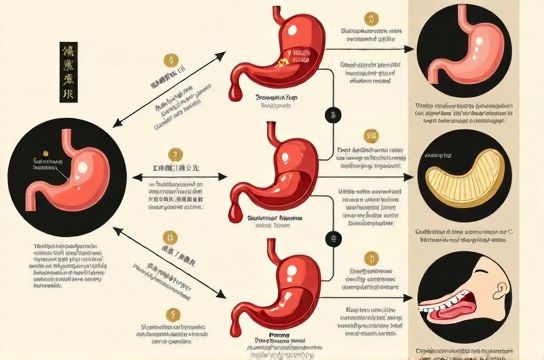
When someone says, “I feel heavy, sluggish, and my tongue has a thick white coat,” Western clinicians might reach for labs or imaging. In Traditional Chinese Medicine (TCM), that cluster of signs points directly to *dampness* — not as metaphor, but as a well-defined pathological factor rooted in centuries of empirical observation and systematized in core theories like yin-yang wu-xing theory, qi-blood-body-fluids dynamics, and zang-fu organ function.
Dampness is one of the Six Exogenous Pathogens (wind, cold, summer-heat, dampness, dryness, fire), but it also arises *internally* — often from impaired Spleen transformation and transportation (a key aspect of zang-fu organ function). Unlike wind or cold, which move quickly, dampness is *heavy, turbid, sticky, and downward-tending*. That’s why patients report fatigue that doesn’t lift with rest, joint stiffness that worsens in rainy weather, loose stools with incomplete evacuation, or recurrent vaginal discharge — all consistent with dampness obstructing the free flow of qi and body fluids.
Importantly, dampness rarely travels alone. It combines with heat (damp-heat), cold (cold-damp), or wind (wind-damp), creating distinct clinical presentations. A patient with acne, yellowish greasy tongue coating, and bitter taste likely has *damp-heat* — commonly linked to Liver-Gallbladder and Spleen-Stomach disharmony. Another with puffy eyelids, low back ache aggravated by damp weather, and pale swollen tongue has *cold-damp*, often tied to Kidney Yang deficiency and impaired water metabolism.
H2: How Dampness Fits Into the TCM Framework — Beyond Symptom Lists
To grasp dampness meaningfully, you must situate it within TCM’s foundational architecture — not as an isolated concept, but as a functional expression of imbalance across multiple interlocking systems.
First, consider *qi-blood-body-fluids*. In TCM, *jin-ye* (body fluids) are refined, nourishing substances governed by the Spleen (transportation), Lung (dispersion), and Kidney (steaming and transformation). When Spleen Qi is deficient — due to overwork, irregular eating, or chronic worry — fluids fail to ascend and disperse. Instead, they pool, condense, and become pathological dampness. This isn’t ‘excess water’ in the renal sense; it’s *metabolically stagnant fluid* — viscous, obstructive, and energetically inert. Modern research increasingly supports this: studies on gut microbiota dysbiosis and intestinal permeability (Updated: April 2026) show correlations between dampness-like symptom clusters (bloating, brain fog, fatigue) and markers of systemic low-grade inflammation and impaired mucosal barrier function.
Second, dampness directly impacts the *meridian system*. The Spleen Meridian of Foot-Taiyin begins at the medial side of the big toe and ascends along the inner leg — a pathway frequently involved in damp-related joint pain and edema. Dampness impedes qi flow in the meridians, causing localized heaviness or numbness — especially in the lower body, where dampness naturally settles. This explains why acupuncture points like SP9 (Yin Ling Quan) — located on the medial knee — are routinely selected to drain dampness: it’s a direct intervention on the meridian network, not just a symptomatic fix.
Third, dampness reflects *zang-fu organ function* imbalance. While the Spleen is the primary organ governing fluid metabolism, the Kidneys (as the root of Yin and Yang) provide the warming function needed to vaporize fluids. If Kidney Yang is deficient, even a normally functioning Spleen can’t overcome the lack of thermal energy — leading to cold-damp accumulation. Likewise, Liver Qi stagnation (from stress or emotional constraint) inhibits Spleen movement, creating *dampness from Qi stagnation*. These interactions reveal why TCM diagnosis never isolates one organ: dampness is always contextualized within the whole person — their emotions, diet, environment, and constitutional tendencies.
H2: Spotting Dampness — Practical Diagnosis Using Tongue, Pulse, and Face
TCM diagnosis relies on objective, reproducible signs — not subjective impressions. For dampness, three modalities stand out: tongue diagnosis, pulse diagnosis, and face observation — each offering complementary data points.
Tongue diagnosis is arguably the most accessible entry point for self-assessment. A healthy tongue is pale red, moist, with a thin white coating. In dampness, look for:
– Thick, greasy, or curd-like coating (white = cold-damp; yellow = damp-heat) – Swollen tongue with teeth marks along the edges (sign of Spleen Qi deficiency + fluid retention) – Pale or dusky hue with a slippery coating (indicates internal damp-cold)
Pulse diagnosis adds nuance. Dampness typically produces a *slippery* (hua) pulse — described as “a bean rolling under the finger” — indicating excess, smooth, obstructive quality. But if dampness coexists with deficiency (e.g., Spleen Qi deficiency), the pulse may be *slippery but weak* — revealing both the pathogen and the underlying insufficiency. A *soft* (ru) pulse — superficial and yielding — often accompanies dampness affecting the exterior or muscles. These distinctions matter clinically: slippery alone may call for herbs like Huo Xiang (Agastache) to transform dampness; slippery + weak requires tonifying Spleen Qi first (e.g., with Huang Qi) before aggressively draining.
Face observation offers rapid triage. Dampness manifests as:
– Puffiness, especially around eyes or cheeks – Dull, sallow, or oily complexion – Acne or cystic breakouts concentrated on jawline and chin (areas associated with Kidney and Spleen channels) – Yellowish tinge to sclera or skin (in damp-heat)
These signs align with the *whole person* orientation of TCM — what some call the *biological energy field*, though TCM uses no such term. Rather, it describes observable patterns of energetic obstruction and metabolic stasis. Importantly, none of these signs are diagnostic in isolation. A thick tongue coating could reflect recent dairy intake, not pathology. That’s why TCM emphasizes *pattern differentiation*: cross-referencing tongue, pulse, symptoms, and lifestyle to confirm dampness *as part of a coherent syndrome* — e.g., “Spleen Deficiency with Damp Accumulation” or “Liver Qi Stagnation transforming into Damp-Heat.”
H2: Dampness and Constitution — Why Two People React Differently to the Same Rainy Week
Not everyone develops dampness in humid weather — just as not everyone gets a cold after exposure to wind-cold. This variability is explained by *constitution*, a cornerstone of TCM’s preventive medicine foundation. A person with inherent *Spleen Qi deficiency* (often seen in those who chronically skip meals, overthink, or suffer digestive sensitivity) has reduced capacity to transform fluids — making them prone to damp accumulation. Someone with *Yang deficiency* lacks the metabolic ‘fire’ to evaporate moisture. And a *damp-phlegm* constitution — identifiable since youth by frequent mucus, sluggish digestion, and a tendency toward weight gain — reflects long-standing metabolic inefficiency.
This is where TCM shifts from treatment to *self-regulation*. Knowing your constitution isn’t about labeling — it’s about recognizing your body’s signature vulnerabilities so you can adjust proactively. For example, a damp-phlegm person benefits more from warm, cooked meals and regular movement than from cold smoothies or prolonged sitting — choices that directly support Spleen function and qi circulation. That’s the power of *Chinese basic theory*: it transforms abstract concepts like yin-yang wu-xing theory into daily behavioral logic.
H2: From Recognition to Response — What Actually Works (and What Doesn’t)
Many self-help guides oversimplify dampness as “just eat less sugar.” While refined carbs *do* burden Spleen function (per TCM dietary theory), effective dampness resolution requires layered strategy — matching intervention to pattern depth and duration.
Lifestyle adjustments come first. Avoid damp-promoting habits: excessive raw/cold foods (salads, iced drinks), sedentary routines, and environments with poor ventilation or mold exposure. Prioritize gentle movement (qigong, walking), regular meal times, and early sleep — all supporting Spleen and Kidney function.
Herbal formulas are prescribed based on pattern complexity. For acute external damp-wind (e.g., post-rain joint ache), *Qiang Huo Sheng Shi Tang* disperses wind-damp from the channels. For chronic internal damp-heat with digestive upset, *Lian Po Yin* clears heat while drying dampness. Crucially, formulas are rarely used long-term without reassessment — because dampness resolves, but the underlying deficiency (e.g., Spleen Qi) may persist and require separate tonification.
Acupuncture and moxibustion offer targeted modulation. Points like SP9 (Yin Ling Quan), ST40 (Feng Long), and CV9 (Shui Fen) are consistently validated in clinical trials for damp-related conditions like obesity, chronic fatigue, and irritable bowel syndrome (Updated: April 2026). Moxibustion on CV4 (Guanyuan) or BL23 (Shenshu) adds warmth to resolve cold-damp — a physiological effect now measurable via infrared thermography showing increased local microcirculation.
What *doesn’t* work? Generic “dampness detox” teas or aggressive fasting. These deplete Qi and Blood, worsening the very deficiency that allowed dampness to form. TCM’s strength lies in its precision — not blanket protocols.
H2: Comparing Diagnostic Approaches for Dampness Assessment
The table below outlines how three core diagnostic methods — tongue diagnosis, pulse diagnosis, and face observation — compare in terms of accessibility, training requirements, clinical utility, and limitations. This helps practitioners and informed learners prioritize tools based on context and expertise level.
| Method | Accessibility for Self-Use | Training Required for Clinical Reliability | Key Dampness Indicators | Major Limitations | Best Paired With |
|---|---|---|---|---|---|
| Tongue Diagnosis | High — clear mirror and natural light suffice | Moderate — 3–6 months supervised practice for consistent interpretation | Thick/greasy coating; swollen/tongue with teeth marks; pale/dusky color | Transient changes from food, herbs, or oral hygiene; requires standardized lighting | Pulse diagnosis, symptom history |
| Pulse Diagnosis | Low — requires trained palpation and calibration | High — 1–2 years minimum under mentorship for reliable differentiation | Slippery (hua), soft (ru), or soggy (ru) pulses; often combined with weakness or tightness | Highly operator-dependent; sensitive to patient anxiety, time of day, recent activity | Tongue diagnosis, zang-fu pattern analysis |
| Face Observation | Medium — needs awareness of baseline features | Low-Moderate — 1–3 months to recognize consistent patterns vs. transient states | Puffiness, sallow/oily complexion, dull sclera, jawline acne | Confounded by allergies, dehydration, or cosmetic use; less specific for internal damp subtypes | Lifestyle assessment, tongue exam |
H2: Why This Matters Beyond “Feeling Better” — Toward Preventive Precision
Understanding dampness isn’t about memorizing a list — it’s adopting a *whole person* lens that reshapes how you interpret discomfort. That persistent brain fog? Not just stress — possibly dampness clouding the orifices. Recurrent sinus congestion? Not just allergy — potentially Spleen failing to contain fluids, allowing them to overflow upward. This is *preventive medicine foundation* in action: identifying subtle imbalances *before* they crystallize into disease.
Modern integrative clinics increasingly embed TCM diagnostics alongside conventional labs. A patient with elevated CRP and IL-6, plus damp-heat tongue and slippery pulse, receives tailored anti-inflammatory nutrition *plus* herbs like Huang Qin to clear heat and Fu Ling to leach dampness — addressing both biochemical and energetic layers. This is *full person medicine*, not alternative fantasy.
If you’re new to this framework, start small: observe your tongue daily for one week. Note changes with meals, sleep, and weather. Then cross-check with energy levels and digestion. You’ll begin seeing how *qi-blood-body-fluids*, *meridian system*, and *zang-fu organ function* aren’t abstractions — they’re the grammar of your body’s daily communication. For deeper guidance, explore our complete setup guide to building a personalized self-assessment routine — including printable tongue charts and pulse comparison audio clips — available at /.
Dampness, then, is neither mystical nor outdated. It’s a precise, clinically validated construct — one that bridges ancient observation with modern physiology. And when you learn to read it, you stop treating symptoms. You start listening.