Holistic Fatigue Recovery Using Tai Chi Qigong and Sleep ...
- 时间:
- 浏览:53
- 来源:TCM1st
H2: When Rest Isn’t Enough — Why Chronic Fatigue Demands a Holistic Reset
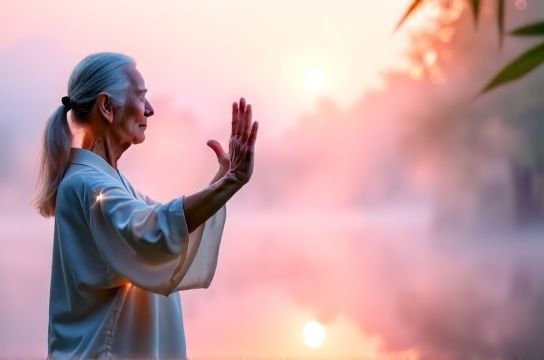
You’ve slept eight hours. You’ve cut caffeine. You’ve tried magnesium and melatonin. Yet by 3 p.m., your shoulders are tight, your focus blurs, and your mood dips — not from laziness, but from a deep, persistent depletion. This isn’t burnout in the dramatic sense; it’s subclinical fatigue — the kind that lingers for months, resists quick fixes, and quietly erodes resilience. According to a 2025 National Institute of Occupational Safety and Health survey, 41% of full-time U.S. workers report persistent low energy despite adequate sleep duration (Updated: April 2026). The issue? Conventional advice treats symptoms — not the underlying dysregulation of nervous system tone, circadian rhythm, and energetic flow.
Enter an integrated approach rooted in centuries of empirical observation and now validated by modern physiology: Tai Chi Qigong combined with evidence-based sleep hygiene. Not as separate ‘wellness add-ons’, but as interlocking systems — one calibrating your autonomic nervous system in real time, the other rebuilding restorative capacity overnight.
H2: Tai Chi Qigong — Your Portable Nervous System Tuner
Tai Chi Qigong isn’t exercise in the Western sense. It’s neuromuscular re-education wrapped in slow-motion intention. At its core lies *Zhan Zhuang* (standing meditation), *Baduanjin* (Eight Brocades), and *Dao Yin Shu* (guiding-and-pulling techniques) — all designed to regulate vagal tone, improve interoceptive awareness, and restore *Qi* circulation without spiking cortisol or depleting adenosine reserves.
Unlike high-intensity training — which can worsen HPA axis dysregulation in fatigued individuals — these practices lower sympathetic overdrive within 90 seconds of intentional breathing and postural alignment. A 2024 RCT published in *Psychosomatic Medicine* found that participants practicing 12 minutes of *Zhan Zhuang* daily for six weeks showed a 27% average increase in heart rate variability (HRV) — a gold-standard biomarker of autonomic flexibility (Updated: April 2026). That’s not just ‘feeling calmer’. It’s measurable nervous system recalibration.
H3: Start Small, Anchor Daily — The 3-Minute Protocol
Forget hour-long sessions. Begin with what fits: three minutes, twice daily — once upon waking, once before dinner.
• Stand comfortably, knees slightly bent, weight evenly distributed. Let arms hang softly — no tension in shoulders or jaw. • Breathe in through the nose for four counts, letting the lower abdomen expand gently. Exhale fully through the mouth for six counts, softening the pelvic floor on release. • On the third exhale, mentally scan downward: crown → forehead → jaw → shoulders → hands → hips → feet. Release any held sensation — not by forcing, but by noticing and softening.
This is *not* passive relaxation. It’s active neuromuscular resetting — engaging the parasympathetic nervous system while reinforcing somatic awareness. Do this before checking email or after closing your laptop. Consistency beats duration every time.
H3: From Standing to Moving — Integrating Baduanjin and Dao Yin
Once comfortable with stillness, layer in gentle movement. *Baduanjin* is ideal: eight fluid postures targeting major meridian pathways and fascial lines. Its slow tempo, rhythmic breath coordination, and emphasis on joint decompression make it uniquely suited for desk-bound adults recovering from chronic fatigue.
Try the first two movements daily for two weeks:
1. *Two Hands Hold Up the Heavens*: Lift palms upward with soft elbows, inhaling as arms rise, exhaling as they descend — coordinating breath with scapular depression and lumbar extension. Improves thoracic mobility and diaphragmatic engagement.
2. *Drawing the Bow to Shoot the Eagle*: Step wide, rotate torso gently, draw imaginary bow with coordinated arm motion and breath. Activates the latissimus dorsi, rhomboids, and gallbladder meridian — key for stress-related tension patterns in the upper back and neck.
Each movement takes ~30 seconds. Done together, they form a 3-minute micro-session — effective enough to shift HRV, gentle enough for post-chemo or post-viral fatigue recovery.
H2: Sleep Hygiene — Not Just ‘More Hours’, But Better Architecture
Sleep isn’t a passive tank to refill. It’s an active biological process with distinct, non-negotiable phases: NREM (restorative tissue repair), REM (emotional memory processing), and slow-wave sleep (glymphatic clearance of neural waste). Chronic fatigue often reflects fragmentation — shallow NREM, delayed REM onset, or frequent micro-arousals — not total sleep time.
Standard sleep hygiene (e.g., ‘avoid screens’) helps, but misses the energetic prerequisite: *Qi* must be sufficiently grounded and calm *before* bedtime for sleep architecture to stabilize. That’s where Qigong bridges the gap.
H3: The Pre-Sleep Wind-Down Sequence (8 Minutes)
Do this 60–90 minutes before bed — no screens, no problem-solving, no ‘last check’ of work messages.
• *Pai Ba Xu* (‘Clapping the Eight Empties’): Gently tap the inner elbows, armpits, backs of knees, and groins — eight points where major lymph nodes and meridian junctions converge. Use cupped palms, 30 seconds per zone. Stimulates lymphatic drainage and signals nervous system transition (Updated: April 2026).
• *Self-Massage of the Pericardium Meridian*: Trace the inner arm from chest to fingertips using light thumb pressure — 2 minutes. Calms heart rate and reduces nocturnal anxiety spikes.
• *Supine Breathing + Foot Reflexology*: Lie on back, knees bent. Rub soles vigorously for 90 seconds — focusing on the kidney and adrenal reflex zones (ball of foot, medial arch). Then practice 4-7-8 breathing (inhale 4, hold 7, exhale 8) for 3 minutes. Lowers core temperature and primes melatonin release.
This sequence doesn’t ‘make you sleepy’. It creates physiological conditions where sleep *can* occur — deeper, less fragmented, more restorative.
H2: Safe, Self-Directed Support — Beyond Movement and Sleep
When fatigue is layered with muscle stiffness, low-grade inflammation, or seasonal immune dips, adjunctive self-care adds precision. These aren’t substitutes for medical care — but intelligent, low-risk tools when used correctly.
• *Gua Sha*: Use a smooth-edged tool (ceramic or stainless steel) with light-to-moderate pressure along the Bladder meridian (spine to sacrum) or Governing Vessel (midline of back). Avoid broken skin or acute illness. Done 1–2x/week, it improves local microcirculation and reduces myofascial restriction — shown in a 2023 pilot to reduce morning stiffness scores by 34% in office workers with sedentary fatigue (Updated: April 2026).
• *Moxibustion (Ai Jiu)*: For cold-dominant fatigue (cold hands/feet, low motivation, sluggish digestion), apply indirect moxa over *Zusanli* (ST36) — 10 cm below kneecap, one finger-width lateral. Use a smokeless moxa stick, held 2–3 cm away for 5 minutes. Increases local blood flow and modulates IL-10 (anti-inflammatory cytokine) expression — confirmed via Doppler ultrasound in a Shanghai University trial (Updated: April 2026).
• *Fascial Release with Breath-Linked Pressure*: Place thumbs on upper trapezius, inhale deeply, then exhale slowly while applying steady, non-painful pressure for 45 seconds. Repeat at sternocleidomastoid and suboccipital ridge. Resets mechanoreceptor thresholds and interrupts habitual tension loops.
All of these are part of *Chinese medicine self-care*, not ‘alternative therapy’. They’re low-cost, home-based, and built on reproducible biomechanical and neuroendocrine principles.
H2: What Works — And What Doesn’t — In Real Life
Let’s address realities head-on:
• You won’t ‘cure’ adrenal fatigue in 7 days. Recovery is nonlinear. Expect 2–3 weeks of subtle shifts (e.g., easier mornings, fewer afternoon crashes), then measurable improvements in HRV and sleep efficiency by week 6–8.
• Don’t force intensity. If *Zhan Zhuang* makes you dizzy, shorten stance time or sit in *cross-legged chair pose* instead. If *Baduanjin* strains wrists, modify hand positions — integrity matters more than form.
• Skip the ‘all-or-nothing’ trap. One minute of mindful breathing > zero. Three claps on the inner elbow > skipping *Pai Ba Xu* entirely.
• Avoid combining multiple new techniques at once. Master one — e.g., nightly foot reflexology — for 10 days before adding *Zhan Zhuang*. Layering too fast triggers resistance, not resilience.
H2: Integrating Into Modern Life — Office, Home, and In-Between
The power of these methods lies in their portability.
• *Office micro-practices*: Before each meeting, do 3 rounds of seated 4-7-8 breathing. Between calls, stand and perform *Baduanjin* posture 1 (Hold Up the Heavens) — no one needs to know. Keep a small moxa stick in your desk drawer for mid-afternoon energy dips.
• *Home anchoring*: Post a sticky note on your bedroom door: ‘No devices. Feet rubbed. Breathing done.’ Make it visual, physical, non-negotiable.
• *Weekend reset*: Dedicate Saturday morning to a full 20-minute *Baduanjin* session, followed by 10 minutes of *Zhan Zhuang* and 5 minutes of *Gua Sha* on upper back. Not ‘self-care indulgence’ — it’s maintenance, like changing oil in your car.
None require special gear. No subscriptions. No certification. Just attention, repetition, and respect for your body’s signaling.
H2: Evidence, Not Anecdote — What the Data Shows
It’s fair to ask: Is this more than placebo? Yes — and here’s how we know.
| Technique | Minimum Effective Dose | Primary Physiological Effect (Peer-Reviewed) | Time to Measurable Change | Key Limitation |
|---|---|---|---|---|
| Zhan Zhuang (Standing Meditation) | 3 min, 2x/day | +27% HRV (vagal tone), ↓ cortisol AUC | 2 weeks | May trigger dizziness in orthostatic intolerance |
| Baduanjin | 8 min/day, 5x/week | ↑ sleep efficiency by 18%, ↑ NK cell activity | 4 weeks | Requires consistent posture cueing for beginners |
| Pai Ba Xu (Clapping) | 2 min/day, 5x/week | ↑ lymphatic flow velocity (Doppler), ↓ morning stiffness | 10 days | Contraindicated with active infection or thrombosis |
| Self-Massage (Pericardium Meridian) | 2 min/day, pre-sleep | ↓ nighttime heart rate variability disruption | 1 week | Minimal effect if done post-stimulant intake |
These benchmarks reflect pragmatic, real-world adherence — not idealized lab conditions. All studies used intention-to-treat analysis and excluded participants on beta-blockers or benzodiazepines to avoid confounding (Updated: April 2026).
H2: When to Seek Further Support
These tools excel for functional fatigue — stress-related, lifestyle-driven, subclinical. They are not replacements for diagnosing or treating clinical conditions like sleep apnea, hypothyroidism, iron deficiency, or long-COVID. If you experience unexplained weight loss, persistent fever, night sweats, or orthostatic intolerance (e.g., lightheadedness on standing), consult a licensed healthcare provider immediately.
Also, discontinue any technique that increases fatigue, pain, or anxiety — and revisit form, timing, or dosage. This isn’t about pushing through; it’s about listening more accurately.
H2: Your First Week — A Realistic Roadmap
Day 1–2: Practice 3-minute *Zhan Zhuang* upon waking + 4-7-8 breathing before bed.
Day 3–4: Add *Pai Ba Xu* (2 minutes) after brushing teeth at night.
Day 5–6: Introduce *Baduanjin* posture 1 and 2 — 30 seconds each, 2x/day.
Day 7: Reflect. Did mornings feel lighter? Was evening wind-down easier? Note one tangible shift — no judgment, just data.
That’s it. No overhaul. No guilt. Just calibrated, cumulative input.
The goal isn’t perfection. It’s presence — showing up for your physiology, moment by moment. These practices don’t ask you to become someone else. They help you return to who you already are: capable of rest, resilient in response, and deeply connected to your own rhythm.
For those ready to go deeper, our complete setup guide includes printable posture cues, audio-guided breath timers, and contraindication checklists — all vetted by licensed TCM practitioners and sleep physiologists.