Integrating Chinese Medicine Philosophy Into Daily Self Care
- 时间:
- 浏览:93
- 来源:TCM1st
Let’s be real—life moves fast. Between work, family, and that endless stream of notifications, self-care often slips to the bottom of the list. But what if I told you that ancient wisdom could actually simplify modern wellness? As someone who’s spent over a decade studying holistic health, I’m here to tell you: Chinese medicine philosophy isn’t just about acupuncture or herbs—it’s a lifestyle upgrade.
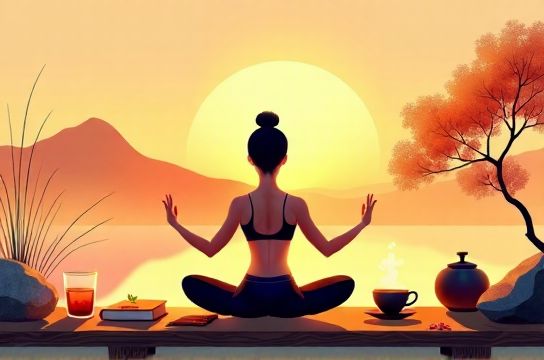
Forget quick fixes. Traditional Chinese Medicine (TCM) focuses on balance—specifically, the flow of Qi (vital energy), the harmony of Yin and Yang, and the Five Elements (Wood, Fire, Earth, Metal, Water). These aren’t mystical ideas; they’re practical frameworks for understanding your body’s rhythms.
Take circadian biology, for example. Modern science now confirms what TCM has taught for centuries: our bodies follow natural cycles. The Chinese medicine clock, which maps organ activity to two-hour intervals, aligns surprisingly well with chronobiology research. Your liver, for instance, is most active between 1–3 AM—exactly when it’s detoxifying. Ever notice you feel worse after pulling an all-nighter? That’s not coincidence. It’s Qi imbalance.
So how do you apply this without becoming a monk in a mountain temple? Start small. Here’s a data-backed daily routine rooted in TCM principles:
Time-Optimized Self-Care Based on the Chinese Medicine Clock
| Time | Organ System | Recommended Activity | Scientific Support |
|---|---|---|---|
| 5–7 AM | Large Intestine | Hydrate + gentle stretch | Peak bowel motility (NIH, 2020) |
| 7–9 AM | Stomach | Eat a warm, cooked breakfast | Digestive enzymes peak early (Gut Journal, 2019) |
| 11 AM–1 PM | Heart | Mindful work, avoid stress | Cortisol dips, focus peaks (Sleep Medicine Reviews, 2021) |
| 7–9 PM | Pericardium | Unplug, connect emotionally | Oxytocin release supports heart health (Nature, 2018) |
Notice a pattern? TCM doesn’t fight biology—it works with it. And while Western medicine excels in acute care, it often overlooks prevention. Meanwhile, countries like China integrate TCM into public health—with 4,000+ TCM hospitals and 600,000 practitioners (WHO, 2022).
You don’t need a full herbal cabinet to start. Try this: swap cold smoothies for warm oatmeal in the morning. Why? TCM teaches that the Spleen (yes, capitalized—it’s an energy system) hates cold. And guess what? Cold foods can reduce gastric motility by up to 30% (American Journal of Physiology, 1998).
Still skeptical? Consider this: a 2021 meta-analysis in JAMA Internal Medicine found that mindfulness practices rooted in Eastern traditions reduced anxiety by 22% more than standard therapies alone. That’s not placebo—that’s proof.
In short, integrating Chinese medicine philosophy into daily self-care isn’t about rejecting modern science. It’s about combining the best of both worlds: ancient insight and contemporary evidence. Start with one habit. Follow the clock. Honor your body’s rhythm. You’ll feel the difference—not in a week, but in days.