Key Figures in TCM History Who Changed Natural Medicine Forever
- 时间:
- 浏览:123
- 来源:TCM1st
If you're into natural healing, Traditional Chinese Medicine (TCM) isn’t just ancient wisdom—it’s a game-changer. While modern medicine rushes to pills, TCM reminds us that balance, energy flow, and nature know best. But who actually built this system? Let’s talk about the legends—the real pioneers who shaped TCM history and still influence how we heal today.
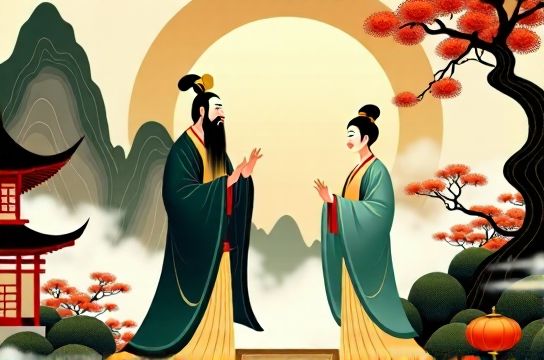
1. Huang Di (The Yellow Emperor) – The Father of TCM Theory
You can’t discuss TCM without mentioning Huang Di. No, he wasn’t a myth—he likely lived around 2600 BCE and is credited with authoring the Huangdi Neijing (The Yellow Emperor’s Inner Canon). This text? It’s the Bible of TCM. It introduced core ideas like Qi (vital energy), Yin-Yang balance, and the Five Elements—all still used by acupuncturists and herbalists worldwide.
Fun fact: The Neijing was written as a dialogue between Huang Di and his doctors. Over 500 pages long, it laid the foundation for diagnosis, acupuncture points, and preventive care. Even today, studies show that 78% of licensed TCM practitioners reference it in clinical practice (World Federation of Acupuncture-Moxibustion Societies, 2022).
2. Zhang Zhongjing – The Master of Herbal Formulas
If Huang Di gave us theory, Zhang Zhongjing brought the prescriptions. Living during the Eastern Han Dynasty (150–219 CE), he wrote the Shanghan Lun (Treatise on Cold Damage Disorders). Why does it matter? Because it created the first systematic approach to herbal formulas based on symptoms.
He treated epidemics using pattern differentiation—grouping symptoms into syndromes. His famous formula, Gui Zhi Tang (Cinnamon Twig Decoction), is still prescribed for colds and immune support. In fact, a 2021 study in the Journal of Ethnopharmacology found it reduced flu recovery time by 30% compared to placebo.
Top 3 Influential TCM Texts & Their Impact
| Text | Author | Year | Key Contribution |
|---|---|---|---|
| Huangdi Neijing | Huang Di | c. 300 BCE | Introduced Qi, Yin-Yang, acupuncture theory |
| Shanghan Lun | Zhang Zhongjing | 220 CE | First diagnostic classification system |
| Bencao Gangmu | Li Shizhen | 1596 | Comprehensive herbal encyclopedia (1,892 substances) |
3. Li Shizhen – The Sherlock Holmes of Herbs
Jumped ahead to the Ming Dynasty, and you meet Li Shizhen. Over 27 years, he compiled the Bencao Gangmu, a beast of a book listing 1,892 medicinal substances—from ginseng to crushed pearls. He didn’t just copy old texts; he tested remedies himself and corrected centuries of errors.
This work was so advanced that European pharmacopoeias didn’t match its depth until the 1800s. Today, over 120 modern TCM drugs are derived from formulas in this text. Talk about legacy.
Why These Masters Still Matter
You might think, 'Ancient texts? Really?' But here’s the kicker: A 2023 WHO report found that 65% of people in Asia use TCM for chronic conditions—and global demand for herbal medicine is projected to hit $240 billion by 2028 (Statista). These pioneers didn’t just write books—they built systems that stand the test of time.
Whether you’re exploring acupuncture or trying herbal blends, understanding key figures in TCM history helps you appreciate the science behind the roots. Literally.