How TCM History Reflects China’s Cultural and Medical Legacy
- 时间:
- 浏览:95
- 来源:TCM1st
If you’ve ever scratched your head wondering how Traditional Chinese Medicine (TCM) history shaped not just healing practices but an entire civilization’s worldview, you’re not alone. As someone who’s spent over a decade diving into holistic health systems, I can tell you—TCM isn’t just about herbs and acupuncture. It’s a mirror reflecting China’s philosophical depth, scientific curiosity, and cultural resilience.
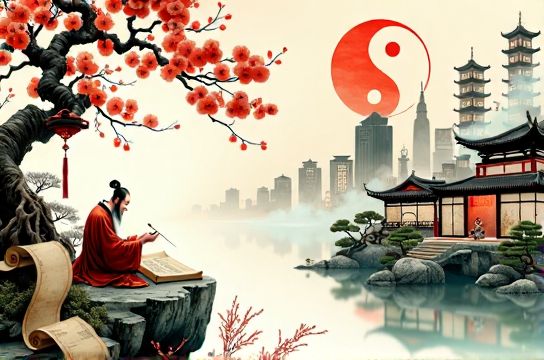
Let’s rewind to around 200 BCE. The Huangdi Neijing (Yellow Emperor’s Inner Canon) laid the foundation of TCM with concepts like Qi (vital energy), Yin-Yang balance, and the Five Elements. Fast forward two millennia, and guess what? These ideas still influence over 1 billion people’s healthcare choices today—especially across Asia.
But here’s the kicker: TCM didn’t evolve in isolation. Its history is packed with trial, error, innovation, and imperial support. During the Tang Dynasty (618–907 CE), the government established medical colleges teaching TCM, and by the Song Dynasty, printed herbal manuals were standard. Talk about early public health infrastructure!
Now, let’s break down key milestones that show how deeply medicine and culture are intertwined in China:
Major Developments in TCM History
| Era | Contribution | Impact |
|---|---|---|
| Warring States (475–221 BCE) | Foundational texts like Huangdi Neijing | Established theoretical framework |
| Tang Dynasty (618–907 CE) | National medical academy & exams | Standardized practice |
| Ming Dynasty (1368–1644) | Compendium of Materia Medica by Li Shizhen | Documented 1,892 substances |
| 20th Century | Integration with Western medicine | Birth of modern TCM hospitals |
This table shows more than progress—it reveals how TCM history has always adapted to societal needs. For instance, Li Shizhen’s compendium wasn’t just a list of herbs; it included detailed observations on efficacy, side effects, and sourcing. Sound familiar? That’s proto-clinical research!
And get this: According to WHO, as of 2023, **over 110 countries** now offer TCM-based treatments. In China, TCM accounts for nearly 40% of outpatient services in some rural areas. That’s not nostalgia—that’s trust built through centuries.
But why does this matter to you? Because understanding Traditional Chinese Medicine history helps decode a system that values prevention, harmony, and individualized care—principles many modern healthcare models are only now rediscovering.
So whether you're exploring natural remedies or studying global medical traditions, remember: TCM isn't ancient magic. It's a living legacy—one that continues to evolve while staying rooted in its rich past.