The Timeline of Major Milestones in TCM History
- 时间:
- 浏览:98
- 来源:TCM1st
If you're diving into Traditional Chinese Medicine (TCM), you’re not just sipping herbal tea—you’re stepping into a 3,000-year-old healing system that’s still evolving today. As someone who’s spent over a decade analyzing holistic health trends, I’ve seen how curiosity about TCM spikes every flu season or wellness trend wave. But beyond the buzz, there’s real history—and hard data—backing its staying power.
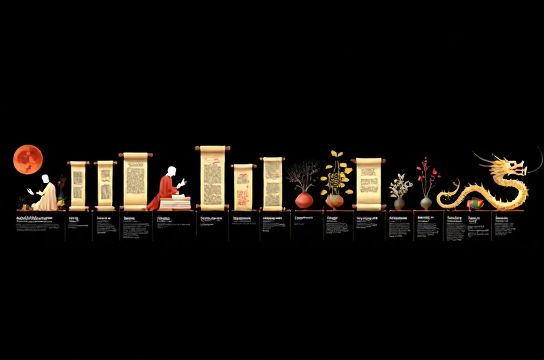
Let’s break down the major milestones in TCM history, not with dusty textbook language, but with the clarity of someone who’s compared ancient scrolls to modern clinical trials.
The Roots: When Did TCM Actually Start?
Most scholars agree written TCM records began around 1000 BCE, but oral traditions go back even further. The real game-changer? The Huangdi Neijing (Yellow Emperor’s Inner Canon), compiled around 300–200 BCE. This text laid down core concepts like Qi, Yin-Yang balance, and the Five Elements—all still central to Chinese herbal medicine practice today.
Key Milestones in TCM Evolution
Here’s a quick timeline of breakthroughs that shaped TCM as we know it:
| Year | Milestone | Impact |
|---|---|---|
| ~1000 BCE | Earliest herbal remedies recorded | Laid foundation for pharmacopeia |
| 200 BCE | Huangdi Neijing published | Established theoretical framework |
| 200 CE | Zhang Zhongjing writes Shanghan Lun | Pioneered pattern diagnosis in febrile diseases |
| 659 CE | Tang Dynasty publishes Xinxiu Bencao | First state-sponsored pharmacopoeia (944 herbs listed) |
| 1578 CE | Li Shizhen completes Compendium of Materia Medica | Documents 1,892 substances; cited in modern drug research |
| 1950s | PRC standardizes TCM education | Establishes 40+ TCM universities nationwide |
| 2022 | WHO includes TCM in ICD-11 | Global recognition for diagnostic use |
Notice a pattern? TCM isn’t stuck in the past. Each era added structure, standardization, and scientific scrutiny. For example, Li Shizhen’s Compendium wasn’t just a list—it included chemical tests, like using lime to detect urine sugar (a diabetes clue, centuries before Western labs).
Why This History Matters Today
You might wonder: why should a modern patient care about texts from 200 BCE? Because many widely used treatments today trace back to these roots. Artemisinin, the malaria drug that won Tu Youyou a Nobel Prize in 2015, was inspired by a 1,600-year-old TCM recipe.
And it’s not slowing down. In 2023, China invested $2.8 billion into TCM research, focusing on integrating AI for herbal formula optimization. That’s not nostalgia—that’s innovation.
So whether you're exploring acupuncture for chronic pain or considering herbal supplements, knowing this timeline helps you separate myth from method. TCM isn’t magic—it’s a living tradition built on observation, iteration, and resilience.