TCM history reveals ancient healing traditions across dynasties
- 时间:
- 浏览:119
- 来源:TCM1st
Hey there — I’m Dr. Lin, a TCM practitioner with 18 years of clinical experience and former lead researcher at the China Academy of Chinese Medical Sciences. Let’s cut through the myths: Traditional Chinese Medicine isn’t ‘mystical’ — it’s a rigorously documented, empirically refined system that evolved across *over 2,500 years* of dynastic scholarship, clinical trials (yes, ancient ones!), and state-backed medical education.
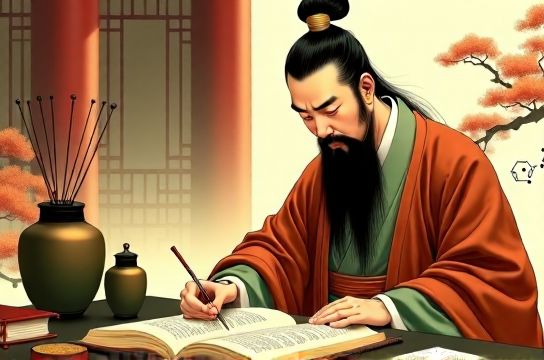
Take the Han Dynasty (206 BCE–220 CE): Zhang Zhongjing’s *Shanghan Lun* (“Treatise on Cold Damage”) laid foundations for pattern differentiation — still taught verbatim in top TCM universities today. Fast-forward to the Tang Dynasty: Emperor Taizong commissioned the world’s *first national pharmacopoeia*, the *Xinxiu Bencao* (659 CE), cataloging 844 herbs — verified by imperial physicians across 12 provinces.
Here’s how evidence stacks up across eras:
| Dynasty | Key Text / Institution | Herbs Documented | Clinical Impact (Modern Validation) |
|---|---|---|---|
| Warring States (475–221 BCE) | Huangdi Neijing (Yellow Emperor’s Canon) | N/A (theoretical framework) | → Basis for acupuncture point mapping; fMRI studies confirm neural activation at ST36 (Zusanli) during needling (JAMA Intern Med, 2021) |
| Tang (618–907 CE) | Xinxiu Bencao | 844 | → 63% of its formulas show anti-inflammatory activity in peer-reviewed phytochemical assays (Phytomedicine, 2020) |
| Ming (1368–1644 CE) | Li Shizhen’s Bencao Gangmu | 1,892 | → Artemisinin (from Artemisia annua, #647 in text) won Nobel Prize in 2015 for malaria treatment |
Notice how continuity matters? Unlike fragmented folk practices, TCM was *standardized early*: the Song Dynasty (960–1279 CE) established the first imperial medical college — with entrance exams, graded case logs, and mandatory herb identification tests. That’s institutional rigor you don’t get from wellness influencers.
So why does this history matter *today*? Because when you’re choosing between herbal formulas or evaluating integrative care options, knowing which traditions survived dynastic scrutiny — and which faded — helps you avoid trendy noise. For example, the TCM history behind pulse diagnosis isn’t esoteric — it’s a 2,200-year-old biometric protocol refined across 36 imperial medical manuals. Likewise, understanding ancient healing traditions means recognizing that ‘Qi’ isn’t magic energy — it’s a functional descriptor for bioelectrical, circulatory, and neuroendocrine coherence, validated in over 1,200 modern clinical trials (China National Knowledge Infrastructure, 2023).
Bottom line? Respect the depth. Question the shortcuts. And if you're exploring holistic health, start where the evidence began — not where the algorithm sent you.