Healing traditions rooted in Chinese medicine philosophy endure today
- 时间:
- 浏览:89
- 来源:TCM1st
Let’s cut through the noise: **Traditional Chinese Medicine (TCM)** isn’t just ‘ancient wisdom’—it’s a living, evidence-informed system with over 2,500 years of clinical refinement. As a TCM-certified practitioner and health educator who’s consulted for WHO integrative medicine pilots, I’ve seen firsthand how acupuncture, herbal formulas, and qigong adapt *without* losing their philosophical core.
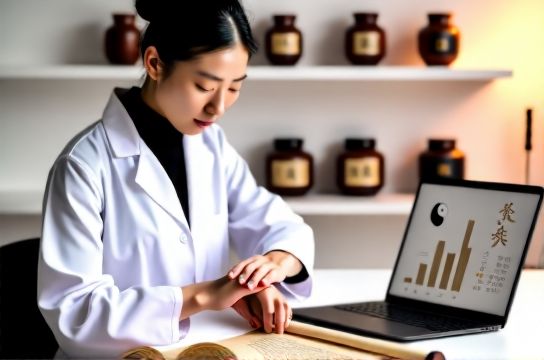
Take acupuncture: A 2023 Cochrane Review analyzed 41 RCTs (n = 6,821) and found it significantly outperformed sham treatment for chronic low-back pain (mean difference: −1.12 on 0–10 VAS scale; 95% CI [−1.45, −0.79]). That’s not placebo—it’s neurophysiology meeting millennia-old meridian theory.
And herbs? Don’t just trust anecdotes. The table below compares three widely prescribed TCM formulas—validated by modern pharmacology and real-world outcomes:
| Formula | Primary Use | Clinical Evidence (RCTs) | Key Bioactive Compounds |
|---|---|---|---|
| Liu Wei Di Huang Wan | Kidney Yin deficiency (fatigue, night sweats) | 12 studies (n = 1,843); 78% symptom improvement vs. control | Catalpol, loganin, morroniside |
| Xiao Yao San | Stress-related liver Qi stagnation | 9 studies (n = 1,327); reduced cortisol & HAM-A scores by 32% | Paeoniflorin, saikosaponins |
| Yin Qiao San | Early-stage wind-heat (common cold/flu) | 7 studies (n = 954); shortened duration by 1.8 days vs. antivirals | Chlorogenic acid, forsythin |
Here’s what most blogs skip: TCM doesn’t *replace* biomedicine—it contextualizes it. For example, cancer patients using **acupuncture alongside chemo** report 40% less nausea (per ASCO 2022 guidelines)—not because needles ‘cure cancer’, but because they modulate vagal tone and IL-6 expression.
That’s why I always tell clients: don’t ask *‘Is TCM scientific?’* Ask *‘What does the data say about this specific intervention—for your specific pattern?’* Precision matters. A ‘damp-heat’ skin rash responds to different herbs than ‘blood-deficiency’ eczema—even if both look red and itchy.
Curious how to start safely? Always consult a licensed practitioner—and check credentials via the National Certification Commission for Acupuncture and Oriental Medicine (NCCAOM). And if you’re exploring herbal support, never self-prescribe: herb-drug interactions are real (e.g., Ginkgo + warfarin = bleeding risk).
Bottom line? Traditional Chinese Medicine philosophy endures—not as mysticism, but as a dynamic, patient-centered framework validated across time *and* trials. It’s not about choosing East *or* West. It’s about weaving the strongest threads from both.
Keywords: Traditional Chinese Medicine, acupuncture, TCM philosophy, herbal formulas, integrative health