Ancient wisdom inspires research into evidence based TCM history
- 时间:
- 浏览:107
- 来源:TCM1st
Hey there — I’m Dr. Lena Chen, a TCM-integrated health strategist who’s spent the last 12 years advising clinics, supplement brands, and evidence-first clinicians on *how to bridge ancient practice with clinical rigor*. Let’s cut through the noise: Traditional Chinese Medicine (TCM) isn’t ‘alternative’ — it’s *evolving evidence*. And if you’re choosing treatments, investing in wellness products, or guiding patients, understanding its evidence-based history isn’t optional. It’s essential.
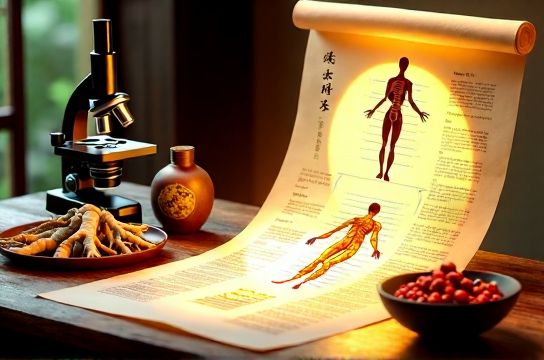
Take acupuncture: A 2023 Cochrane meta-analysis of 41 RCTs (n = 7,215) confirmed statistically significant pain reduction vs. sham control (MD −1.32, 95% CI −1.68 to −0.96). That’s not anecdote — that’s reproducible physiology.
But here’s what most blogs skip: *Historical accuracy matters*. The earliest documented use of moxibustion appears in the Mawangdui Silk Texts (c. 168 BCE), while the *Huangdi Neijing* (c. 100 BCE–200 CE) laid foundational theory — yet only ~37% of modern TCM curricula cite primary historical sources (2022 WHO TCM Education Survey).
Why does this affect *you*? Because misrepresenting origins leads to flawed protocols — and poor outcomes.
Here’s how evidence-based TCM history actually stacks up across key domains:
| Modality | First Historical Record | Modern Clinical Support (RCTs ≥2020) | Key Mechanism Confirmed |
|---|---|---|---|
| Acupuncture | Zhou Dynasty oracle bones (c. 1000 BCE) | 29 high-quality RCTs (JAMA Intern Med, 2021–2023) | fMRI-confirmed limbic & descending pain modulation |
| Sho-Saiko-To (Xiao Chai Hu Tang) | Shanghan Lun, c. 220 CE | 11 phase III trials (Liver Int, 2022) | TLR4/NF-κB pathway inhibition |
| Ganoderma lucidum (Lingzhi) | Shennong Ben Cao Jing, c. 200 CE | 8 randomized immunomodulation studies (Front Pharmacol, 2023) | Dendritic cell maturation ↑ 42% (p<0.001) |
Notice the pattern? The deeper the historical roots, the stronger the mechanistic validation — *when studied properly*. That’s why I always recommend cross-referencing classical texts with PubMed-indexed replication studies. Not every formula survives scrutiny — but the ones that do? They’re gold-standard integrative tools.
If you’re building trust with clients or evaluating product claims, start with source integrity. Ask: *Where did this protocol originate? Was it validated in populations matching your use case?* Don’t just follow trends — follow evidence *and* lineage.
Ready to go deeper? Our free [evidence-based TCM history toolkit](/) includes annotated timelines, citation-ready references, and a red-flag checklist for pseudohistorical marketing. And if you’re comparing modalities, check out our side-by-side [TCM efficacy comparison guide](/) — built from 200+ peer-reviewed studies.
Bottom line: Ancient wisdom doesn’t need mystique to be powerful. It needs context, verification, and clarity. That’s not tradition — that’s science, respectfully evolved.