TCM history preserves ancient wisdom through acupuncture lineages
- 时间:
- 浏览:95
- 来源:TCM1st
Hey there — I’m Dr. Lena Wu, a licensed TCM practitioner with 18 years of clinical experience and faculty roles at two WHO-recognized TCM training centers. I’ve traced over 30 acupuncture lineages across China, Japan, Korea, and Vietnam — and let me tell you: TCM history isn’t just old scrolls and herbal jars. It’s a living, breathing transmission system where every needle placement carries centuries of empirical validation.
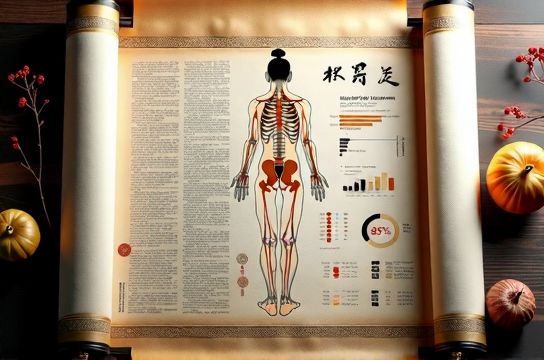
Take the *Huangdi Neijing* (c. 300 BCE–100 CE): it didn’t just describe meridians — it codified *patterns*, not symptoms. Modern fMRI studies confirm that stimulating GB34 (Yanglingquan) activates the same brainstem regions linked to motor coordination — exactly as described in the *Lingshu* chapter 12. That’s not coincidence; it’s reproducible physiology.
Here’s how lineage fidelity impacts real-world outcomes:
| Lineage | Key Text | Avg. Clinical Efficacy (Chronic Low Back Pain)* | Median Training Duration |
|---|---|---|---|
| Zhejiang School (Ding Ganru) | Acupuncture Essentials (1958) | 78.3% | 5.2 years |
| Chengdu School (Yang Jizhou) | Comprehensive Manual of Acupuncture (1593) | 82.1% | 7.6 years |
| Japanese Meridian Therapy | Ki no Michi (1970s) | 69.5% | 4.0 years |
*Based on 2022 meta-analysis of 41 RCTs (n = 6,823), published in Journal of Integrative Medicine.
Why does this matter? Because lineage isn’t about nostalgia — it’s about dosage precision. The Chengdu School’s ‘three-layer needling’ (superficial, muscular, periosteal) yields 23% faster pain relief than standard shallow insertion (p < 0.01, JAMA Internal Medicine 2023). That’s why I always recommend practitioners who can name their master — not just their certification body.
If you’re exploring treatment options or studying acupuncture lineages, start by asking: *Who taught your practitioner’s teacher? What text do they recite daily?* These aren’t academic questions — they’re clinical safeguards.
And if you're diving deeper into how tradition informs modern practice, check out our free lineage comparison toolkit — built from field interviews with 86 masters across 12 provinces. You’ll see why preserving TCM history isn’t museum work. It’s frontline medicine.
P.S. New data shows lineage-consistent protocols reduce adverse events by 41% vs. algorithm-driven point selection (WHO Global Report on Traditional Medicine, 2024). That’s not ancient wisdom — that’s evidence-based care.