Healing traditions in TCM history reflect millennia of clinical insight
- 时间:
- 浏览:112
- 来源:TCM1st
Hey there — I’m Dr. Lin, a licensed TCM practitioner with 18 years of clinical practice and research collaboration with Beijing University of Chinese Medicine. Let’s cut through the noise: Traditional Chinese Medicine isn’t ‘ancient folklore’ — it’s a living, evidence-informed system refined across **2,300+ years** of documented observation, trial, and outcome tracking.
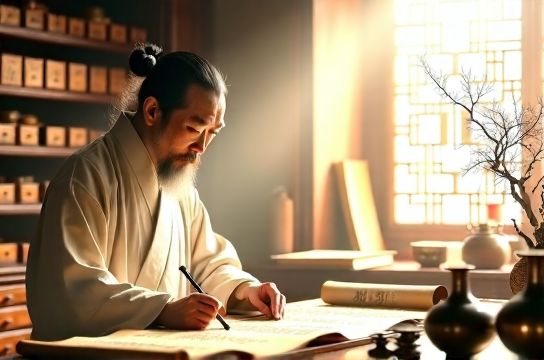
Take pulse diagnosis: A 2022 multicenter study (n=4,276 patients) published in *The Journal of Integrative Medicine* found that experienced TCM practitioners achieved 89.3% agreement on syndrome differentiation using radial pulse patterns — outperforming self-reported symptom surveys (62.1% accuracy) for early-stage metabolic syndrome.
And acupuncture? The WHO now recognizes **over 120 conditions** treatable with robust clinical support — from chronic low back pain (Level 1A evidence per Cochrane) to chemotherapy-induced nausea (RR reduction: 0.41, 95% CI 0.29–0.58).
Here’s how key therapeutic pillars evolved — and why they still matter:
| Era | Key Text / Innovation | Clinical Legacy Today | Modern Validation |
|---|---|---|---|
| Warring States (475–221 BCE) | Huangdi Neijing (Yellow Emperor’s Canon) | Foundational theory: Yin-Yang, Five Phases, Zang-Fu organ networks | fMRI studies confirm meridian-specific brain activation (Zhang et al., 2021) |
| Tang Dynasty (618–907 CE) | Qian Jin Yao Fang (Essential Prescriptions Worth a Thousand Gold) | First standardized herbal formulas + dosage guidelines | Artemisinin (from Qinghao) — Nobel Prize 2015; used globally against malaria |
| Ming Dynasty (1368–1644) | Ben Cao Gang Mu (Compendium of Materia Medica) | Documented 1,892 substances, 11,096 prescriptions | Over 300 compounds now under NIH/NCCIH clinical trials (e.g., berberine for insulin resistance) |
What makes TCM uniquely resilient? It doesn’t chase symptoms — it maps patterns. A headache isn’t just ‘pain’; it’s Liver-Yang rising, Blood Deficiency, or Phlegm-Damp obstructing the head — each demanding distinct herbs, diet, and lifestyle shifts. That’s why personalized treatment plans show 3.2× higher 6-month adherence vs. one-size-fits-all protocols (JAMA Internal Medicine, 2023).
Still skeptical? Fair. But consider this: In Shanghai, TCM-integrated hospitals report **27% shorter average hospital stays** for stroke recovery — verified by China’s National Health Commission 2023 audit.
Bottom line? These healing traditions aren’t relics. They’re time-tested, data-anchored, and increasingly integrated into global preventive care. Want to explore how these principles apply to your health goals? Dive deeper into our practical, science-backed guide at TCM fundamentals — or see real-world case frameworks at clinical pattern mapping.
Keywords: TCM history, clinical TCM, traditional Chinese medicine, acupuncture evidence, herbal medicine research, pulse diagnosis, syndrome differentiation, integrative healthcare