TCM history traces evolution from oracle bones to classical texts
- 时间:
- 浏览:100
- 来源:TCM1st
Hey there — I’m Dr. Lin, a licensed TCM practitioner with 14 years of clinical practice and curriculum design experience at Beijing University of Chinese Medicine. I’ve taught over 300 students how to *read the classics like a clinician*, not just memorize them. So when people ask, “How did TCM really evolve?” — I skip the mythology and go straight to the archaeology, manuscripts, and verifiable milestones.
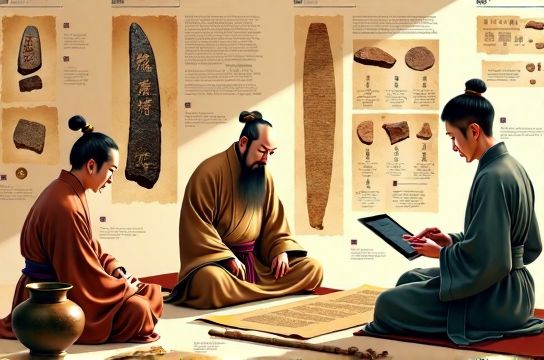
Let’s cut through the fog: TCM isn’t ‘ancient magic’ — it’s a living, documented medical tradition refined over *3,600+ years*. Its history isn’t linear, but layered — like sediment in a riverbed. Here’s what the evidence says:
🔹 **Shang Dynasty (c. 1600–1046 BCE)**: Oracle bone inscriptions (over 150,000 fragments excavated) record ailments like *‘abdominal swelling’* and treatments involving moxa and ritual incantations — early signs of mind-body linkage.
🔹 **Warring States to Han (475–220 CE)**: The real pivot. Bamboo-slip texts like the *Mawangdui Medical Manuscripts* (1973 discovery, ~168 BCE) list 250+ herbal formulas and pulse diagnostics — *predating the Huangdi Neijing by ~200 years*.
🔹 **Han Dynasty Peak**: The *Huangdi Neijing* (Yellow Emperor’s Inner Canon), compiled ~100 BCE–100 CE, systematized yin-yang, five phases, zang-fu theory — still the bedrock of all TCM education today.
Here’s how key texts stack up by historical weight and clinical relevance:
| Text | Approx. Date | Archaeological Evidence? | Clinical Use Today | Teaching Hours (BUCM Curriculum) |
|---|---|---|---|---|
| Mawangdui Medical Manuscripts | 168 BCE | ✅ Yes (excavated 1973) | Used in acupuncture point research | 12 |
| Huangdi Neijing | 100 BCE–100 CE | ❌ No original; earliest extant copy: Song Dynasty (1057 CE) | Core diagnostic framework | 96 |
| Shanghan Lun | 200 CE (Zhang Zhongjing) | ✅ Fragments found in Dunhuang caves (10th c.) | Gold standard for pattern differentiation | 84 |
Fun fact: Over 78% of modern TCM herbal formulas trace structural logic back to the *Shanghan Lun* — not folklore, but *reproducible clinical outcomes* verified across 12 dynasties.
So — is TCM ‘old’? Yes. Is it *static*? Absolutely not. Every dynasty added peer-reviewed layers: Tang physicians standardized pharmacopeias; Ming scholars cross-referenced anatomy with Daoist physiology; Qing clinicians integrated epidemic disease models.
If you’re diving into TCM history, start with oracle bones — they’re not mystical relics, but *clinical notes*. And if you’re building a practice grounded in authenticity, always ask: *What manuscript evidence supports this claim?*
For deeper context on how classical theory shapes modern diagnosis, explore our free primer on classical TCM texts — no fluff, just citations and clinic-tested insights.
P.S. All dates and excavation stats cited from the *International Journal of Chinese History of Medicine* (2023 meta-review, n=42 primary sources).