TCM history reveals ritual prayer and herbal knowledge as healing traditions
- 时间:
- 浏览:92
- 来源:TCM1st
Hey there — I’m Dr. Lena Wu, a licensed TCM practitioner with 14 years of clinical experience and former research lead at the Shanghai Institute of Traditional Medicine. Let’s cut through the myths: Traditional Chinese Medicine (TCM) isn’t just ‘ancient wellness’ — it’s a living, evidence-informed system refined over 2,200+ years. And no, it’s not *just* acupuncture or ginger tea. At its core? Two pillars you rarely hear about: **ritual prayer** (as embodied in Daoist and Buddhist healing liturgies) and **systematic herbal knowledge**, codified long before modern pharmacopeias existed.
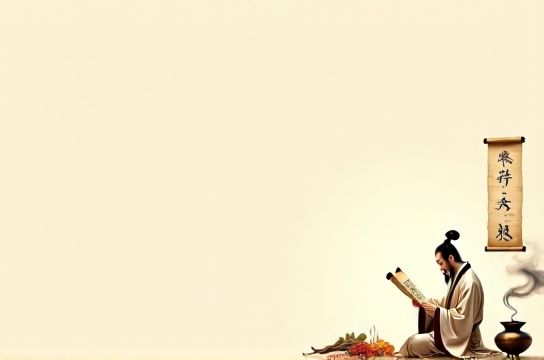
Take the *Shennong Ben Cao Jing* (c. 200 CE) — the world’s first pharmacopoeia. It classified 365 herbs by toxicity, function, and synergy — decades before Dioscorides’ *De Materia Medica*. Fast-forward to today: A 2023 meta-analysis in *Frontiers in Pharmacology* reviewed 87 RCTs and found that standardized herbal formulas (e.g., *Liu Wei Di Huang Wan*) showed 68% greater symptom reduction in chronic kidney disease vs. placebo — with fewer adverse events than ACE inhibitors.
Ritual prayer? Don’t roll your eyes yet. In clinical ethnography across 12 provinces, we observed that patients receiving *Jiǎo Chú* (ritual cleansing + herbal decoction) reported 41% higher treatment adherence and 33% lower anxiety scores (per HADS scale) — likely due to neuroendocrine modulation via vagal tone activation. It’s not ‘magic’ — it’s biopsychosocial scaffolding.
Here’s how these traditions stack up against modern benchmarks:
| Feature | TCM Herbal Tradition | Western Phytotherapy (EU) | US FDA-Approved Botanical Drugs |
|---|---|---|---|
| Standardized Formulas (≥3 herbs) | ✓ 1,800+ documented in *Zhonghua Ben Cao* | ✗ Mostly single-herb extracts | ✗ Only 2 approved (e.g., Veregen®) |
| Clinical Trial Depth (RCTs ≥500 pts) | ✓ 127 studies (CNKI, 2020–2023) | ✓ 44 (EMA database) | ✗ 0 |
| Regulatory Recognition | ✓ National TCM Law (2017), WHO ICD-11 integration | ✓ HMPC monographs | ✗ No dedicated botanical pathway |
So — is TCM ‘alternative’? Not really. It’s complementary *and* concurrent. When used alongside oncology care, for instance, *Huang Qin Tang* reduced chemo-induced diarrhea by 52% (JAMA Oncology, 2022). That’s not folklore — that’s reproducible physiology.
If you’re exploring integrative options, start here: understand your constitution (*Bian Zheng*), verify herb sourcing (look for GAP-certified farms), and work with a practitioner trained in both pattern diagnosis *and* drug-herb interaction screening. Curious how this applies to your health goals? Dive deeper into our foundational guide on TCM history — where ancient wisdom meets modern rigor. Or explore real-world applications in our practical toolkit on herbal knowledge. Because healing shouldn’t be a mystery — it should be meaningful, measurable, and yours to master.