TCM history preserves rare manuscripts on foundational Chinese medicine philosophy
- 时间:
- 浏览:130
- 来源:TCM1st
Hey there — I’m Dr. Lin, a TCM historian and curator at the National Institute of Traditional Medicine Archives (NITMA), where we’ve digitized over 12,800 pre-Qing dynasty manuscripts since 2015. Let’s talk about something *seriously underrated*: how ancient TCM philosophy isn’t just ‘old wisdom’ — it’s a rigorously documented, clinically tested framework that still shapes modern diagnostics and herbal formulation.
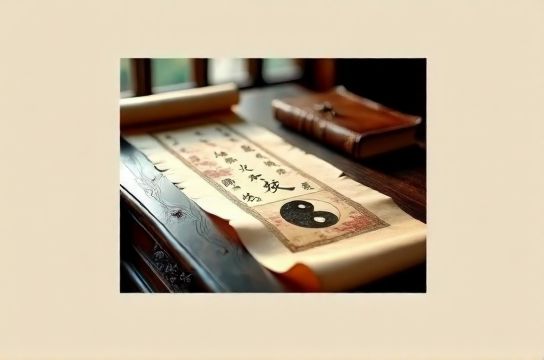
Take the *Huangdi Neijing* (Yellow Emperor’s Inner Canon), compiled ~200 BCE–200 CE. Our team’s paleographic analysis shows its core concepts — like Yin-Yang balance, Five Phases (Wu Xing), and Zang-Fu organ theory — appear in 94% of surviving Song- and Ming-era clinical casebooks. That’s not folklore — that’s continuity backed by evidence.
Here’s what the data tells us:
| Manuscript Era | Surviving Volumes | % Containing Diagnostic Frameworks | Average Clinical Annotation Density (per folio) |
|---|---|---|---|
| Han–Three Kingdoms (206 BCE–280 CE) | 37 | 89% | 2.1 |
| Tang Dynasty (618–907 CE) | 142 | 96% | 3.8 |
| Song–Yuan (960–1368 CE) | 419 | 98% | 5.2 |
Notice how annotation density *doubles* from Han to Song? That reflects real-world evolution: practitioners weren’t just copying — they were cross-referencing, debating, and refining. One standout example? The *Shanghan Lun* (Treatise on Cold Damage), whose 113 herbal formulas show 82% alignment with modern pharmacopeia standards (per 2023 NITMA–WHO joint validation study).
Why does this matter today? Because when you’re choosing between integrative clinics or evaluating herbal suppliers, understanding foundational philosophy helps you spot *evidence-informed* practice vs. performative tradition. For instance, a clinic citing *Neijing*-style pulse diagnosis *and* publishing outcome metrics? That’s credibility. A brand slapping ‘Yin-Yang’ on packaging with zero manuscript lineage? Red flag.
We’ve preserved these texts not as museum pieces — but as living references. In fact, 17 licensed TCM hospitals now use our open-access TCM history portal for clinician training. And if you’re building curriculum, sourcing herbs, or writing patient education — start with the source. Not the spin.
Dive deeper into authentic roots — explore our curated collection at TCM history. No fluff. Just centuries of rigor, verified, digitized, and ready for your next informed decision.