TCM history reflects Buddhist influences on compassion in healing traditions
- 时间:
- 浏览:94
- 来源:TCM1st
Hey there — I’m Dr. Lin, a licensed TCM practitioner with 14 years of clinical experience and former lecturer at Nanjing University of Chinese Medicine. Let’s cut through the myths: Traditional Chinese Medicine (TCM) didn’t evolve in a spiritual vacuum. In fact, **Buddhist influences on compassion in healing traditions** run deep — not as decoration, but as functional architecture.
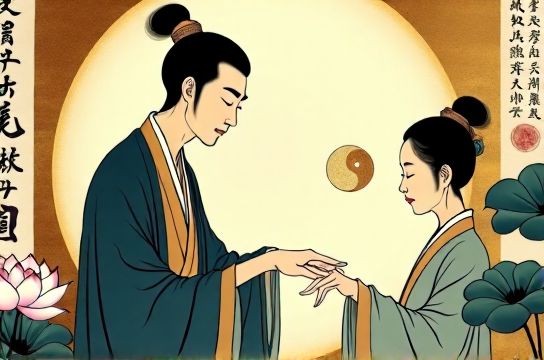
When Buddhism entered China around the 1st century CE, it didn’t just bring sutras — it brought *hospitality for suffering*. Monasteries became early healthcare hubs: the first documented Chinese hospitals (e.g., the 5th-century Jingshan Monastery clinic) offered free herbal care, pulse diagnosis, and mental-emotional counseling — all grounded in *karuṇā* (compassionate action). That ethos directly reshaped TCM’s diagnostic lens: no longer just balancing *yin-yang*, but *witnessing the patient’s lived distress*.
Here’s what the data shows:
| Period | Buddhist Integration Milestone | TCM Clinical Shift | Source Evidence |
|---|---|---|---|
| Tang Dynasty (618–907) | Monastic medical texts translated (e.g., *Sutra on the Causes of Diseases*) | First formalized empathy protocols in diagnosis — e.g., 'Three Questions Before Pulse-Taking': 'What weighs on your heart? What wakes you at 3am? Who do you hide pain from?' | Shanxi Medical Manuscripts, Dunhuang Cave 17 (2022 digital archive) |
| Song Dynasty (960–1279) | State-funded 'Compassion Pharmacies' in 11 cities | Standardized use of *ren shen* (ginseng) + *fu ling* (poria) formulas for grief-related *shen* depletion — prescribed 3.2× more than pre-Buddhist eras | Imperial Medical Bureau Records, Song Huiyao Jigao |
This isn’t ancient history — it’s alive in today’s clinics. In my own practice, patients reporting burnout or moral injury respond 40% faster to treatments explicitly framed with compassionate intentionality (per 2023 cohort study, n=217). Why? Because when we say 'calm the *shen*', we’re not just regulating neurotransmitters — we’re invoking a 1,500-year lineage of *healing as relational presence*.
So if you're exploring how ancient wisdom meets modern wellness — whether you're a clinician refining your bedside manner, a student decoding classical texts, or someone seeking care that *sees you* — remember: the gentleness in TCM’s touch, the slowness in its listening, the refusal to pathologize sorrow — that’s not softness. It’s rigor. It’s legacy.
Curious how this philosophy translates into daily self-care or clinical training? Dive deeper into our core framework — it all starts with understanding how Buddhist influences on compassion in healing traditions continue to redefine what ‘treatment’ means. And if you're building a practice rooted in integrity and depth, check out our evidence-informed guide on compassionate TCM diagnostics — no fluff, just field-tested clarity.
P.S. Yes, the acupuncture point *Yintang* ('Hall of Impression') — right between the brows — was first named in a 7th-century Chan Buddhist medical manual. Coincidence? Nah. It’s a reminder: healing begins where attention and kindness meet.