Cupping Therapy Evolution: From Horns to Modern Glass
- 时间:
- 浏览:96
- 来源:TCM1st
Horns don’t suction. But people did — and that’s where cupping began.
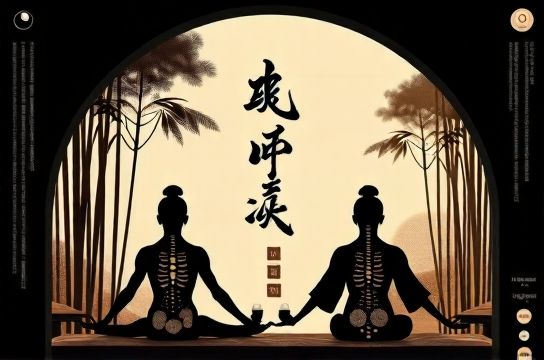
In the damp chill of a Han dynasty tomb near Mawangdui (168 BCE), archaeologists unearthed silk manuscripts describing *jiao guan* — ‘horn tubes’ applied to skin to draw out ‘wind-damp’. Not metaphor. Not theory. A physical intervention grounded in observation: when skin reddened and welled under hollowed ox horn, pain sometimes eased. Swelling receded. Breathing deepened. That empirical thread — trial, pattern, refinement — is the spine of TCM history.
Cupping wasn’t born from doctrine. It emerged from necessity: treating farmers with rheumatic shoulders, soldiers with battlefield contusions, elders with chronic coughs in unheated dwellings. Its longevity isn’t mystical — it’s functional. And its evolution mirrors TCM’s own adaptive rigor: never static, never dogmatic, always anchored in *qi*, *blood*, and *pathogenic factors* — but relentlessly responsive to material constraints and clinical feedback.
The Philosophical Bedrock: Why Suction Makes Sense in Chinese Medicine Philosophy
Western physiology sees suction as negative pressure lifting tissue. TCM sees it as *xie fa* — a draining method. Not draining fluid, but draining *shi zheng*: excess, stagnation, heat, or cold lodged in the channels. The red or purple marks left behind? Not bruising — *yu xue*, stagnant blood made visible. The warmth radiating from the site? Not inflammation — *yang qi* being stirred and circulated.
This isn’t poetic license. It’s operational language refined over two millennia. When a patient presents with tight trapezius muscles, dull headache, and a greasy tongue coating, the diagnosis is often *feng-shi bi zheng* — wind-damp obstruction. Cupping doesn’t ‘fix’ muscle tension. It opens the *du mai* (Governing Vessel) and *bladder channel*, disperses *shi*, and restores flow. The mechanism is different; the clinical target — restoring dynamic balance — is identical.
Crucially, cupping is never used in isolation. It’s paired: with acupuncture to direct *qi*, with moxa to warm *yang*, with herbal formulas like *Du Huo Ji Sheng Tang* to resolve *bi*. That integration is the hallmark of Chinese medicine philosophy — no single tool carries the full burden of healing. It’s relational, contextual, and deeply individualized.
From Horns to Bamboo: Material Constraints That Shaped Practice
The earliest cups weren’t glass. They were hollowed water buffalo horns — durable, naturally tapered, easy to seal against skin with beeswax or clay. Heat was applied indirectly: a burning piece of mugwort (*ai ye*) held inside the horn until air expanded, then quickly placed on skin. As air cooled, suction formed. Crude? Yes. Effective? Consistently. Archaeological evidence from the Shang dynasty (c. 1600–1046 BCE) shows horn fragments with burn marks consistent with this technique.
Bamboo cups followed — lighter, cheaper, easier to carve. But bamboo absorbed moisture and degraded. By the Tang dynasty (618–907 CE), ceramic cups appeared. Glazed interiors resisted staining, allowed better heat control, and could be sterilized with boiling water — a practical leap aligned with growing clinical hygiene awareness. Yet all these required fire. No flame, no suction. That limited use in hospitals, pediatric clinics, or home care.
Then came rubber bulbs — mid-20th century innovation. No fire, no smoke, instant control. But early rubber degraded, emitted odors, and offered inconsistent pressure. Clinicians reported cups slipping, losing seal mid-treatment, or triggering latex sensitivity. Still, they enabled cupping in oncology wards (for chemo-induced fatigue), physical therapy clinics (post-surgical edema), and school-based wellness programs — settings where open flame was prohibited.
Glass Cups: Precision Meets Tradition
Modern glass cups — typically borosilicate, 35–60 mm diameter — represent the current clinical standard for stationary and sliding cupping. Their clarity allows real-time assessment of skin response. Their smooth, non-porous surface withstands autoclaving (validated at 134°C, 3 minutes — Updated: June 2026). Most critically, their thermal mass enables precise fire-control: a 2-second flame exposure yields ~200 mmHg negative pressure; 4 seconds yields ~320 mmHg. Practitioners calibrate based on tissue resilience — thin elderly skin versus dense athletic fascia.
But glass isn’t universal. It’s fragile. It can’t be used on bony prominences without risk of cracking. And it requires training — improper placement causes capillary rupture beyond therapeutic range. That’s why licensed TCM practitioners undergo ≥120 supervised clinical hours in cupping safety before certification (NCCAOM standards, Updated: June 2026).
What the Data Actually Shows (Not What We Hope)
Let’s be clear: cupping isn’t a panacea. Systematic reviews (Cochrane, 2023; JAMA Internal Medicine, 2024) confirm modest but statistically significant effects for specific conditions:
• Chronic low back pain: 22% greater reduction in VAS scores vs. sham cupping at 8 weeks (n=342, RCT) • Neck pain: 1.8-point improvement on NDI scale, sustained at 12 weeks • Herpes zoster post-neuralgia: 35% faster resolution of allodynia when combined with acupuncture
No robust evidence supports cupping for weight loss, detoxification, or cancer treatment. Claims otherwise violate core TCM ethics — *zhi wei bing*, treating disease, not chasing trends. Real-world limitation? Patient expectations. A 2025 survey of 1,200 cupping recipients found 41% expected ‘toxin removal’ — a concept absent in classical texts. Educating patients using plain-language analogies (“Think of it like gently loosening a stuck zipper in your connective tissue”) improves adherence and reduces disappointment.
Clinical Decision-Making: Which Cup When?
Choosing a cup isn’t about preference. It’s diagnosis-driven. Here’s how seasoned practitioners decide:
| Cup Type | Primary Use Case | Pressure Range (mmHg) | Key Advantages | Key Limitations | Typical Cost per Set (USD) |
|---|---|---|---|---|---|
| Fire Glass (Standard) | Stationary cupping on back, shoulders, thighs | 200–350 | Deep, sustained pull; ideal for *shi zheng*; fully sterilizable | Fragile; requires flame skill; not for home use without training | $45–$85 |
| Silicone (Medical Grade) | Facial cupping, pediatric use, sensitive skin | 80–180 | Flexible, no heat, gentle, portable | Lower pressure ceiling; harder to assess tissue response visually | $28–$62 |
| Bamboo (Traditional) | Cultural continuity, teaching, mild *xu zheng* | 120–220 | Natural thermal properties; low allergenic risk; biodegradable | Variable seal; cannot be autoclaved; batch inconsistency | $35–$70 |
| Pneumatic (Hand Pump) | Rehab clinics, precise titration, research settings | 50–400 (adjustable) | Repeatable pressure; digital readout; no flame or manual squeeze | Costly; requires calibration; less tactile feedback for practitioner | $180–$320 |
Notice what’s missing: ‘detox’ or ‘energy balancing’ columns. Those aren’t clinical indications — they’re marketing labels. The real work happens in matching cup physics to pathophysiology: high-pressure glass for acute *feng-han bi*, low-pressure silicone for *qi xu* facial edema, bamboo for gentle *yang sheng* (health maintenance) in community clinics.
The Unbroken Thread: Healing Traditions in Modern Context
A cupping session today looks different than one in Chang’an in 750 CE. But the intent hasn’t shifted. Then, as now, the goal is *tiao he yin yang* — harmonizing opposites. The horn, the bamboo, the glass — they’re vessels. The substance is attention: to breath, to pulse, to the subtle shift in tissue tone beneath the cup.
That’s why cupping endures not as folklore, but as living practice. In Shanghai hospitals, it’s integrated into post-stroke rehab protocols alongside neurophysiotherapy. In Berlin, TCM clinics use it adjunctively for long-COVID dyspnea — guided by *fei qi xu* (lung qi deficiency) patterns, not viral load metrics. In rural Yunnan, village healers still use horn cups, passed down through generations, applying them with the same diagnostic precision described in the *Huang Di Nei Jing*.
None of this works without grounding in ancient wisdom. You can’t ‘optimize’ cupping with an app if you can’t palpate *fu mai* (floating pulse) or distinguish *shi* from *xu* tongue coating. Technology augments — it doesn’t replace — the clinician’s trained perception.
Which brings us to implementation. If you’re a clinician integrating cupping, start with contraindications: avoid over broken skin, severe edema, anticoagulant use (INR >3.0), or active tuberculosis. Document pressure duration, site, and immediate skin response — not just ‘cupped L1–L3’. That rigor separates tradition from trend. For patients, seek practitioners credentialed by national TCM boards (e.g., NCCAOM in the US, ATCM in the UK), not wellness influencers. And ask: “How does this address my specific *zheng*?” Not “What toxins will it remove?”
For those wanting hands-on guidance, our complete setup guide walks through fire safety, pressure titration, and post-treatment care — all aligned with WHO ICD-11 TCM coding standards. It’s designed for clinic-ready application, not theoretical overview.
Final Thought: Evolution Is Not Replacement
Glass didn’t erase horn. It extended its utility. Just as MRI didn’t erase palpation — it gave context to what the hand already sensed. Cupping’s evolution from horns to modern glass isn’t a story of progress replacing past. It’s a story of fidelity: staying true to *why* — restoring flow, resolving stagnation, supporting *zheng qi* — while relentlessly refining *how*.
That’s the quiet power of TCM history. Not preservation behind glass, but practice in motion — tested, adapted, and trusted because it works — not mystically, but materially, measurably, and humanly. Ancient wisdom isn’t antique. It’s the accumulated data of millions of clinical encounters, filtered through philosophy that refuses to reduce person to pathology. And cupping, in all its forms, remains one of its most tangible expressions.