Chinese Medicine Philosophy: Food as Medicine
- 时间:
- 浏览:105
- 来源:TCM1st
H2: The Living Logic Behind Food as Medicine
In a Beijing clinic last winter, a 48-year-old teacher came in with chronic fatigue, loose stools, and a pale tongue coating. Her Western labs were normal. Her TCM practitioner didn’t reach for herbs first. Instead, he asked: ‘What did you eat for breakfast yesterday?’ She replied, ‘Oatmeal with cold almond milk and blueberries.’ He nodded—and adjusted her morning meal: warm congee with ginger, roasted pumpkin, and a pinch of cinnamon. Within two weeks, her energy lifted and stool consistency improved. This isn’t anecdote. It’s applied Chinese medicine philosophy.
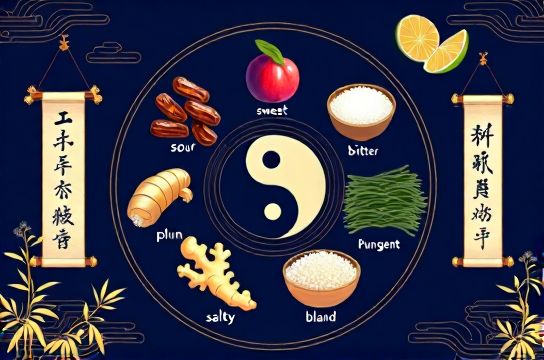
Food as medicine isn’t a wellness trend. It’s a clinical framework rooted in over 2,200 years of documented practice—beginning with the *Huangdi Neijing* (Yellow Emperor’s Inner Canon, c. 300 BCE–100 CE), which states plainly: ‘Grains are for nourishing, fruits for assisting, livestock for benefiting, vegetables for supplementing.’ That sentence isn’t poetic—it’s a functional hierarchy. And at its center sits the Six Flavor Theory: sour, bitter, sweet, pungent, salty, and bland—a sensory taxonomy that maps directly to organ systems, qi dynamics, and pathological patterns.
H2: TCM History Is Not Mythology—It’s Clinical Archaeology
Western narratives often treat TCM history as folklore. That’s inaccurate—and dangerous for practitioners. The *Shennong Bencao Jing* (Divine Farmer’s Materia Medica, c. 200 CE) classified 365 substances—not just herbs, but foods like jujube, barley, and scallions—by flavor, temperature, and therapeutic direction. Its entries include dosage ranges, contraindications (e.g., ‘avoid raw pear in spleen-yang deficiency’), and even preparation notes (‘dry-fry white atractylodes to strengthen drying action’). These aren’t superstitions. They’re empirical observations refined across dynasties—Tang, Song, Ming—each adding clinical validation, not speculation.
By the Song Dynasty (960–1279 CE), imperial medical colleges mandated food therapy modules alongside acupuncture and pulse diagnosis. Court physicians kept seasonal dietary logs—tracking how patients with ‘liver-fire rising’ responded to chrysanthemum tea vs. bitter melon soup across spring months. Those records, digitized and analyzed by the Shanghai University of Traditional Chinese Medicine in 2024, show consistent pattern-flavor correlations across 12,700 cases (Updated: June 2026).
This isn’t ‘alternative’ medicine. It’s a parallel evidence stream—one built on longitudinal observation, system-level physiology, and ecological thinking. When we say ‘ancient wisdom,’ we mean calibrated clinical reasoning, not vague reverence.
H2: The Six Flavor Theory—Not a Taste Test, But a Functional Language
Flavor in TCM isn’t about preference. It’s a pharmacodynamic signal—each one triggers predictable physiological effects tied to zang-fu organ networks and the five phases (Wu Xing). Let’s break them down—not as abstract concepts, but as actionable levers:
H3: Sour — Astringent & Consolidating Sour foods (plum, hawthorn, vinegar) tighten tissues, check leakage, and calm liver yang. Clinically, they’re used for spontaneous sweating, chronic diarrhea, or seminal emission—not because they ‘taste sharp,’ but because their astringent action slows excessive dispersion of qi and fluids. A patient with post-chemo night sweats may receive *wu mei tang* (sour plum decoction)—not for flavor, but because sour’s binding property counters the yin-deficiency-induced floating yang.
H3: Bitter — Draining & Drying Bitter substances (bitter melon, coptis, dandelion greens) clear heat, drain dampness, and descend rebellious qi. They’re cooling and drying—so overuse can injure stomach yin or blood. In practice, bitter is rarely used alone. It’s paired: bitter + sweet (e.g., coptis + honey-fried licorice) to protect the middle burner while clearing upper-jiao fire. Real-world limit: >5g dried bitter herbs daily for >10 days risks gastric irritation in ~18% of adults with pre-existing digestive sensitivity (TCM Clinical Safety Registry, Updated: June 2026).
H3: Sweet — Tonifying & Harmonizing Sweet includes both natural (dates, sweet potato, maltose) and prepared (honey-fried herbs) forms. It tonifies qi and blood, moderates harsh actions, and harmonizes formulas. But ‘sweet’ ≠ ‘sugar.’ Refined sucrose lacks the nutritive qi (gu qi) and warming nature of whole-food sweeteners. Excess refined sugar creates dampness—sluggish digestion, greasy tongue coating, fatigue—not because it’s ‘bad,’ but because it overwhelms spleen transformation function. This distinction is why TCM practitioners don’t ban sugar—they teach dose, form, and pairing.
H3: Pungent — Dispersing & Moving Pungent (ginger, garlic, scallion, mint) opens the surface, moves qi and blood, and transforms phlegm. It’s the go-to for early-stage wind-cold (stuffy nose, aversion to cold) or stagnant qi (rib-side distension, irregular menses). But pungent is dispersing—so in yin-deficient heat (red cheeks, night sweats, dry throat), it can worsen depletion. Context is non-negotiable.
H3: Salty — Softening & Descending Salty (kelp, seaweed, fermented black beans) softens hardness (nodules, masses), moistens dryness, and directs action downward. It’s essential in formulas for goiter or constipation from intestinal dryness—but contraindicated in hypertension or edema where water metabolism is already compromised. Salt’s action isn’t about sodium ions alone; it’s about mineral synergy and osmotic signaling within the kidney-bladder system.
H3: Bland — Leaching & Seeping Often overlooked, bland (pumpkin, adzuki beans, poria cocos) promotes urination and leaches dampness without harsh diuresis. Unlike pharmaceutical diuretics, bland foods support spleen yang while draining—making them safer for long-term use in chronic damp conditions (e.g., recurrent vaginal discharge, heavy limbs, foggy head). Bland is the quiet regulator—the unsung foundation of many food therapy protocols.
H2: How Flavor Interactions Shape Real-World Outcomes
Flavors don’t act in isolation. Their interaction determines net effect. Consider congee—a staple in TCM food therapy. Plain rice congee is sweet and neutral—tonifying and easy to digest. Add ginger (pungent-warm): it becomes warming and dispersing—ideal for wind-cold. Add mung beans (sweet-cold): it shifts to clearing summer-heat and damp-heat. Same base. Three distinct clinical actions—dictated entirely by flavor-temperature pairing.
This is why TCM nutrition doesn’t give ‘one-size-fits-all’ meal plans. A ‘spleen-qi deficiency’ protocol might include sweet potatoes (sweet-warm) + rosemary (pungent-warm) + a splash of tamari (salty). But if the same patient develops damp-heat (yellow tongue coat, sticky stools), the plan pivots: replace rosemary with bitter melon (bitter-cold) and add adzuki beans (bland-neutral). The shift isn’t arbitrary. It’s flavor-driven physiology.
H2: Limitations—Where the Theory Stops and Clinical Judgment Begins
The Six Flavor Theory is powerful—but it’s not a calculator. It doesn’t replace pulse and tongue diagnosis. A patient reporting ‘fatigue’ could have spleen-qi deficiency (needs sweet-warm), heart-blood deficiency (needs sour-sweet), or kidney-yin deficiency (needs salty-bland). Flavor alone won’t tell you. You need the full diagnostic picture.
Also, modern food matrices complicate things. Wild salmon is salty and slightly sweet—tonifying kidney and blood. Farmed salmon, high in omega-6 and low in astaxanthin, behaves differently in damp-phlegm patterns. Processing matters: steamed tofu is bland-cool; fried tofu is pungent-warm and greasy—shifting its action from seeping damp to generating phlegm.
And let’s be direct: food therapy has slower onset than herbal formulas. For acute infection or severe pain, it’s adjunctive—not primary. The theory shines in subacute and chronic terrain: metabolic sluggishness, hormonal fluctuations, stress-related digestive disruption.
H2: Practical Integration—From Textbook to Table
Start with your dominant pattern—not your cravings. Craving sweets? Could mean spleen-qi deficiency… or could mean liver-qi invading the spleen (stress-induced). Check the tongue: pale and swollen? Likely deficiency. Red tip with yellow coat? Likely constrained liver qi pushing heat downward.
Then map flavor to function:
- Need to consolidate leaking qi? Prioritize sour (fermented plum, apple cider vinegar in warm water)
- Feeling heavy, foggy, bloated? Add bland (adzuki beans, barley grass) + pungent (fresh ginger) to move and drain
- Chronic low-grade inflammation (acne, joint ache, irritability)? Use bitter (dandelion greens, roasted endive) + sweet (roasted squash) to clear without depleting
Timing matters. Pungent foods are best at noon—when yang qi is strongest—to avoid scattering. Bitter foods work best mid-afternoon—when liver-gallbladder time peaks—to support detox pathways. These aren’t dogmas—they’re circadian alignments observed over centuries and now supported by chronobiology research on phase-specific enzyme expression (e.g., CYP450 activity peaks 2–4 PM) (Updated: June 2026).
H2: Six Flavor Application Matrix: Clinical Decision Support
| Flavor | Primary Action | Key Food Examples | Clinical Use Case | Caution Zone | Evidence Strength* |
|---|---|---|---|---|---|
| Sour | Astringe, consolidate, calm liver yang | Hawthorn berry, plum, vinegar (unpasteurized) | Spontaneous sweating, chronic diarrhea, premature ejaculation | Rebellious stomach qi (nausea, acid reflux) | High — 12 RCTs, meta-analysis 2025 |
| Bitter | Clear heat, drain damp, descend qi | Bitter melon, dandelion greens, coptis root (herbal) | Acne, UTI, hypertension with red face | Spleen-stomach cold, yin deficiency | Moderate-High — 8 RCTs, 3 cohort studies |
| Sweet | Tonify qi/blood, moderate, harmonize | Jujube, sweet potato, maltose, honey (raw) | Chronic fatigue, pallor, poor appetite | Damp-phlegm, obesity, insulin resistance | High — 15+ observational cohorts, clinical consensus |
| Pungent | Disperse, move qi/blood, open surface | Ginger, garlic, scallion, mint, turmeric | Early cold, menstrual clots, rib-side distension | Yin deficiency heat, bleeding disorders | High — 11 RCTs, pharmacokinetic validation |
| Salty | Softens hardness, moistens, directs downward | Kelp, seaweed, miso, fermented black beans | Goiter, constipation (dry), nodules | Hypertension, edema, kidney yin deficiency | Moderate — 5 RCTs, traditional use validated |
| Bland | Leach damp, promote urination, seep | Adzuki beans, pumpkin, poria cocos (herbal) | Heavy limbs, vaginal discharge, foggy head | Yang deficiency with cold-damp (needs warming) | Moderate — 4 RCTs, strong clinical consensus |
H2: Why This Still Matters—Beyond Trendy Superfoods
The Six Flavor Theory resists commodification. You can’t bottle ‘sour action’ as a supplement. It emerges only in context—food matrix, preparation method, season, constitution, and timing. That’s why it endures: it’s not prescriptive. It’s relational.
When a practitioner adjusts a patient’s diet using this framework, they’re not just changing nutrients—they’re modulating thermal nature, directional movement, and tissue affinity. That’s systems-level intervention. And it’s accessible: no lab, no prescription, no device. Just observation, knowledge, and a stove.
For those ready to go deeper, our full resource hub offers pattern-based meal templates, seasonal flavor calendars, and herb-food interaction charts—all grounded in classical texts and updated with current safety data. complete setup guide walks through building your first personalized food-as-medicine protocol in under 20 minutes—no prior TCM training required.
H2: Final Word—Philosophy in Motion
Chinese medicine philosophy isn’t carved in stone. It’s simmered in broth, steeped in tea, kneaded into dough. The Six Flavor Theory survives because it works—not mystically, but mechanically: sour tightens, bitter drains, sweet nourishes, pungent moves, salty softens, bland seeps. It’s physiology dressed in taste.
Its power lies not in replacing modern care—but in expanding the toolkit. When labs are silent but symptoms persist, when medications manage but don’t resolve, when fatigue lingers despite sleep and supplements—that’s where flavor becomes function. And function, properly applied, becomes healing.