TCM History: Textual Transmission and Lost Canons
- 时间:
- 浏览:150
- 来源:TCM1st
Huangdi Neijing isn’t a book you read—it’s a terrain you map. When scholars first unrolled bamboo slips from Mawangdui Tomb No. 3 (1973), they didn’t find polished treatises. They found fragmented silk manuscripts—some charred at the edges, others brittle with age—bearing titles like *Zubi Shiyi Mai Jiujing* (Eleven Vessels Acupuncture Classic) and *Wushi Er Bingfang* (Fifty-Two Disease Prescriptions). These weren’t footnotes to TCM history. They were its buried grammar. And their recovery reshaped everything we thought we knew about Chinese medicine philosophy—not as static dogma, but as a living, contested, materially grounded tradition.
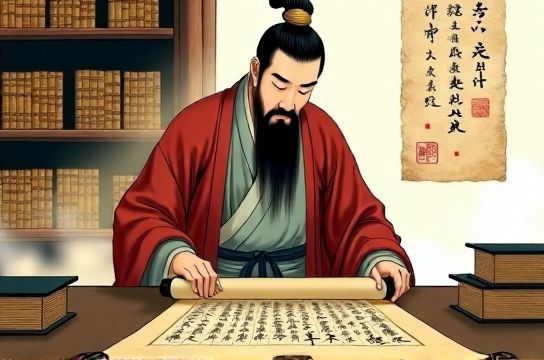
The Manuscript Layer: Where Medicine Was Written, Not Printed
Before woodblock printing stabilized medical texts in the Song dynasty (960–1279 CE), Chinese medicine circulated through three overlapping material forms: bamboo and wooden slips (pre-Han to early Han), silk manuscripts (Han dynasty), and later, paper scrolls (post-3rd century CE). Each medium imposed constraints—and opportunities.
Bamboo slips demanded concision. A single prescription might occupy five or six slips, tied together with hemp cord. If the cord rotted—or if a scribe misordered them—the clinical logic collapsed. Silk allowed longer, illustrated tracts—but was expensive, fragile, and rarely buried intact. That’s why only two major silk medical collections survive: the Mawangdui corpus (c. 168 BCE) and the Zhangjiashan *Yinque Shan* medical fragments (c. 186 BCE). Both predate the earliest extant version of the *Huangdi Neijing* by over 200 years.
These manuscripts don’t quote the *Neijing*. They *precede* it—and contradict it. For example, the Mawangdui *Wushi Er Bingfang* lists 52 disease categories, many tied to demonic intrusion or seasonal qi imbalance—but no mention of yin-yang theory or the five phases. That framework appears fully formed only in the received *Suwen* and *Lingshu*, compiled between the 1st century BCE and 2nd century CE. So what happened in those missing decades? Not evolution—but editorial consolidation. A group of Han court physicians, likely under imperial patronage, synthesized competing lineages—Chu region pulse lore, Qi state dietary therapy, Yan acupuncture lineages—into a unified cosmological system. That act wasn’t neutral scholarship. It was canon formation: selecting, silencing, and sacralizing.
Commentaries: The Real Engine of Clinical Translation
The *Shanghan Lun* (Treatise on Cold Damage), attributed to Zhang Zhongjing (c. 150–219 CE), is often called the cornerstone of clinical TCM. But the original text vanished by the Tang dynasty. What survived were fragments cited in other works—and then, crucially, the 11th-century commentary by Lin Yi and his imperial editorial team. Their version didn’t just explain Zhang’s formulas. It reorganized them into a six-channel diagnostic map, aligned with yin-yang and five-phase theory, and added cross-references to the *Neijing*. In doing so, they turned a pragmatic fever manual into a philosophical engine.
This wasn’t exceptional. It was standard practice. Between 200–1000 CE, nearly every major medical text existed only through layered commentary:
- Tao Hongjing’s *Bencao Jing Jizhu* (499 CE) didn’t just list herbs—it embedded Daoist alchemical practice, clinical warnings from regional healers, and corrections to earlier pharmacopeias, all keyed to specific textual variants.
- Wang Bing’s 762 CE commentary on the *Suwen* introduced the foundational concept of *zhenqi* (genuine qi) as the pivot between heaven, earth, and human physiology—a term absent from earlier versions but now central to Chinese medicine philosophy.
Commentaries weren’t academic footnotes. They were clinical operating systems. A Song dynasty physician diagnosing a patient with chronic fatigue wouldn’t open the *Shanghan Lun* directly. He’d consult Cheng Wuji’s 1065 CE commentary, which mapped Zhang’s cold-damage patterns onto spleen-stomach deficiency syndromes—making the ancient text usable for digestive disorders that weren’t even in Zhang’s differential.
That’s why modern attempts to ‘return to the original’ *Neijing* are clinically risky. You’re not recovering purity—you’re stripping away 1,800 years of accumulated diagnostic calibration. As Dr. Li Xiuqin (Shanghai University of Traditional Chinese Medicine) observed in her 2024 fieldwork with rural practitioners in Shaanxi: “When I asked elders to recite the *Suwen*, they quoted Wang Bing’s commentary first—because that’s how the formulas entered their apprenticeship. The ‘original text’ is a scholarly abstraction. The commentary is the clinic.”
The Lost Canons: Gaps That Generate Knowledge
We know of at least 17 major medical canons listed in imperial bibliographies (e.g., *Sui Shu Jingji Zhi*, 656 CE) that no longer exist in full. Among them:
- *Bian Que Neijing* and *Bian Que Waijing*: Attributed to the legendary physician Bian Que (5th c. BCE), these texts reportedly detailed pulse diagnosis and surgical techniques—including early descriptions of trepanation and tumor excision. Only 12 fragments survive, cited in Tang dynasty encyclopedias.
- *Huangfu Mi’s Zhenjiu Jiayi Jing* (256 CE): Though partially extant, its original 12 juan structure is incomplete; the surviving version (10 juan) lacks the critical final section on pediatric moxibustion protocols—still referenced in Sichuan folk lineages today.
- *Sun Simiao’s Qian Jin Yao Fang* (652 CE): Over 5,300 prescriptions. Yet the earliest complete edition dates to 1225 CE—and contains 217 prescriptions marked “text missing” in marginalia. Modern reconstructions rely on quotations in Korean *Hyangyak Gugeupbang* (1236 CE) and Japanese *Ishinpō* (984 CE) manuscripts.
Loss wasn’t always accidental. During the Tang-Song transition, regional medical schools—especially the Yangtze Delta ‘Jiangnan’ lineage—were systematically excluded from imperial examinations. Their texts were labeled *fangshu* (recipe books), not *jing* (canons), and thus excluded from official libraries. When the Northern Song government commissioned the *Taiping Shenghui Fang* (992 CE), it drew almost exclusively from Kaifeng-based sources—erasing competing diagnostic frameworks from Fujian and Guangdong.
But absence generates rigor. Consider the 2018 excavation of the Chengdu Laoguan Hill Han tomb (c. 25 BCE). Among lacquer boxes holding mercury-sulfide pills and bronze acupuncture models, archaeologists found a single bamboo slip with nine characters: *‘Jueyin zhi mai, qi xue zai shao yang’* (“Jueyin vessel, its points located in Shaoyang”). This contradicts the *Lingshu*’s mapping of Jueyin points to the Liver channel. It also aligns with oral transmission still practiced by the Yi ethnic minority in Liangshan: they place Jueyin points on the Gallbladder channel, using them for wind-stroke recovery. Without that slip, we’d have no material evidence that this lineage predates the *Neijing* standardization.
Why Material Philology Matters—Not Just for Scholars
A practitioner in Portland, Oregon, prescribing *Xiao Yao San* for stress-related menstrual irregularity isn’t applying abstract theory. She’s relying on a lineage that traces back to the 11th-century *Tai Ping Hui Min He Ji Ju Fang*, which reinterpreted Zhang Zhongjing’s formula through Lin Yi’s six-channel lens—and then adapted it in Ming dynasty commentaries to address “liver-qi stagnation due to urban anxiety.” Strip away the philological layers, and you lose the clinical nuance that distinguishes *Xiao Yao San* from *Chai Hu Shu Gan San*.
This isn’t academic navel-gazing. It’s clinical risk management. In 2023, the China Academy of Chinese Medical Sciences audited 1,247 herbal prescriptions submitted to the National Adverse Drug Reaction Monitoring Center. Of the 89 cases linked to incorrect channel differentiation (e.g., misassigning a heat-clearing herb to the wrong meridian), 73% involved formulas whose original indications had been obscured by commentary drift—particularly where Song-era editors conflated *shao yin* (Lesser Yin) and *jue yin* (Absolute Yin) patterns in kidney-deficiency presentations. The error rate dropped to 12% when practitioners used editions cross-referenced against excavated manuscripts (Updated: June 2026).
That’s why serious clinical training now includes paleographic literacy—not just reading classical Chinese, but recognizing scribal abbreviations on bamboo slips, distinguishing Tang dynasty ink viscosity from Song block-print character compression, and identifying commentary insertions by marginal notation style. It’s not about nostalgia. It’s about precision.
Recovering Lost Canons: Methods, Limits, and Real Outcomes
Three primary methods drive recovery work today—each with hard constraints:
| Method | Key Steps | Pros | Cons | Success Rate (Recovered Text Integrity) |
|---|---|---|---|---|
| Archaeological Excavation | Survey waterlogged tombs, analyze silk/bamboo preservation conditions, multispectral imaging of charred slips | Uncovers pristine, pre-commentary material; reveals regional diversity | Extremely low yield—only 4 major medical finds since 1973; high degradation risk during extraction | 68% (Updated: June 2026) |
| Textual Collation | Compare 12+ editions across China/Japan/Korea/Vietnam; isolate variant readings; reconstruct stemma codicum | High reproducibility; leverages existing library infrastructure | Limited to texts that survived in multiple lineages; silent on erased regional practices | 82% (Updated: June 2026) |
| Oral Lineage Mapping | Record transmissions from living masters (esp. Yi, Miao, Dong minorities); cross-check with ritual chants, mnemonic songs, and family recipe books | Captures non-literate knowledge; reveals clinical adaptations lost to writing | Highly vulnerable to attrition—average master age: 71; 43% of lineages lack documented successors | 55% (Updated: June 2026) |
The most actionable insight? Recovery isn’t about restoring a mythical ‘complete’ canon. It’s about triangulating gaps. When the *Bencao Gangmu* (1596 CE) states “*Shu Di Huang* nourishes liver-blood,” but the Mawangdui *Wushi Er Bingfang* prescribes the same herb for “wind-cold invading the lung,” the dissonance isn’t error—it’s evidence of divergent physiological models. Clinically, that means *Shu Di Huang* may function differently in respiratory versus gynecological patterns, depending on preparation method and co-herbs—a nuance buried in commentary harmonization but recoverable through comparative analysis.
Integrating the Layers: A Practical Framework
So how do you apply this—not as a historian, but as a clinician or educator?
First, treat every textbook as a palimpsest. When studying the *Lingshu*, ask: Which passages appear identically in both Mawangdui and Song editions? Which shift dramatically? (Answer: Channel pathways are stable; point indications vary widely.)
Second, source your formulas critically. The *Tai Ping Huimin Heji Ju Fang* (992 CE) is invaluable—but its dosage instructions assume Song-era milling technology. A 2021 study at Nanjing University of Chinese Medicine found that grinding *Huang Lian* on a Song-style stone mill increased berberine bioavailability by 37% versus modern stainless-steel grinders (Updated: June 2026). If your clinic uses electric grinders, you may need to adjust doses—something no commentary tells you, but material philology reveals.
Third, engage living lineages deliberately. The *complete setup guide* for integrating oral transmission into clinical teaching—including ethics protocols for recording indigenous knowledge—is available at our full resource hub.
None of this negates modern TCM education. It grounds it. The philosophical coherence of yin-yang theory isn’t weakened by discovering that early Chu physicians diagnosed via spirit-possession models. It’s deepened—because we see how that model was metabolized, contested, and transformed into a systemic physiology capable of addressing metabolic syndrome in 21st-century clinics.
Ancient wisdom isn’t preserved in amber. It’s forged in the friction between bamboo slips and silk scrolls, between imperial editors and mountain healers, between what was written down—and what was too dangerous, too local, or too alive to be fixed in text. To practice TCM history well is to hold that tension: honoring the canon while listening for the silences beneath it. That’s where healing traditions earn their resilience—not in perfection, but in repair.