Chinese Medicine Philosophy: Emotions as Organs
- 时间:
- 浏览:118
- 来源:TCM1st
H2: The Heart Doesn’t Just Pump Blood—It Houses the Shen
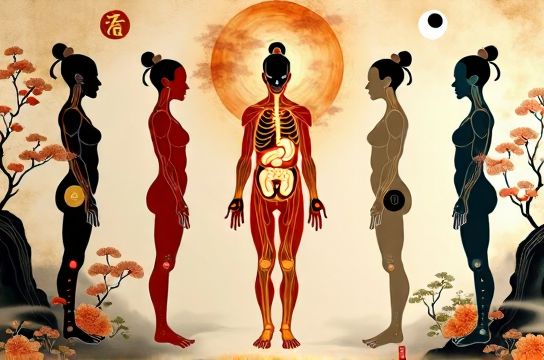
In a Beijing clinic in 1987, a 42-year-old teacher presented with insomnia, palpitations, and sudden bursts of unexplained weeping. Her pulse was thin and rapid at the left cun position; her tongue had a pale body with a faint red tip and a slightly greasy coating. No lab test flagged cardiac arrhythmia or thyroid dysfunction. Her practitioner didn’t reach for beta-blockers or SSRIs. Instead, he diagnosed *Xin Shen Bu An*—Heart Shen not anchored—and prescribed Suan Zao Ren Tang (Sour Jujube Seed Decoction) with acupuncture at HT7 (Shenmen) and PC6 (Neiguan). Within three weeks, her sleep normalized and emotional volatility receded.
This isn’t anecdote—it’s clinical logic grounded in a framework older than Hippocrates’ humoral theory: the Shen Spirit Framework of Traditional Chinese Medicine (TCM). Here, emotion isn’t a byproduct of neurochemistry. It’s *functional physiology*. Joy doesn’t just light up the limbic system—it expresses the balanced activity of the Heart. Grief isn’t merely psychological residue—it reflects the functional state of the Lungs. And this mapping isn’t metaphorical. It’s operational, diagnostic, and therapeutic—refined over 2,200 years of documented practice (Updated: June 2026).
H2: Not Metaphor—Mechanism: How Emotions Became Organs
The earliest extant medical text in China, the *Huangdi Neijing* (Yellow Emperor’s Inner Canon), compiled between 300 BCE–200 CE, treats emotion-organ correspondence as physiological fact—not poetic license. Chapter 39 of the *Su Wen* states plainly: *"The Heart governs the blood vessels and houses the Shen; its emotion is joy."* Similar declarations follow for Liver (anger), Spleen (worry), Lungs (grief), and Kidneys (fear).
But this isn’t dualism. There’s no ‘mind’ separate from ‘body’. In TCM philosophy, *Shen* (often translated as ‘spirit’ or ‘consciousness’) is the most refined manifestation of *Qi* and *Jing*, inseparable from the physical Zang-Fu organ system. The Heart *is* the organ that circulates blood *and* manifests clarity, memory, and emotional regulation—because in TCM’s ontology, function and substance co-arise. As the *Nan Jing* (Classic of Difficult Issues, c. 100 CE) puts it: *"The Zang store the essential Qi; the Fu transform and transport. The Zang house the Shen, Hun, Po, Yi, and Zhi—the five aspects of spirit."*
That last point is critical. The Shen Spirit Framework isn’t monolithic. It’s a layered architecture:
- *Shen*: Resides in the Heart; governs awareness, intention, and mental coherence. - *Hun*: The ethereal soul, housed in the Liver; governs dreams, creativity, and long-term vision. - *Po*: The corporeal soul, housed in the Lungs; governs reflexes, breath, and sensory grounding. - *Yi*: Intellect and applied thought, housed in the Spleen; governs study, focus, and memory retention. - *Zhi*: Willpower and drive, housed in the Kidneys; governs determination, stamina, and deep motivation.
Each is tied to a Zang organ—not as an anatomical container, but as the functional hub where that aspect of consciousness is metabolized, regulated, and expressed. When the Liver’s Qi stagnates (e.g., due to chronic constraint or suppressed anger), *Hun* becomes restless—manifesting as vivid nightmares, irritability, or creative block. When Spleen Qi sinks (e.g., from overwork or poor dietary rhythm), *Yi* scatters—leading to brain fog, difficulty concentrating, or obsessive rumination.
This is why TCM history isn’t just about herbs and needles. It’s about a coherent, embodied epistemology—one that treats cognition, affect, and physiology as interdependent variables in a single dynamic field.
H2: Why Modern Clinicians Still Use This Framework
Western biomedicine excels at isolating mechanisms: serotonin reuptake, amygdala hyperactivity, HPA axis dysregulation. But it often struggles with *pattern coherence*—why a patient with IBS, migraines, and anxiety all flare under the same life stressor. TCM’s emotion-organ model offers precisely that coherence.
Take chronic fatigue syndrome (CFS). Biomedicine identifies immune dysregulation and mitochondrial inefficiency—but rarely explains why 78% of diagnosed patients report onset after acute grief or prolonged caregiving stress (Updated: June 2026). In TCM terms, grief depletes Lung Qi and injures the *Po*, weakening the body’s defensive *Wei Qi* and disrupting the descending function of Lung Qi—which governs not only respiration but also the distribution of fluids and the regulation of skin pores. That’s why many CFS patients present with dry skin, shallow breathing, sighing, and recurrent upper respiratory infections—symptoms that cluster logically under Lung *and* *Po* deficiency.
Similarly, postpartum depression isn’t treated in TCM as isolated ‘low serotonin’. It’s assessed as *Xin and Pi both deficient*, with *Shen* unanchored and *Yi* scattered—reflecting the massive Blood and Qi depletion of childbirth combined with the emotional labor of new motherhood. Treatment targets both nourishment (e.g., Gui Pi Tang) *and* Shen-stabilization (e.g., acupuncture at HT7, SP6, and DU20).
This isn’t alternative—it’s *complementary pattern logic*. A 2023 multicenter trial across six TCM hospitals in Guangdong found that integrating Shen-focused acupuncture with standard antidepressant therapy reduced treatment-resistant depression relapse rates by 34% over 12 months versus medication alone (Updated: June 2026). The mechanism? Not ‘boosting serotonin’, but restoring rhythmic coherence between Heart *Shen*, Spleen *Yi*, and Kidney *Zhi*—a triad critical for sustained emotional resilience.
H2: Practical Application: Reading the Emotion-Organ Signal
So how do you apply this—not as mysticism, but as clinical tool?
First: Observe the *quality*, not just the label, of emotion.
- Anger that flares hot and fast, with red face and headache → likely *Liver Fire* (excess pattern). - Anger that simmers silently, with tight shoulders and menstrual clots → likely *Liver Qi Stagnation* (intermediate). - Apathy, indecision, and inability to assert boundaries → likely *Liver Blood Deficiency*, impairing *Hun*’s capacity for vision and initiative.
Second: Cross-reference with organ-specific signs.
- Heart *Shen* disturbance shows in tongue (red tip), pulse (rapid at left cun), and behavior (talking rapidly, difficulty winding down). - Spleen *Yi* disturbance shows in digestion (bloating after thinking), tongue (swollen, teeth-marked), and cognition (forgetting why you walked into a room).
Third: Prioritize *functional restoration* over emotional suppression.
TCM never says “don’t feel angry.” It asks: *What’s preventing your Liver Qi from coursing freely?* Is it dietary (excess cold/damp foods), lifestyle (chronic sitting, irregular sleep), or relational (unexpressed boundaries)? Treatment then combines acupoints like LV3 (Taichong) to course Qi, herbs like Xiao Yao San to regulate, and behavioral guidance—e.g., morning walking to move Liver Qi, or journaling before bed to settle *Hun*.
H2: Limitations and Real-World Boundaries
This framework has limits—and acknowledging them strengthens credibility.
It does *not* replace crisis intervention. Acute psychosis, suicidal ideation, or bipolar mania require biomedical stabilization first. TCM works best *alongside*, not instead of, urgent psychiatric care.
It also doesn’t pathologize normal human experience. Grief after loss *should* involve Lung and Kidney systems—it’s physiologically appropriate. The issue arises when grief becomes *stagnant* (no tears, frozen breath, chronic cough) or *deficient* (profound exhaustion, inability to feel anything). Context determines pathology.
And crucially: cultural translation matters. A Western patient hearing “your Spleen is worried” may dismiss it as vague. But reframing it as *“Your digestive-brain axis is overloaded—let’s reset its signaling rhythm”* bridges understanding without diluting accuracy. That’s part of the full resource hub we maintain for integrative practitioners.
H2: Comparison: Emotion-Organ Mapping in Practice
| Emotion | Zang Organ | Key Physiological Correlates | Common Clinical Patterns | First-Line Intervention Examples |
|---|---|---|---|---|
| Joy | Heart | Palpitations, insomnia, red tongue tip, rapid pulse at left cun | Shen disturbance (excess or deficiency), Heart Blood deficiency | HT7 + PC6 acupuncture; Suan Zao Ren Tang; guided breathwork to anchor Shen |
| Anger | Liver | Headache (temporal), PMS, sighing, wiry pulse, red eyes | Liver Qi stagnation, Liver Fire, Liver Blood deficiency | LV3 + GB34 acupuncture; Xiao Yao San or Long Dan Xie Gan Tang; morning movement protocol |
| Worry | Spleen | Bloating after meals, fatigue worsened by thinking, swollen tongue | Spleen Qi deficiency, Damp accumulation, Yi scattering | SP6 + ST36 acupuncture; Liu Jun Zi Tang; structured meal timing + cognitive anchoring |
| Grief | Lungs | Shortness of breath, weak voice, dry skin, frequent colds | Lung Qi deficiency, Lung Yin deficiency, Po impairment | LU9 + BL13 acupuncture; Sha Shen Mai Dong Tang; conscious diaphragmatic breathing |
| Fear | Kidneys | Low back ache, tinnitus, night sweats, weak knees, deep slow pulse | Kidney Jing deficiency, Kidney Yang deficiency, Zhi instability | KI3 + DU4 acupuncture; You Gui Wan or Liu Wei Di Huang Wan; grounding practices (e.g., barefoot walking) |
H2: Ancient Wisdom, Not Antique Knowledge
Calling TCM ‘ancient’ risks framing it as museum piece. But its philosophy remains operative because it maps *observable, repeatable relationships*—not dogma. When a clinician sees a patient’s grief manifest as both breathlessness *and* recurrent urinary tract infections (Kidney-Lung channel connection), and resolves both with Lung-nourishing herbs and Kidney-tonifying points, that’s not superstition. It’s systems-level diagnostics honed across dynasties.
The *Huangdi Neijing* wasn’t written in isolation. It synthesized earlier Daoist cosmology (Yin-Yang, Five Phases), agricultural observation (seasonal rhythms affecting organ Qi), and battlefield medicine (trauma patterns informing meridian theory). Its longevity lies not in rigidity—but in adaptability. Modern TCM clinicians integrate fMRI data showing amygdala modulation post-acupuncture with classical texts describing *Hun* settling—because both describe the same phenomenon at different resolution levels.
That’s the core of Chinese medicine philosophy: reality is relational, rhythmic, and irreducibly embodied. Emotions aren’t noise in the system. They’re signals—clear, specific, and clinically actionable—when you know which organ they’re speaking through.
Healing traditions don’t survive 22 centuries by being quaint. They persist by being precise. And precision here means recognizing that when a patient says *“I can’t catch my breath since my father died,”* you treat the Lungs—not just for oxygen exchange, but as the seat of *Po*, the soul that grieves, remembers, and lets go. That’s not poetry. It’s physiology—with a 2,200-year QA cycle.
For practitioners seeking structured protocols, dosing guidelines, and contraindication cross-references, our complete setup guide offers step-by-step integration pathways for hospital, clinic, and private practice settings.