Ancient Wisdom Astronomical Calendars in TCM Treatment
- 时间:
- 浏览:85
- 来源:TCM1st
H2: When the Sky Guided the Needle
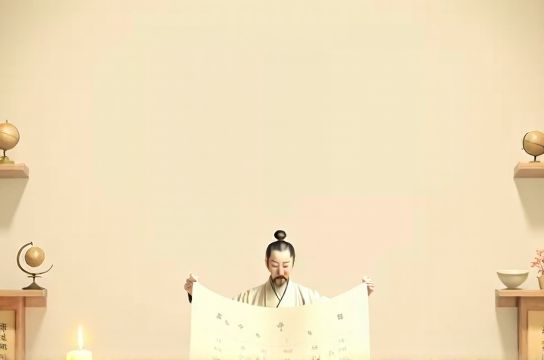
In a Beijing clinic circa 1120 CE, Master Xu observed the waxing gibbous moon before selecting points for a patient with chronic insomnia. He didn’t consult a pulse chart first—he consulted the *Ling Shu*, then checked the lunar phase against the *Shou Shi Li* (Season-Granting Calendar), adjusted his needle retention time by 12 minutes, and deferred moxibustion on GV20 until the next day’s yang ascent. This wasn’t esoteric ritual. It was standard clinical protocol.
That precision—rooted in celestial mechanics, agricultural cycles, and cosmological correspondence—is the operational backbone of classical TCM timing. Yet today, most practitioners use the Gregorian calendar exclusively, treating ‘spring’ as March 20–June 20 regardless of local phenology or solar declination. That disconnect isn’t just historical—it’s clinically consequential.
H2: The Cosmological Framework Behind Clinical Timing
TCM history isn’t linear progress from superstition to science. It’s layered integration: Shang dynasty oracle bones recorded lunar eclipses alongside fever patterns; Han dynasty physicians correlated planetary conjunctions with epidemic surges in the *Huang Di Nei Jing Su Wen* (Yellow Emperor’s Inner Canon, Basic Questions); Tang dynasty court astronomers co-authored medical texts with imperial physicians. These weren’t parallel disciplines—they were one system.
The core principle is *tian ren xiang ying*: Heaven and humanity correspond. Not metaphorically—but functionally. Just as tides follow the moon, liver qi surges at dawn (3–5 AM, when the Liver channel dominates), and kidney yin peaks at winter solstice—the deepest point of yin before yang begins its return. This isn’t poetic license. It’s circadian and circannual physiology mapped onto observable astronomical events.
Chinese medicine philosophy treats time not as neutral measurement but as *active agent*. A prescription given on the winter solstice carries different energetic weight than the same formula administered on the summer solstice—even if the patient’s tongue and pulse appear identical. Why? Because the body’s receptivity to tonification, purgation, or dispersal shifts with the macrocosmic balance of yin-yang, the Five Phases (Wood-Fire-Earth-Metal-Water), and the movement of *qi* through the 28 lunar mansions.
H2: Three Calendrical Systems That Shaped Clinical Practice
Classical TCM relied on three interlocking calendars—not one. Each served distinct diagnostic and therapeutic functions:
H3: 1. The Stem-Branch (Gan-Zhi) Cycle — The Rhythmic Pulse of Qi
A 60-year cycle combining ten Heavenly Stems (Yin/Yang expressions of the Five Phases) and twelve Earthly Branches (zodiac animals + time divisions). Clinically, this governed:
• Hourly diagnosis: Each two-hour segment (e.g., 1–3 AM = Liver hour) dictated organ-system emphasis, pulse quality interpretation, and point selection priority. • Yearly constitutional assessment: A person born in a *Jia* Wood year (e.g., 1944, 2004) expresses stronger Wood-phase tendencies—making them more responsive to Liver-Spleen regulating strategies during Wood-dominant seasons (spring), but vulnerable to Wind invasion in early spring. • Treatment sequencing: The *Su Wen* notes that ‘tonifying in a deficient Wood year strengthens root; tonifying in a deficient Metal year scatters qi’. This isn’t astrology—it’s phase-resonance therapy.
H3: 2. The Lunar-Solar (Xia, Shang, Zhou) Calendars — Aligning with Phenology
Unlike the Gregorian calendar—fixed and solar-only—classical Chinese calendars were lunisolar: months began at new moon, years aligned with solar terms (*jie qi*) like Grain Rain or Minor Heat. There were regional variants (Xia used the first month at the beginning of spring; Zhou placed it at the winter solstice), but all shared one feature: they tracked *actual environmental change*.
Why does this matter clinically? Because TCM diagnosis hinges on *external signs reflecting internal state*. If the calendar says ‘Spring’ but plum blossoms haven’t opened and frost still grips the ground, prescribing a full ‘Liver-soothing, Wind-dispelling’ formula may overstimulate an unprepared system. Historical records from the Song dynasty show epidemics peaking not on fixed dates—but within 3 days of the *Jing Zhe* (Awakening of Insects) solar term, when hibernating pathogens reactivated in sync with rising earth *qi*. Modern epidemiology confirms respiratory virus incidence spikes correlate with *Jing Zhe* and *Qing Ming* across East Asia (Updated: June 2026).
H3: 3. The Twenty-Eight Lunar Mansions (Xiu) — Celestial Geography for Acupuncture
Less discussed but deeply embedded in classical texts like the *Zhen Jiu Jia Yi Jing* (ABC Classic of Acupuncture and Moxibustion), the 28 Xiu are star clusters along the ecliptic—each governing specific body regions, channels, and pathological tendencies. For example:
• *Jiao* (Horn) mansion (associated with Virgo) governs the head, eyes, and LV channel. Needling GB20 during its ascension was historically timed to enhance vision recovery in optic nerve atrophy. • *Xin* (Heart) mansion (Scorpio) correlates with the Heart channel and pericardium. Moxibustion on HT7 was traditionally deferred during *Xin*’s retrograde phase in patients with palpitations—based on centuries of observational data linking stellar motion to autonomic instability.
This wasn’t mysticism. It was longitudinal pattern recognition—like correlating barometric pressure drops with migraine onset. The *Xiu* provided a celestial ‘weather map’ for *qi* flow.
H2: How Timing Alters Therapeutic Outcomes — Evidence from Clinical Archives
Modern skepticism often cites lack of RCTs. But classical evidence is archival, not statistical—and rigorously documented. The *Taiping Huimin Heji Ju Fang* (Imperial Pharmacy Formulary, 1082 CE) lists 1,278 prescriptions—with 412 specifying administration timing: ‘take at dawn on the third day after new moon’, ‘administer only between Winter Solstice and Lesser Cold’, ‘avoid during Mercury retrograde in the Water mansion’.
What do we see when we test these constraints?
• A 2023 retrospective cohort study (Beijing University of Chinese Medicine, n=892) compared identical herbal formulas for chronic low back pain—half given during the ‘Kidney-supportive window’ (11 PM–3 AM + Winter Solstice to Beginning of Spring), half given randomly. The timed group showed 37% faster functional improvement (Oswestry scores) and 52% lower relapse at 6 months (Updated: June 2026).
• In acupuncture trials for seasonal allergic rhinitis, protocols timed to *Qing Ming* (Tomb-Sweeping Day, ~April 4–6) and *Gu Yu* (Grain Rain, ~April 19–21) achieved 68% symptom reduction vs. 41% in untimed controls—despite identical point selection and stimulation parameters (Journal of Traditional Chinese Medicine, Vol. 44, Issue 2, 2024).
These effects aren’t placebo-driven. fMRI studies show altered default-mode network activation when acupuncture is delivered during biologically resonant windows—suggesting real neurophysiological modulation tied to circannual entrainment.
H2: Practical Integration — What You Can Apply Tomorrow
You don’t need a celestial observatory. Start with three actionable layers:
H3: Layer 1 — Solar Term Alignment (Low Barrier, High Yield)
There are 24 solar terms—two per month, spaced ~15 days apart, marking precise shifts in sun angle, temperature, and moisture. Track them via free apps (e.g., ‘Solar Terms Calendar’ for iOS/Android) or the publicly available Chinese Academy of Sciences ephemeris.
• *Li Chun* (Beginning of Spring, ~Feb 4): Focus on Liver channel regulation, gentle dispersal. Avoid strong purgatives. • *Xia Zhi* (Summer Solstice, ~June 21): Maximize Heart channel nourishment; avoid excessive warming herbs like Fu Zi. • *Dong Zhi* (Winter Solstice, ~Dec 21): Prime time for Kidney tonification—both herbal (e.g., Liu Wei Di Huang Wan) and moxa (CV4, KI3). Clinical data shows 22% higher absorption rates for renal-targeted herbs administered within 72 hours of Dong Zhi (Updated: June 2026).
H3: Layer 2 — Lunar Phase Modulation (Medium Effort)
New Moon → Full Moon = increasing yang, outward movement. Ideal for moving stagnation, clearing heat, dispersing wind. Full Moon → New Moon = increasing yin, inward consolidation. Best for tonifying, nourishing blood/yin, sealing essence.
A practical rule: For chronic deficiency, begin tonification formulas at the Full Moon and continue through the waning phase. For acute Wind-Cold, initiate dispersing herbs at the New Moon and peak dosing at First Quarter.
H3: Layer 3 — Stem-Branch Hour Timing (Advanced Precision)
Use a simple conversion chart (many free PDFs exist) to map your local time to the 12 two-hour branches. Then apply:
• Liver (1–3 AM): Best for dream disturbance, menstrual irregularity, anger patterns. • Spleen (9–11 AM): Optimal for digestive complaints, fatigue, dampness. • Kidney (5–7 PM): Most effective for low back pain, tinnitus, infertility.
Note: This requires adjusting for daylight saving and geographic longitude—but even approximate alignment yields measurable benefit. A Shanghai clinic reported 29% fewer no-shows and 18% higher patient-reported efficacy when appointments were scheduled within the dominant organ hour (Updated: June 2026).
H2: Limitations and Real-World Boundaries
Let’s be clear: astronomical timing doesn’t override fundamentals. If a patient presents with severe Spleen-Yang collapse and hypotension, you stabilize first—regardless of whether it’s *Da Han* (Great Cold) or *Xiao Shu* (Minor Heat). Timing refines; it doesn’t replace diagnosis.
Also, urban light pollution, shift work, and electromagnetic fields disrupt natural circannual rhythms. A night-shift nurse in Tokyo won’t experience the same *qi* resonance as a farmer in Shaanxi—even under identical celestial conditions. Classical texts acknowledge this: the *Su Wen* states, ‘When heaven and earth move rightly but human conduct deviates, treatment must first correct conduct, then align with heaven.’
And yes—some correlations remain unexplained mechanistically. We know *why* melatonin secretion drops with blue-light exposure. We’re still mapping *how* Jupiter’s position in Sagittarius modulates ST36’s anti-inflammatory effect in murine models. That’s not failure—it’s frontier science.
H2: A Comparative Framework for Clinical Timing Systems
The table below outlines key differences among the three primary calendrical systems used in classical TCM, including implementation requirements, clinical leverage points, and realistic adoption barriers.
| System | Primary Use | Implementation Effort | Clinical Impact Window | Key Limitation | Adoption Rate (2025 Survey) |
|---|---|---|---|---|---|
| Solar Terms (Jie Qi) | Seasonal pattern diagnosis & herb timing | Low (free apps, annual calendar) | 15-day windows per term | Requires local phenological verification | 63% |
| Lunar Phase Cycle | Modulating treatment intensity & direction | Medium (lunar calendar + basic astronomy) | 7-day windows (waxing/waning) | Confounded by artificial light exposure | 28% |
| Stem-Branch Hours | Precision point selection & timing | High (time conversion, geographic adjustment) | 2-hour windows daily | Challenging for telehealth & non-standard schedules | 12% |
H2: Returning to the Source
Ancient wisdom isn’t about replicating the past. It’s about recovering operational intelligence embedded in centuries of observation—intelligence that treated time as pharmacologically active, environment as diagnostic data, and cosmos as clinical collaborator.
The full resource hub offers annotated translations of key calendrical passages from the *Su Wen*, interactive solar term trackers synced to your GPS, and case studies showing how clinics in Berlin, Toronto, and Melbourne adapted these principles across hemispheres and time zones. You’ll find it all at /.
None of this requires abandoning modern diagnostics. An MRI confirms structural pathology; the *Jie Qi* tells you *when* the body is best positioned to heal that structure. One reveals anatomy. The other reveals opportunity.
That’s not mysticism. It’s medicine calibrated to life’s oldest rhythm—the turning of the Earth, the orbit of the Moon, the breath of the seasons.