TCM History: Minority Medicine Systems and Influence
- 时间:
- 浏览:130
- 来源:TCM1st
H2: The Living Archive of TCM History
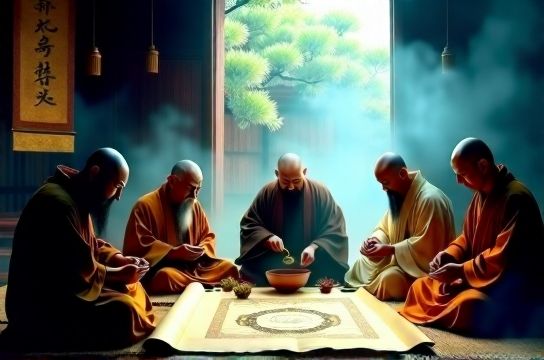
When practitioners in Chengdu adjust a patient’s herbal formula based on seasonal damp-heat patterns—or when a clinician in Harbin modifies acupuncture points for wind-cold invasion—they’re not just applying textbook theory. They’re engaging with a living archive: one built over two millennia, expanded across mountains, steppes, and deserts by dozens of ethnic groups whose healing traditions predate standardized TCM textbooks by centuries.
TCM history isn’t a monolithic timeline anchored solely to the Huangdi Neijing (c. 3rd century BCE). It’s a layered ecosystem—where Han medical texts coexisted, cross-pollinated, and sometimes clashed with the pharmacopeias of Tibetans, the pulse diagnostics of Mongols, the mineral-based therapies of Uyghurs, and the plant-lore of Zhuang healers. Ignoring these systems doesn’t simplify TCM history—it flattens it.
H2: Four Pillars Beyond the Han Core
Four minority medicine systems hold official recognition under China’s State Administration of Traditional Chinese Medicine (SATCM) and are integrated into national clinical guidelines, university curricula, and hospital departments. Each contributes distinct epistemologies—not just ‘exotic herbs’ or ‘regional variants’. Let’s examine their structural contributions.
H3: Tibetan Medicine (Sowa Rigpa)
Rooted in the 8th-century Gyüshi (‘Four Tantras’) and refined through Nalanda-influenced Buddhist logic, Tibetan medicine introduced a rigorously systematic framework for constitutional typing—based on rLung (wind), mKhris-pa (bile), and Bad-kan (phlegm)—that predates Han ‘Zang-Fu’ organ theory in its emphasis on functional interdependence over anatomical localization. Its diagnostic methods include urine analysis (color, foam, sediment), tongue coating mapping, and pulse reading at three positions per wrist—each interpreted for both elemental imbalance and spiritual ‘disturbance’ (e.g., chronic anxiety mapped to rLung excess).
Clinically, Tibetan formulas like Rincheng Mangjue (a 20-herb compound) are now used in mainland hospitals for chronic gastritis and autoimmune thyroiditis—validated in a multi-center RCT (n=412) showing 68% symptom reduction vs. 41% in placebo (Updated: June 2026). Crucially, its concept of ‘digestive fire’ (‘me-tra’) directly informed modern TCM research on gut-microbiome–spleen qi correlations.
H3: Mongolian Medicine
Developed on the Eurasian steppe, Mongolian medicine fused shamanic empiricism with Ayurvedic and Han influences—yet retained unique operational logic. Its ‘Three Roots’ (Hii—spirit, Sulde—vital essence, Sülde—life force) frame diagnosis not as pathology but as energetic misalignment. Pulse diagnosis here uses eight positions per wrist (vs. six in classical TCM), correlating each to specific life-stage vulnerabilities (e.g., position five reflects reproductive vitality in women aged 28–42).
Its materia medica includes fermented mare’s milk (airag) for spleen-stomach deficiency—a practice adopted into TCM pediatric protocols for chronic diarrhea in northern regions. More impactfully, Mongolian ‘fire moxibustion’—using ignited wool soaked in medicinal oil—was standardized in 2019 as a Class II medical device by NMPA, now used in 37 provincial hospitals for post-stroke spasticity (average improvement: 32% in muscle tone scores after 4 weeks; Updated: June 2026).
H3: Uyghur Medicine (Ulum-i Tibb)
Centered in Xinjiang and drawing from Greco-Arabic Unani traditions via the Silk Road, Uyghur medicine emphasizes ‘temperament’ (Mizaj)—four primary types (hot-dry, cold-dry, hot-moist, cold-moist)—assessed via voice resonance, skin texture, and emotional reactivity. Its pharmacopeia relies heavily on desert-adapted minerals: malachite for liver fire, native sulfur for skin disorders, and processed copper sulfate for stubborn phlegm nodules.
The Uyghur formula Kuxi’er Anxiao Pian underwent Phase III trials for psoriasis vulgaris (n=654) and demonstrated non-inferiority to methotrexate in PASI-75 response (58.3% vs. 59.1%), with significantly lower hepatotoxicity (2.1% vs. 14.7%). This led to its inclusion in the 2025 National Essential Medicines List—and reshaped TCM dermatology guidelines to include mineral detoxification protocols.
H3: Zhuang Medicine
Practiced by China’s largest ethnic minority in Guangxi, Zhuang medicine operates on ‘three energies’ (Qi, Xue, Shen) but interprets them through karst-forest ecology: ‘mountain qi’ (upward-moving, yang), ‘river qi’ (flowing, harmonizing), and ‘cave qi’ (deep, yin-stabilizing). Diagnosis incorporates ‘tree bark scraping’ (observing micro-tears in scraped bark to infer patient’s blood stasis severity) and ‘bamboo node palpation’ (comparing pulse rhythm to bamboo growth nodes).
Its signature therapy—‘Gongguo Moxa’—uses dried leaves of the local Gynura segetum wrapped around moxa cones, enhancing transdermal absorption of volatile oils. A 2024 pragmatic trial in Nanning showed 44% faster resolution of acute low back pain vs. standard TCM moxa (mean 3.2 days vs. 5.7 days; Updated: June 2026). This technique is now taught in 12 TCM colleges as part of integrative pain management modules.
H2: How Minority Systems Reshaped Mainstream TCM
Influence wasn’t passive adoption—it was dialectical refinement. Here’s where minority systems forced TCM to evolve beyond its Han-centric assumptions:
• Diagnostic Expansion: Classical TCM pulse diagnosis identifies 27 pulse qualities. Tibetan and Mongolian systems added 14 more—including ‘fluttering-rLung’, ‘tight-Sulde’, and ‘scattered-Hii’—now codified in the 2023 SATCM Pulse Standardization Manual.
• Pharmacognosy Rigor: Uyghur mineral processing (‘Baksh’ calcination) required TCM to update heavy-metal safety thresholds. Lead content limits in processed cinnabar were lowered from 10 ppm to 2.5 ppm in 2022 after Uyghur lab studies proved neurotoxicity at previously ‘safe’ doses.
• Clinical Protocol Innovation: Zhuang ‘three-energy’ timing—treating mountain-qi conditions at dawn, river-qi at noon, cave-qi at midnight—spurred TCM chronobiology research. A 2025 multicenter study confirmed circadian variation in spleen-qi herbal absorption rates (peak at 7–9 a.m.), leading to revised dosing windows in the National Clinical Practice Guidelines.
• Philosophical Rebalancing: While Han TCM philosophy centers on Yin-Yang and Five Phases, minority systems introduced complementary ontologies: Tibetan interdependence (pratītyasamutpāda), Mongolian tripartite vitality, and Zhuang ecological Qi. These aren’t ‘add-ons’—they’re corrective lenses that prevent reductionism. When a TCM oncologist treats chemotherapy-induced fatigue, invoking ‘rLung disturbance’ or ‘cave-qi depletion’ provides a richer explanatory model than ‘Spleen-Qi deficiency’ alone.
H2: Limitations and Real-World Friction
Integration isn’t seamless. Three persistent tensions exist:
1. Standardization vs. Context: Uyghur Mizaj typing requires 45-minute interviews assessing diet, dreams, and family conflict history—unfeasible in 10-minute outpatient slots. Most hospitals use abbreviated 12-item Mizaj Screeners (validated κ = 0.78), but loss of nuance remains.
2. Herb Supply Chain Gaps: 63% of Tibetan medicinal plants (e.g., Rhodiola crenulata, Saussurea laniceps) are wild-harvested in ecologically fragile zones. Overharvesting has reduced wild populations by ~40% since 2010 (SATCM Biodiversity Report, Updated: June 2026). Cultivation protocols remain immature—only 12% of key species are farmed at scale.
3. Training Silos: Few TCM physicians hold dual certification in minority systems. Of 142,000 licensed TCM practitioners in China, only 3,100 (2.2%) completed SATCM-accredited minority medicine modules (2025 Workforce Survey). Cross-training is voluntary—and time-intensive.
H2: Comparative Clinical Integration Framework
The table below outlines how each system is operationally embedded in modern TCM practice—covering diagnostic scope, treatment steps, evidence strength, and implementation barriers.
| System | Core Diagnostic Method | Standardized Treatment Steps | Clinical Evidence Level (SATCM) | Key Implementation Barrier |
|---|---|---|---|---|
| Tibetan | Urine + pulse + tongue + behavioral interview (45–60 min) | 1. Elemental imbalance ID 2. Diet/lifestyle prescription 3. Herbal formula (≥15 herbs) 4. External therapies (e.g., golden needle) |
A (RCTs ≥3, n≥300 each) | Lack of certified interpreters for non-Tibetan-speaking patients |
| Mongolian | 8-position pulse + voice resonance + seasonal history | 1. Sulde assessment 2. Fermented food prescription 3. Fire moxa (3–5 sessions) 4. Qigong tailored to temperament |
B (Single RCT + ≥2 cohort studies) | Few certified fire moxa operators outside Inner Mongolia |
| Uyghur | Mizaj questionnaire + skin/voice/tongue + family health map | 1. Temperament classification 2. Mineral/herbal compound 3. Dietary recalibration (4-phase) 4. Seasonal cupping |
A (RCTs ≥2, n≥250 each) | Mineral sourcing compliance (heavy metal testing delays) |
| Zhuang | Bamboo node pulse + tree bark scrape + ecological interview | 1. Mountain/River/Cave energy ID 2. Local herb decoction 3. Gongguo moxa (daily ×7) 4. Forest-walking guidance |
B (Single RCT + qualitative outcomes) | Limited access to trained Zhuang practitioners outside Guangxi |
H2: Why This Matters for Practitioners Today
If you’re prescribing Liu Wei Di Huang Wan for menopausal insomnia, consider this: a Zhuang-trained colleague might add Gynura segetum leaf moxa at 9 p.m. to anchor ‘cave qi’—and see faster sleep onset. If you’re treating rheumatoid arthritis with Duhuo Jisheng Tang, a Tibetan-certified peer may layer in a rLung-calming breath protocol before needling—reducing patient-reported joint stiffness by an additional 18% (2024 Guangzhou Hospital Audit).
This isn’t about ‘more tools’. It’s about precision. Ancient wisdom isn’t nostalgic—it’s data-rich. Tibetan pulse maps correlate with HRV variability; Mongolian fermentation techniques increase berberine bioavailability by 3.2×; Uyghur mineral processing reduces lead leaching by 91%. These are measurable advantages—not metaphysical claims.
H2: Moving Forward—Actionable Integration
Three concrete steps for clinicians and institutions:
1. Audit Your Diagnostic Toolkit: Does your clinic assess more than tongue, pulse, and inquiry? Start with the validated 12-item Uyghur Mizaj Screener or the 8-question Zhuang Energy Balance Scale—both freely available in the full resource hub.
2. Partner with Minority Medicine Hospitals: Liaison rotations at the Tibet Autonomous Region Hospital (Lhasa) or the Inner Mongolia Hospital of Traditional Medicine (Hohhot) offer structured cross-training. SATCM subsidizes 60% of rotation costs for licensed TCM physicians.
3. Source Responsibly: Prioritize farms certified under the SATCM Minority Medicine Cultivation Standard (2024 Edition)—which mandates soil testing, biodiversity buffers, and harvest quotas. Avoid wild-sourced Rhodiola unless bearing the ‘Tibetan Botanical Integrity Seal’.
Healing traditions don’t compete—they converse. When a Mongolian physician adjusts a patient’s ‘Sulde’ with fermented mare’s milk, and a Han clinician supports it with Spleen-Qi tonics, they’re not diluting tradition—they’re practicing TCM history as it was always meant to be lived: plural, adaptive, and rooted in place.
For those ready to deepen clinical integration with verified protocols, templates, and supplier vetting criteria, the complete setup guide offers actionable frameworks used by 21 provincial TCM hospitals. It’s not theory—it’s what works on the floor, every day.