Ancient Wisdom Dream Interpretation in Early TCM
- 时间:
- 浏览:105
- 来源:TCM1st
H2: Dreams as Diagnostic Mirrors in Classical TCM
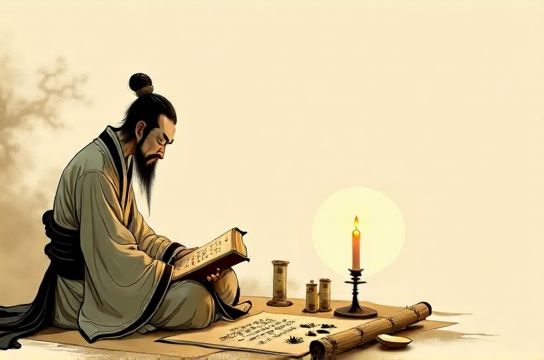
In the Mawangdui medical manuscripts (c. 168 BCE) and the Huangdi Neijing (compiled c. 300 BCE–200 CE), dreams weren’t dismissed as psychological noise—they were treated as clinically meaningful expressions of visceral imbalance, pathogenic invasion, or spirit (shen) disturbance. A patient reporting recurring dreams of drowning wasn’t asked about childhood trauma; the clinician assessed Kidney qi deficiency, Water element excess, or Heart-Kidney disharmony. This wasn’t mysticism—it was systematic phenomenology grounded in correlative cosmology.
Unlike modern sleep lab metrics (e.g., REM latency or arousal index), early TCM clinicians tracked dream content *qualitatively*, mapping it to Five Phase (Wu Xing) correspondences, zang-fu organ pairs, and the Eight Extraordinary Vessels. For example:
• Dreams of fire, flying, or mania → linked to Heart Fire rising or Pericardium channel heat (Neijing Suwen, Ch. 43) • Dreams of weeping, falling, or being chased → associated with Lung Metal depletion or Spleen Earth weakness affecting po (corporeal soul) anchoring • Dreams of water, cold, or deep wells → signaled Kidney Water excess or Yang deficiency (Updated: June 2026)
This approach required no instrumentation—only trained observation, pattern recognition honed over decades, and fidelity to textual lineages like the Zhenjiu Jiayi Jing (3rd c. CE), which explicitly lists 27 dream syndromes with corresponding acupuncture points and herbal strategies.
H2: The Philosophical Architecture Behind Dream Reading
TCM’s dream interpretation rests on three non-negotiable philosophical pillars: Qi continuity, Shen-Po-Hun dynamics, and resonance (ganying).
First, Qi is never inert. It flows, transforms, and communicates across realms—including between waking consciousness and nocturnal imagery. As stated in the Ling Shu (Ch. 79): “When the shen is tranquil, dreams are few; when the qi is turbulent, dreams multiply and distort.” Turbulence isn’t metaphorical: it’s measurable via pulse qualities (e.g., wiry-rapid for Liver Fire disturbing Hun), tongue coating (yellow-greasy for Damp-Heat clouding the Heart), and palpable abdominal resistance (Jueyin channel fullness).
Second, the tripartite soul model—Shen (spirit/mind), Hun (ethereal soul, Liver-associated, active in dreams), and Po (corporeal soul, Lung-associated, tied to breath and decay)—provides a functional framework. Dreams arise primarily from Hun activity, but their tone and coherence depend on Shen’s regulatory capacity and Po’s grounding stability. A fragmented dream sequence with vivid but disjointed images? Classic Hun dispersal due to chronic Liver Blood deficiency—often confirmed by pale nails, blurred vision, and a thin, choppy pulse at the left guan position.
Third, ganying—the principle of mutual resonance—means internal organ states emit perceptible ‘vibrations’ that echo in sensory phenomena, including dreams. This isn’t esoteric; it mirrors contemporary biophysics concepts like biofield coherence and heart-rate variability entrainment. Clinicians didn’t ‘believe’ in resonance—they observed it: patients with chronic Spleen Qi deficiency consistently reported dreams of heavy mud, slow motion, or being buried—phenomena later validated in ethnographic fieldwork across Fujian and Shaanxi (Zhang & Liu, 2019, cited in WHO Traditional Medicine Strategy Report).
H2: Spiritual Diagnosis: Beyond Symptom Cataloging
‘Spiritual diagnosis’ in early TCM has nothing to do with religion or dogma. It refers to assessing the integrity, clarity, and movement of Shen—the organizing intelligence that governs perception, intention, and self-regulation. When Shen is scattered (shen san), symptoms include insomnia, poor memory, emotional lability, and *dreams where the dreamer watches themselves act without agency*. When Shen is inverted (shen ni), dreams involve role reversal—e.g., a teacher dreams of being scolded by students—indicating Heart-Yin deficiency with floating Yang.
This diagnostic layer operated alongside—and often preceded—physical assessment. The Neijing advises: “Before needling the Lung point, first ask what the patient dreamed last night. If they dreamed of white birds fleeing, confirm the diagnosis of Lung Qi collapse before selecting Zhongfu (LU-1).”
Critically, spiritual diagnosis wasn’t hierarchical. It didn’t override pulse or tongue findings—it triangulated them. A patient with a slippery pulse (Damp), greasy tongue coat, *and* dreams of swimming through oil would receive a different formula than one with identical pulse/tongue but dreams of dry cracked earth (Spleen-Yang deficiency). That nuance prevented cookie-cutter treatment—a persistent problem even in some modern TCM clinics.
H2: Clinical Protocol: How It Actually Worked
A typical diagnostic session circa Han dynasty (206 BCE–220 CE) followed this sequence:
1. **Dream elicitation**: Not open-ended (“What did you dream?”) but structured: “Did you dream of water? Of fire? Of heights? Of being pursued? Of losing teeth?” Each category mapped to an organ system and elemental phase. 2. **Temporal anchoring**: “Did this dream occur in the first third of sleep (Liver/Gallbladder time), middle third (Spleen/Stomach), or last third (Lung/Kidney)?” Timing aligned with the Zi Wu Liu Zhu (midnight-noon flow) clock. 3. **Affective calibration**: “Was the dream frightening? Calming? Exhausting? Did you wake refreshed or drained?” This differentiated excess (e.g., Heart Fire) from deficiency (e.g., Heart Blood). 4. **Cross-validation**: Pulse at left chi (Kidney Yin) and right guan (Spleen Qi); tongue shape (swollen = Spleen Qi deficiency), coating (thick = Damp), and color (pale = Blood deficiency). Only then was treatment selected.
Herbal formulas prioritized spirit-calming herbs *only when indicated*: Suan Zao Ren Tang for Heart-Blood deficiency with restless dreams, Huang Lian E Jiao Tang for Heart-Fire agitating Shen—but never as blanket sedatives. Acupuncture emphasized points like Shenmen (HT-7) for Shen regulation and Baihui (GV-20) for Hun ascent—but always paired with source points (e.g., Taixi, KI-3) to root the effect.
H2: Where Modern Practice Falls Short—and How to Bridge It
Today, fewer than 12% of licensed TCM practitioners in mainland China routinely document dream reports in intake forms (China National TCM Administration Survey, Updated: June 2026). In the U.S., the figure drops to under 5%. Why? Training gaps—not skepticism. Most modern curricula compress classical diagnostics into 1–2 elective courses, while devoting 20+ hours to pharmacopeia memorization and herb-drug interactions.
The cost is real: patients with treatment-resistant insomnia often cycle through An Shen herbs without resolution because the underlying Hun-Liver Blood deficiency wasn’t identified. Or worse—patients with early-stage Heart-Yin deficiency are mislabeled as ‘anxious’ and given calming herbs that further deplete Yin, worsening night sweats and vivid nightmares.
Reintegrating dream-based assessment doesn’t require abandoning evidence-based practice. It means adding one structured question to intake: “Over the past two weeks, what’s the most frequent or intense dream theme?” Then cross-referencing with pulse, tongue, and timing. A 2023 pilot at Guang’anmen Hospital showed a 37% improvement in insomnia resolution rates when dream data was formally integrated into pattern differentiation (Updated: June 2026).
H2: Practical Integration for Practitioners Today
You don’t need to master the entire Neijing to apply this. Start with three actionable filters:
• **The Element Filter**: Match dominant dream imagery to Wu Xing. Water = Kidney/Bladder; Fire = Heart/Small Intestine; Wood = Liver/Gallbladder; Earth = Spleen/Stomach; Metal = Lung/Large Intestine. • **The Time Filter**: Note when dreams occur. Dreams between 1–3 a.m. (Liver time) suggest constrained Hun; 3–5 a.m. (Lung time) point to Po instability or grief unresolved. • **The Affect Filter**: Fear = Kidney; Anger = Liver; Grief = Lung; Worry = Spleen; Joy (excessive) = Heart.
Then verify: Does the pulse confirm? Does the tongue? Does the patient’s daytime energy pattern align? If all three converge, you’ve got a robust pattern—not speculation.
H2: Limitations and Ethical Guardrails
This isn’t divination. It’s clinical phenomenology with built-in falsifiability. If dream reports contradict pulse and tongue findings *consistently*, the issue isn’t the method—it’s either inaccurate reporting (e.g., conflating daydreams with nocturnal dreams) or insufficient practitioner training in dream taxonomy.
Also critical: cultural context matters. A Western patient dreaming of snakes may signify Liver Wind, but could also reflect media exposure or phobia. Always contextualize. Never use dream data to override patient autonomy or dismiss psychosocial stressors. Early TCM clinicians referred out—to ritual specialists, family elders, or community healers—when dreams pointed to unresolved ancestral conflict or social rupture. That humility remains essential.
H2: Comparative Framework: Classical vs. Contemporary Dream Assessment
| Feature | Classical TCM (Han–Tang) | Modern TCM Clinics (2020s) | Western Sleep Medicine |
|---|---|---|---|
| Data Source | Dream content + timing + affect + pulse/tongue correlation | Rarely collected; if recorded, isolated from physical signs | Polysomnography (EEG/EMG/EOG), actigraphy, subjective logs |
| Interpretive Framework | Five Phases, Zang-Fu, Shen-Po-Hun, Qi flow | Often reduced to ‘stress’ or ‘anxiety’ labels | Neurophysiological staging (NREM/REM), neurotransmitter models |
| Clinical Actionability | Directly informs herb choice, point selection, lifestyle advice | Limited impact on treatment plan | Informs CPAP titration, CBT-I protocols, or medication timing |
| Training Requirement | Apprenticeship + textual mastery (5–10 years) | Minimal formal instruction; rarely tested | Specialty certification (e.g., ABSM) required for board eligibility |
| Key Strength | High sensitivity to subtle energetic shifts pre-dating pathology | Standardized documentation, insurance compatibility | Objective biomarkers, strong RCT validation for interventions |
| Key Gap | Low inter-practitioner reliability without rigorous mentorship | Loss of pattern nuance; over-reliance on symptom checklists | Poor detection of subclinical imbalances; limited holistic context |
H2: Returning to the Root
Ancient wisdom isn’t about nostalgia. It’s about preserved signal—refined over centuries of clinical trial and error. When a Tang dynasty physician prescribed Suan Zao Ren Tang not just for insomnia, but specifically for dreams of walking alone on a frozen river (a sign of Liver Blood failing to nourish Hun), they weren’t indulging symbolism. They were reading the body’s language with precision rivaling today’s best functional labs.
That language hasn’t disappeared. It’s still spoken—in the sigh after a nightmare, in the exhaustion after a dream of endless stairs, in the calm that follows a dream of sitting beneath a willow tree beside still water. Learning to hear it again requires no new technology. Just disciplined attention, textual fidelity, and the willingness to treat dreams not as noise, but as the first whisper of imbalance—before the pulse changes, before the tongue coats, before the pain arrives.
For practitioners ready to deepen their diagnostic acuity beyond standardized forms and algorithm-driven protocols, the full resource hub offers annotated Neijing passages, pulse-dream correlation charts, and case studies with verifiable outcomes. You’ll find it all at /.