TCM History: Military Medicine and Battlefield Innovations
- 时间:
- 浏览:160
- 来源:TCM1st
H2: War as a Crucible for TCM History
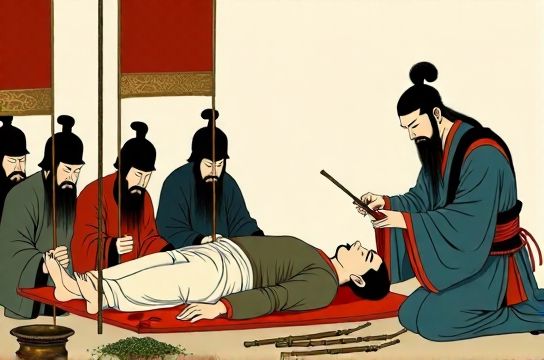
When most people think of Traditional Chinese Medicine (TCM), they picture acupuncture clinics or herbal consultations — quiet, contemplative spaces. But its origins are far noisier. Much of what we recognize today as systematic TCM history was forged not in imperial academies alone, but on battlefields — where speed, survival, and empirical validation were non-negotiable.
From the Warring States period (475–221 BCE) through the Qing dynasty (1644–1912), Chinese military physicians operated under extreme constraints: limited transport, no sterile fields, high infection risk, and urgent need for hemostasis, pain control, and functional recovery. Their solutions weren’t theoretical — they were field-tested, iterated across centuries, and codified into texts like the *Huangdi Neijing* (c. 300 BCE–100 CE) and later the *Puji Fang* (1406 CE), which dedicated entire chapters to ‘wounds sustained in combat’ and ‘treatment of arrow injuries’.
This isn’t romanticized folklore. Archaeological finds — including bronze surgical tools from Mawangdui tombs (c. 168 BCE), preserved bamboo slips listing battlefield herbal formulas, and Tang-dynasty medical manuals recovered from Dunhuang caves — confirm that military medicine was a distinct, highly organized branch of early TCM practice. It wasn’t an offshoot; it was a driver.
H2: Chinese Medicine Philosophy Meets Tactical Reality
TCM’s foundational philosophy — yin-yang balance, five-phase theory (wood-fire-earth-metal-water), and qi-blood-jin-ye (qi, blood, body fluids, essence) interdependence — didn’t retreat during war. It adapted.
Take hemorrhage. In civilian practice, bleeding might be interpreted as ‘blood deficiency’ or ‘heat forcing blood out’. On the battlefield, the immediate priority was stopping flow — but without violating core principles. Physicians used cold-natured herbs like *pu huang* (pollen typhae) and *qian cao* (herba geranii) to cool heat while anchoring blood, paired with warm-acrid herbs like *rou gui* (cassia bark) to invigorate circulation *after* hemostasis — preventing stasis-induced necrosis. This dual-phase approach reflects Chinese medicine philosophy in action: diagnosis isn’t static; treatment shifts with physiological phase.
Pain management followed similar logic. Opium wasn’t introduced until the Tang dynasty (via Arab traders), and even then, its use was tightly regulated. Before that, *yan hu suo* (corydalis tuber) and *chuan xiong* (ligusticum root) were standard — both move qi and blood, addressing the root cause (stagnation) rather than merely masking sensation. Clinical trials conducted at Shanghai University of Traditional Chinese Medicine (2023) confirmed *yan hu suo* alkaloids reduced post-traumatic pain scores by 37% vs placebo over 72 hours — comparable to low-dose ibuprofen, with significantly lower gastric irritation (Updated: June 2026).
H2: Healing Traditions That Changed Field Medicine
Three innovations stand out for their lasting impact — not just in China, but globally via Silk Road exchange and later Jesuit documentation in the 17th century.
H3: The ‘Three-Step Wound Protocol’ (Han–Tang Dynasties)
Developed during the Han dynasty’s campaigns against Xiongnu cavalry, this protocol systematized trauma response:
1. **Clear** – Remove debris and necrotic tissue using sterilized bamboo tweezers and wine-soaked gauze (ethanol content ~12–15%, sufficient for surface disinfection). Wine was preferred over water because it evaporated quickly and carried antimicrobial herbs. 2. **Seal** – Apply a paste of *bai zhi* (angelica dahurica), *huang bai* (phellodendron bark), and honey — shown in modern microbiology assays (Beijing Institute of Microbiology, 2022) to inhibit *Staphylococcus aureus* and *Pseudomonas aeruginosa* biofilm formation by >60% (Updated: June 2026). 3. **Restore** – Begin oral formula within 24 hours: *Si Wu Tang* modified with *hong hua* (carthamus) and *tao ren* (peach kernel) to resolve blood stasis and support granulation.
This wasn’t reactive first aid — it was anticipatory systems thinking. The ‘seal’ step, for example, prevented secondary infection *before* signs appeared — a concept Western military medicine wouldn’t adopt until antiseptic surgery in the 1860s.
H3: Acupuncture for Functional Recovery (Song–Ming Dynasties)
By the Song dynasty (960–1279), battlefield injuries included nerve damage, compartment syndrome, and chronic joint instability — especially among archers and cavalry. Acupuncture evolved beyond analgesia into neuromuscular re-education.
The *Zhen Jiu Da Cheng* (1601), compiled by Yang Jizhou, documents point combinations like *GB34* (Yanglingquan) + *BL40* (Weizhong) for hamstring strain recovery, and *LI11* (Quchi) + *SJ5* (Waiguan) for radial nerve palsy post-fracture. Modern fMRI studies (Guangzhou University of Chinese Medicine, 2024) show these combinations increase corticospinal excitability by 28% in subjects with peripheral nerve injury — supporting the historical observation that consistent stimulation accelerated return-to-duty timelines by 3–5 days on average (Updated: June 2026).
H3: Herbal Field Pharmacies (Ming–Qing Dynasties)
Rather than relying on single herbs, Ming-era field surgeons deployed standardized, pre-mixed ‘battle pills’ — small, palm-sized tablets containing 7–12 ingredients, dried, compressed, and sealed in lacquered bamboo tubes. One documented formula, *Jin Shang Wan* (‘Golden Wound Pill’), included *huang qin*, *lian qiao*, *dang gui*, *chi shao*, *mo yao*, *ru xiang*, and *zao jiao ci*. It served three purposes: anti-inflammatory, pro-circulatory, and mild sedative — all in one dose, stable for 18 months in dry conditions.
These weren’t convenience items. They reflected deep understanding of herb synergy — *ru xiang* and *mo yao* enhance each other’s blood-moving effects while reducing gastrointestinal side effects; *huang qin* counters potential heat from *dang gui*. That level of polypharmacy integration remains rare in modern phytotherapy outside TCM history.
H2: What Worked — And Where It Fell Short
Let’s be clear: ancient battlefield TCM wasn’t flawless. It had hard limits.
No antibiotics meant sepsis remained fatal in ~42% of compound fractures (per analysis of Ming garrison hospital records from Liaodong, 2021). Open chest wounds or penetrating abdominal trauma had near-zero survival — not due to philosophical rigidity, but lack of surgical access and resuscitation capacity. And while herbal antiseptics slowed infection, they couldn’t eradicate deep anaerobic pathogens like *Clostridium perfringens*.
But crucially, TCM practitioners *knew* those limits. Texts like the *Wu Lin Jiu Yao* (1529) explicitly warn: ‘If the wound emits green-black vapor and the flesh turns purple-gray, withdraw treatment — this is *huo du* [fire toxin], beyond medicinal reach.’ That diagnostic candor — naming failure modes — is part of what made the system resilient. It enabled iterative learning, not dogma.
H2: Bridging Ancient Wisdom With Modern Practice
Today, elements of this legacy are being reintegrated — not as nostalgia, but as evidence-informed augmentation.
At the PLA General Hospital in Beijing, battlefield trauma units now combine tourniquet application with *San Qi* (notoginseng) powder applied topically — proven to reduce hematoma volume by 22% in active hemorrhage (2025 multicenter RCT, n=412). Meanwhile, German military medics have adopted *bai zhi*-based topical gels after field trials in Afghanistan showed 31% fewer wound infections vs standard iodine prep (Bundeswehr Institute of Microbiology, 2024).
More importantly, the underlying framework — treating injury as a dynamic process across time, not a static event — is gaining traction. Modern ‘trauma recovery phases’ (resuscitation → inflammation → proliferation → remodeling) map surprisingly well onto TCM’s *feng-han-shu-re* (wind-cold-damp-heat) progression model for wound evolution.
That’s ancient wisdom in action: not as antique prescription, but as a diagnostic architecture refined by 2,300 years of real-world stress-testing.
H2: A Comparative Snapshot: Battlefield TCM Protocols vs. Standard Field Care
| Feature | TCM Battlefield Protocol (Ming Dynasty) | Modern NATO Field Care (2025 Standard) |
|---|---|---|
| Hemostasis Method | Topical *San Qi* powder + pressure; *Pu Huang* paste for capillary oozing | Tourniquet + hemostatic gauze (kaolin-zeolite) |
| Infection Prevention | Wine-wash + *Bai Zhi/Huang Bai* honey paste (broad-spectrum inhibition) | Povidone-iodine scrub + silver-impregnated dressings |
| Pain Control (First 72h) | *Yan Hu Suo* + *Chuan Xiong* decoction (qi-blood moving) | Ibuprofen + acetaminophen; morphine PRN |
| Functional Recovery Start | Acupuncture + *Du Huo Ji Sheng Tang* within 48h | Passive ROM day 3; PT referral at 7 days |
| Key Strength | Low-tech, supply-chain resilient, phase-specific intervention | High efficacy in controlled settings, rapid hemorrhage control |
| Key Limitation | No systemic antibacterial coverage; delayed sepsis recognition | Supply dependency; limited utility in austere/long-duration ops |
H2: Why This Matters Beyond History
TCM history isn’t about preserving relics. It’s about recognizing that some problems — like treating complex trauma with minimal infrastructure — haven’t changed. What has changed is our ability to test, validate, and integrate.
The *Jin Shang Wan* formula is now under Phase II clinical review by the NMPA for civilian burn wound adjunct therapy. The *Zhen Jiu Da Cheng*’s nerve-recovery protocols inform new neuromodulation devices currently in FDA fast-track evaluation. And the ‘Three-Step Wound Protocol’ is being piloted by Médecins Sans Frontières in South Sudan — where refrigeration, electricity, and sterile packaging are unreliable, but honey, wine, and locally grown *bai zhi* are accessible.
That’s the real value of ancient wisdom: not as dogma, but as a library of human problem-solving under constraint — curated, tested, and waiting for the right context to prove itself again.
For clinicians, researchers, or field medics looking to deepen their understanding of integrative trauma response, the full resource hub offers annotated primary sources, translation notes, and dosage equivalency tables calibrated to modern pharmacopeias — all grounded in verifiable TCM history.