The Roots of TCM History in Early Chinese Dynasties
- 时间:
- 浏览:129
- 来源:TCM1st
If you’ve ever sipped on a cup of bitter herbal tea or tried acupuncture for that nagging back pain, you’ve dipped your toes into Traditional Chinese Medicine (TCM). But where did it all begin? Spoiler: it’s way older—and smarter—than your average wellness trend.
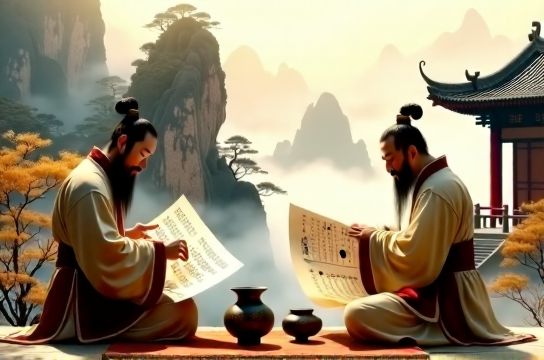
Let’s time-travel back to ancient China, where emperors ruled, dynasties rose and fell, and healers were busy crafting what would become one of the world’s oldest continuous medical systems. TCM didn’t just pop up overnight—it evolved over centuries, shaped by philosophy, observation, and trial and error (hopefully more ‘trial,’ less ‘error’).
The Shang Dynasty (1600–1046 BCE): Bones, Spirits, and Early Healing
Back in the Shang Dynasty, medicine was… let’s say, spiritual. Think oracle bones—yes, actual animal bones and turtle shells used for divination. Healers believed illness came from angry ancestors or cosmic imbalances. Not exactly germ theory, but hey, it was a start.
What’s fascinating? They documented symptoms. On bones. That’s some next-level record-keeping. While treatments leaned toward rituals and sacrifices, these early records laid the groundwork for systematic observation—a core principle in today’s TCM practices.
Zhou Dynasty (1046–256 BCE): Enter Yin, Yang, and the Five Elements
Fast forward to the Zhou Dynasty—this is where things get philosophical. The concepts of yin-yang and the Five Elements (wood, fire, earth, metal, water) became central to understanding health. Balance wasn’t just a lifestyle goal; it was medical doctrine.
Imagine your body as a mini-universe. Too much fire? You’re stressed, inflamed, maybe can’t sleep. Not enough water? Dry skin, fatigue. TCM practitioners used these frameworks to diagnose and treat—no blood tests needed (though they’d come later).
Han Dynasty (206 BCE–220 CE): The Golden Age of TCM
If TCM had a MVP dynasty, it’s the Han. This era gave us the Huangdi Neijing (The Yellow Emperor’s Inner Canon)—basically the Bible of TCM. Compiled around 100 BCE, this text laid down theories on qi (vital energy), meridians, and organ systems that are still taught today.
Another Han hero? Zhang Zhongjing. His book Shanghan Lun revolutionized herbal medicine, introducing formulas still used worldwide—like Xiao Chai Hu Tang for colds and digestive issues.
| Dynasty | Time Period | Key TCM Contributions |
|---|---|---|
| Shang | 1600–1046 BCE | Oracle bone records, spiritual healing |
| Zhou | 1046–256 BCE | Yin-yang, Five Elements theory |
| Han | 206 BCE–220 CE | Huangdi Neijing, herbal formulas |
By the Han era, TCM was no longer just folk magic—it was a structured system backed by texts, observation, and clinical experience. And guess what? Modern studies back some of it. A 2021 meta-analysis found certain TCM herbal blends effective for chronic conditions like irritable bowel syndrome (IBS), with success rates up to 78% when combined with lifestyle changes.
Why This History Matters Today
Understanding TCM’s roots isn’t just academic—it shows why it’s so holistic. Unlike Western medicine’s focus on isolated symptoms, TCM looks at patterns, environment, and energy flow. That’s why a TCM doctor might ask about your sleep, digestion, AND emotions before prescribing herbs.
So next time you reach for that acupuncture appointment or try a new herbal supplement, remember: you’re not just following a trend. You’re part of a 3,000-year-old legacy of healing.